
Sintex How a Textile Mill Became India’s Iconic Water Tank Brand — and Then Collapsed Under ₹7,000 Crore of Debt

Introduction
India’s most recognisable plastic brand — and its extraordinary rise and fall
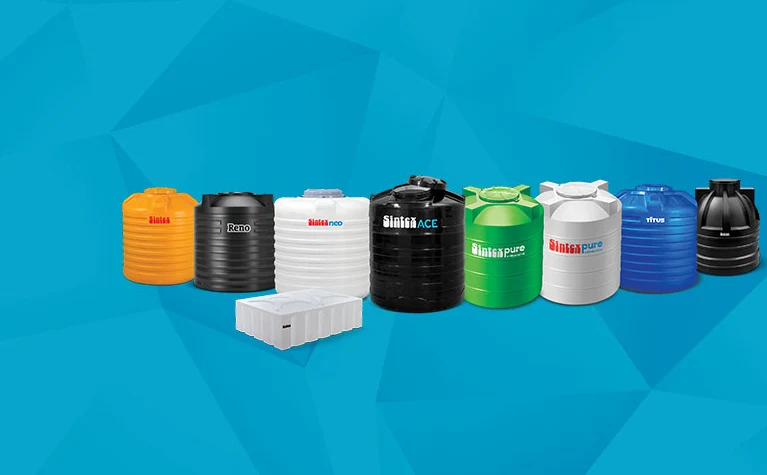
Ask anyone in India about the white plastic tank sitting on their rooftop and they will almost certainly call it a “Sintex.” Not a water tank. A Sintex. In the history of Indian branding, very few products have achieved what marketers call category eponymy — where the brand name replaces the generic name for the product itself. Colgate for toothpaste. Maggi for noodles. Xerox for photocopying. And Sintex for plastic water tanks.
The Sintex story begins not with plastics but with cotton textiles in Kalol, Gujarat in 1931. For four decades, the company was a modest textile mill known as Bharat Vijay Mills. Then a young management graduate from IIM Ahmedabad joined with an audacious idea: make plastic containers. When every market survey, every expert, and every architect said it wouldn’t work, he pressed ahead anyway.
The result: a product that came to define water storage across India. A brand that controlled 60–70% of the organised plastic water tank market at its peak. A company that expanded from Gujarat to 35 manufacturing plants across India, Europe, North Africa, and the USA. And then — a debt-fuelled overexpansion that led to ₹7,000+ crore in borrowings, bankruptcy proceedings at the NCLT, and the ultimate sale of the two halves of the business to Reliance Industries and the Welspun Group in 2023.
People don’t say “I need a water tank.” They say “I need a Sintex.” That is the highest compliment a brand can receive — and it was earned entirely through innovation, persistence, and marketing against the odds.
— Indian FMCG Analysis, 2024Origin — Bharat Vijay Mills, 1931
A textile mill in an agricultural town that chose to reinvent itself
In 1900s India, industrialisation was concentrated in two cities: Bombay (now Mumbai) and Ahmedabad. Cotton mills were expanding, workers were migrating, and commerce was building. About 30 km from Ahmedabad lay the town of Kalol — primarily an agricultural region. Its industrial destiny arrived in 1931 when Bharat Vijay Mills Limited was established — a composite textile mill that began weaving cotton fabric and yarn.
The mill transformed Kalol from farmland to an industrial centre over the following decades. Workers found employment, local trade grew, and the mill built a steady (if unremarkable) business in textiles. But the founders — later identified as operating as a family business whose original names remain largely absent from public records — understood that textiles alone would not sustain long-term growth.
In the 1970s, Dinesh Patel and Arun Patel — the Patel Brothers — acquired Bharat Vijay Mills. Their vision was broader: they wanted to pivot the company into chemicals and plastics, creating separate Strategic Business Units (SBUs) with their own products, teams, and profit-and-loss responsibility. To execute this pivot, they needed a rare type of person — someone who could think entirely outside conventional frameworks.
They went to IIM Ahmedabad and posted a notice on the board. In a placement season dominated by prestigious brands like Asian Paints and Hindustan Unilever, Bharat Vijay Mills went largely unnoticed — until one contrarian young man gave it a serious look.
SB Dangayach — The Man Who Made Sintex
The 20-year-old IIM grad who out-argued his interviewers and changed Indian manufacturing
Satyanarain Bhanwarlal Dangayach (known as SB Dangayach) grew up in Rajasthan. He arrived at IIM Ahmedabad at 20 years old — not yet an engineer, not yet established in any profession, but brimming with unusual confidence and an almost entrepreneurial restlessness. His IIM Ahmedabad interview for Asian Paints became somewhat legendary.
Three objections were raised against him, and he answered each with striking directness:
- Objection 1 — “You’re not an engineer.” Dangayach’s response: “Several IIT-trained engineers take tuition from me.”
- Objection 2 — “You’re too young.” Dangayach’s response: “I have beaten many older people in competition.”
- Objection 3 — “You’re a Marwari. You won’t stay — you’ll want your own business.” Dangayach’s response: “As long as the company gives me the freedom to work, everything will be fine.”
The panel was stunned. He was hired by Asian Paints. But within two years, he realised that Asian Paints — a large, structured, well-run organisation — was not the right environment for the way he thought. In the words of author Rashmi Bansal (who profiled Dangayach in her book Stay Hungry Stay Foolish): Asian Paints had set parameters and an established way of doing things. Dangayach’s mind worked differently — always searching for the unconventional path.
He remembered the Bharat Vijay Mills notice from the IIM board. He applied. The Patel Brothers wanted exactly what Dangayach offered — someone who thought outside conventions. He was their man.
Dangayach joined Bharat Vijay Mills in September 1974 as Marketing Officer. Just 4 months later, in December 1974, he was promoted to General Manager. The Patel Brothers gave him the freedom of an owner without asking him to invest a single rupee. “A businessman sometimes has to put in his own money. But at Sintex, I didn’t have to invest anything — and still had full entrepreneurial freedom,” Dangayach said. For so long did he run the business autonomously that visitors — including author Rashmi Bansal — assumed he was the owner. He had to correct them himself.
In 1998, when Indosuez (a private equity firm) invested in Sintex, the agreement formally recognised Dangayach as a co-promoter — effectively making him a legal co-owner alongside the Patel family, though he maintained that his personal stake was modest. By this point, he was already running the entire plastic division as its creator, strategist, and operational head.
The Trinity Philosophy
Dangayach’s three-part business framework that guided every product decision
SB Dangayach was guided throughout his tenure at Sintex by a personal business philosophy he called the “Tridev” or Trinity Principle — a framework of three simultaneous actions that he believed every entrepreneur must follow at all times:
This philosophy worked brilliantly in the early years. But when applied at international scale with borrowed capital — rather than organic investment — the “bet on the future” pillar became the source of collapse. The Trinity was a sound framework for an organically growing company; it became dangerous when funded by debt.
How the Sintex Water Tank Was Born
From failed Cod Cans to an idea that changed every Indian rooftop
When Bharat Vijay Mills established its plastics division under Dangayach in 1974, the first product was Cod Cans — plastic containers for the textile industry to store yarn and thread. The name Sintex came from the manufacturing process called sintering: heating metal or ceramic powder to high temperatures without fully melting it to form solid shapes. The word was also chosen because it was easy to pronounce and remember.
The seed capital for the plastic division was ₹5 lakh — significant for the era, but not enormous. The Cod Can idea had logic: Bharat Vijay Mills already operated in textiles, so plastic yarn containers seemed a natural adjacency. But the marketing failed. Cod Cans were shut down. It was Dangayach’s first lesson: a product can have sound logic and still find no market.
The Pivot to Industrial Containers
With the plant investment already made, the question was: what else can we make here? Dangayach pivoted to industrial plastic containers — large vessels for storage, transport, and processing in factories. By 1975, Sintex’s turnover was just ₹3 lakh. By 1976 it was ₹18 lakh. By 1977 it was ₹60 lakh. The company had reached break-even by 1977 — recovering its initial investment within three years.
The Water Tank Insight
One day, examining the rotational moulding plant that produced Sintex’s large industrial containers, Dangayach had an observation: the containers being manufactured were hollow, cylindrical, and had a volume that was roughly equivalent to a domestic rooftop water tank. At the time, water storage in India relied on cement and steel tanks — both problematic. Cement tanks were expensive and difficult to build on rooftops; they cracked and could not be repaired. Steel tanks rusted over time, contaminating water.
Dangayach consulted widely before moving forward:
- Government officials — they confirmed demand for an alternative to cement and steel
- Water experts and research institutions — they confirmed the need for a corrosion-resistant, easy-to-clean option
- Architects — they advised that a black plastic tank on a rooftop would look ugly and damage a home’s appearance
- Market survey — the research said there was no market at the price point Sintex was planning
Every data point said: don’t do it. Dangayach did it anyway. He was convinced that the problem he was solving — corrosion-free, easy-to-install, easy-to-clean rooftop water storage — was a genuine consumer need that would overcome the initial resistance once people experienced the product. He was right.
Creating a Category — The Marketing Story
How Sintex convinced India to put a black plastic tank on its rooftop
Launching Sintex water tanks meant not just selling a product, but creating an entirely new product category. In traditional consumer marketing, you compete for share. In category creation, you first need to change behaviour — which is far harder and far more expensive. Sintex had no competitors when it launched, which was both an advantage (no price war) and a challenge (no one to follow in educating the consumer).
The campaign had three core messages, delivered through print advertising, government partnerships, and public relations over several years:
- Plastic tanks don’t rust — unlike steel, which contaminates water with iron oxide over time
- Plastic tanks are easy to clean — unlike cement, which is porous and nearly impossible to sanitise effectively
- Cement tanks can’t be repaired when they crack — Sintex tanks are durable, portable, and replaceable
- Sintex can be placed in any corner of your roof — no structural changes to the building required
The government was the first major customer. Government buildings prioritised durability and cost-efficiency over aesthetics — exactly the profile for which Sintex’s case was strongest. Early government orders gave Sintex scale, revenue, and critical product validation. Once government buildings had Sintex tanks, the brand’s legitimacy was established for the private market.
When people today look at a plastic tank on a rooftop, they cannot imagine the years of effort Sintex invested in convincing the first generation of homeowners that it was safe, smart, and acceptable. That category-creation work is Sintex’s most underappreciated achievement.
— Indian Manufacturing Case Study, 2026The result was one of Indian branding’s most complete victories. Sintex became the generic name for plastic water tanks — much like Colgate for toothpaste or Xerox for photocopying. Shopkeepers began selling competitors’ tanks under the Sintex name. People who didn’t know Sintex was a brand asked for “a Sintex” by default. This is the mark of true category creation: when your brand name becomes the category noun.
By the early 1990s, Sintex held an estimated 60–70% market share in India’s organised plastic water tank industry. In 1995, acknowledging the complete shift in the company’s identity, Bharat Vijay Mills officially changed its name to Sintex Industries Limited.
Products — What Worked, What Failed
Dangayach’s Trinity in action — and the one product he couldn’t kill when he should have
Global Expansion & the Debt Trap
How Sintex’s ambition outran its balance sheet
By 2008, Sintex’s plastics division had a turnover of approximately ₹1,000 crore, contributing 70% of the company’s total revenue. The water tank business was mature and highly profitable. The Indian market was well-established. For any company, this is the natural moment to ask: what’s next?
Sintex’s answer was ambitious: go global. The company had already established a joint venture in Dubai (Suitex Middle East LLC) in 1994. It had experience across India with plants in Bangalore, Kolkata, Daman, Baddi, Nagpur, Salem, and Bhachau. In 1998, when Sintex listed on the Bombay Stock Exchange (and the NSE in 1999), it gained access to capital markets that enabled the next phase.
Sintex’s water tank dominance was eventually challenged as competitors recognised the opportunity it had created. Companies like JS Polyplast, Polycon, and National Plastic entered the market with plastic water tanks at competitive prices. By the mid-2000s, the water tank segment was no longer Sintex’s exclusive territory — which was one reason Dangayach kept pushing into new categories like prefabricated structures, rainwater harvesting, and international custom moulding. When a category you created becomes commoditised, you must either defend it harder or move ahead of it.
The International Acquisitions (2007)
Using capital raised from public markets and borrowings, Sintex in 2007 made two significant international acquisitions:
- Wausaukee Composites Inc. — a US-based custom composite moulding company, significantly expanding Sintex’s automotive and industrial components capability in North America
- Nief Plastic S.A. (France) — later renamed Sintex NP SAS, giving Sintex a European manufacturing and customer base. Sold to XTECH Invest in August 2019.
By February 2017, Sintex had 35 manufacturing plants across India, Europe, North Africa, and the USA. It was genuinely one of India’s first plastics conglomerates with a serious international footprint. Research papers from this era described Sintex as “investor paradise” — the stock consistently delivered high returns for those who held it.
The problem was not the vision. The problem was the financing. Every acquisition, every new plant, every international venture was funded primarily through debt — not internal cash flows. As the company expanded internationally, the revenues from foreign operations did not match the cost of capital deployed. Products that failed (solar heaters, windows) continued to drain resources. By the time the reckoning came, Sintex’s debt had climbed to over ₹7,000 crore.
The 2017 Demerger — Wrong Medicine
In 2017, recognising that the combined company was too large and complex to manage, Sintex attempted a demerger: splitting into Sintex Industries (textiles, managed by the Patel Brothers) and Sintex Plastics Technology (the original plastic division). The intention was to streamline operations, improve management control, and reduce costs. The outcome was the opposite. Post-demerger, operational costs increased. Both entities found themselves independently unable to service their respective debt loads.
Timeline — Key Milestones
Nine decades of innovation, ambition, and ultimately, financial collapse
SWOT Analysis
Understanding what made Sintex great — and what brought it down
- Category-defining brand — “Sintex” = plastic water tank across India
- 60–70% market share at peak in organised plastic tank segment
- First-mover advantage — created the plastic water tank category from scratch
- Broad product portfolio: tanks, doors, industrial containers, prefab, custom moulding
- SB Dangayach’s intrapreneurial vision and Trinity framework
- 35 manufacturing plants across 4 continents at peak (2017)
- Deep government relationships — tanks in thousands of public buildings
- Inability to diversify beyond water tanks — no product matched Sintex’s category dominance
- Plastic windows kept alive for 20+ years against Dangayach’s own framework
- International acquisitions not generating sufficient returns vs. cost of capital
- Financial management allowed debt to grow unchecked to ₹7,000+ crore
- Demerger in 2017 worsened rather than resolved operational complexity
- No digital or direct-to-consumer strategy developed despite mass consumer brand
- Under Welspun: water tank demand growing with urbanisation and water scarcity
- Under Reliance: textiles business can supply global luxury brands (Armani, Hugo Boss)
- Smart tanks (IoT water monitoring), antibacterial, multi-layer formats
- Water conservation products: rainwater harvesting systems as climate focus grows
- Prefabricated affordable housing under PM Awas Yojana government schemes
- Brand equity of “Sintex” remains intact despite ownership change
- Market fragmentation — many local plastic tank manufacturers selling at lower cost
- Brand confusion — consumers may not know Sintex is now Welspun-owned
- Integration risk — new owners may not maintain innovation culture Dangayach built
- Raw material volatility — petrochemical prices affect plastic production costs
- New entrants offering comparable quality at lower price points
Financial Collapse & Bankruptcy
The numbers that tell the story of India’s most spectacular manufacturing fall
| Event | Year | Financial Impact |
|---|---|---|
| Indosuez PE Investment | 1998 | Turnover ~₹170 Cr; first institutional capital |
| BSE / NSE Listing | 1998–99 | Access to public capital; multi-bagger stock returns |
| Plastics Division Turnover | 2008 | ~₹1,000 crore; 70% of total company revenue |
| Wausaukee + Nief acquisitions | 2007 | Significant debt taken on for international expansion |
| Net Profit FY2018 | 2018 | ₹141 crore — last profitable year |
| Net Profit FY2019 | 2019 | ₹21.5 crore — collapsed 85% in one year |
| Total Debt at Collapse | 2019–20 | Over ₹7,000 crore — unserviceable |
| Interest Default Admitted | Dec 2020 | ₹3.6 crore interest on ₹137.5 Cr debt unpayable |
| NCLT Bankruptcy | April 2021 | ₹7,500 crore in creditor claims admitted |
| Reliance Industries acquires SIL | 2023 | ₹3,567 crore — textiles division |
| Welspun acquires SPTL | 2023 | ₹1,251 crore — plastics/tank division |
Sintex’s debt problem was structural, not temporary. Every phase of expansion — from Indian plant expansion in the 1990s, to textile modernisation (₹ crores in air jet and rapier looms in 1993), to international acquisitions in Europe and the USA — was financed through borrowings rather than internal cash generation. When international revenues underperformed expectations, the debt servicing burden became overwhelming. The 2017 demerger, instead of reducing costs, actually increased operational costs as two separate management structures, compliance requirements, and overhead bases replaced one. By 2020, the company could not pay basic interest — let alone principal repayment.
Key Takeaways
What every entrepreneur and student can learn from the Sintex story
Frequently Asked Questions
What people ask most about Sintex, SB Dangayach, and India’s iconic tank brand
Satyanarain Bhanwarlal Dangayach (SB Dangayach) was a management graduate from IIM Ahmedabad who joined Bharat Vijay Mills as Marketing Officer in September 1974 at the age of 20. He was promoted to General Manager within four months. Over the next three decades, he created and led Sintex’s entire plastic division — from industrial containers to water tanks to prefabricated structures and international expansion. He was not an owner in the traditional sense: the Patel Brothers owned the company. But they gave him complete entrepreneurial freedom, and a 1998 investment agreement formally recognised him as a co-promoter. Author Rashmi Bansal profiled him in her book “Stay Hungry Stay Foolish.”
Sintex created the plastic rooftop water tank category from scratch in the late 1970s, when every market survey said there was no demand and every architect said the product was ugly. Dangayach and the Sintex marketing team spent four years educating consumers: plastic tanks don’t rust (unlike steel), don’t crack (unlike cement), are easy to clean, can be placed anywhere on a rooftop, and are available instantly without construction. The government became the first major customer, validating the product. Once mass consumer adoption began, the brand’s consistent quality and national distribution meant it was always first in the consumer’s mind. Over decades, “Sintex” replaced “water tank” as the common noun — similar to Colgate for toothpaste, Xerox for photocopying, or Maggi for instant noodles.
Dangayach’s Trinity (Tridev) Philosophy had three simultaneous imperatives: (1) Stop what fails — kill non-performing products quickly to free resources; (2) Scale what works — invest in and expand profitable products; (3) Bet on the future — always have a new product development pipeline for the next market cycle. The philosophy worked brilliantly in the early years: Cod Cans were shut down, industrial containers were scaled, water tanks were bet on as the future. The framework broke down in two ways: Dangayach violated his own first rule by keeping plastic windows alive for over 20 years despite sustained failure; and the third pillar — betting on the future — was executed through borrowed capital rather than retained profits when the company went international, making the debt load unsustainable.
Sintex’s bankruptcy was the direct result of debt-funded international expansion that didn’t generate proportionate returns. The company acquired US-based Wausaukee Composites and French company Nief Plastic in 2007, and continued expanding internationally through the 2010s. All this was financed primarily through borrowings. By 2017, total debt exceeded ₹7,000 crore. When the company attempted to solve the problem through a demerger of its textiles and plastics businesses, operational costs actually increased instead of decreasing. Revenue at the post-demerger entities couldn’t service the debt. By 2019, profits had collapsed from ₹141 crore to ₹21.5 crore. By December 2020, Sintex Industries admitted it could not pay ₹3.6 crore in interest on ₹137.5 crore of debt. Bankruptcy followed in April 2021.
Sintex was divided between two acquirers in 2023. Reliance Industries Limited (RIL) acquired Sintex Industries Ltd. (the textiles division, the original Bharat Vijay Mills lineage) for ₹3,567 crore, holding 70% stake jointly with Assets Care & Reconstruction Enterprise (ACRE). The famous Sintex plastics and water tank business — Sintex Plastics Technology Limited — was acquired by the Welspun Group for ₹1,251 crore. Welspun, a major Indian conglomerate in pipes and building materials, continues to manufacture and sell Sintex water tanks. The Sintex brand name on water tanks is now owned by Welspun Group. Both divisions continue to operate, but as separate entities under different ownership, with different strategic directions.
Several Sintex products failed despite genuine effort: (1) Cod Cans — plastic yarn storage containers for the textile industry were the first product, shut down quickly after marketing failed; (2) Plastic Windows — launched 1984–85 as alternatives to wooden or aluminium windows. Repositioned multiple times (premium, energy-saving, aluminium alternative) but never found mainstream Indian acceptance. Kept alive for 20+ years against Dangayach’s own Trinity principle; (3) Solar Water Heater — affordable plastic-based solar heater reached 10,000–12,000 units/year by 2004 but was discontinued due to servicing, installation, and leakage problems. In each case, the failure was either a market timing issue (windows were ahead of their time), an execution issue (solar heaters), or a market fit problem (Cod Cans).
Business Case Study — 2026 Edition
Sources: The Indian Blog · Wikipedia Sintex · CanvasBusinessModel.com · ExtractLaw.wordpress.com · IIFL Capital ·
Rashmi Bansal “Stay Hungry Stay Foolish” · Shanti Business School Blog · Sintex BAPL LinkedIn ·
NSE/BSE Filings · NCLT Records
sintexonline.com
· Educational and research purposes only.