
From 500 Bikes
to 1.18 Million.
Three Times, They
Nearly Died.
The full story of the world’s oldest surviving motorcycle brand — needles, wars, jugaad, and a 26-year-old who refused to let it end.
The Scene That Started Everything
Chennai. North of the city, past the dust and industrial grime of Tiruvottiyur, there is a factory that should not exist. By every rational metric — dated machinery, oil-soaked floors, workers hammering dents out of fuel tanks by hand on the ground, no safety goggles, chromium plating that cracked before bikes even reached showrooms — this operation was finished.
In 2008, an American executive named Venky Padmanabhan walked through the gates for the first time as CEO. The scene: young workers sitting cross-legged on the floor, worn shirts, knees pressed together, gripping hammers and chisels — beating dents out of motorcycle fuel tanks one by one. Like a tinsmith from another century. On the other side of the shop, men ground aluminium castings without masks or goggles. By end of shift, their faces were coated in a white layer of aluminium oxide.
The chrome plating department ran a process decades old. Parts that came out of it cracked in the showroom — before anyone had ridden the bike. The engine leaked oil so badly that customers had long since renamed the brand: “Royal Oilfields.” The brand they were propping up was selling just 500 motorcycles a year. The owners were actively discussing closure.
Today, that same brand sells 1.18 million motorcycles annually — more than Harley-Davidson, KTM, BMW, Triumph, and Ducati combined. Its market cap exceeds ₹45,000 crore. Its bikes sell in 80+ countries. And in October 2019, one of its motorcycles became the best-selling bike in Britain — the very country where it was born, and where it died.
This is the Royal Enfield story. It spans 125 years, three near-deaths, one needle factory, two World Wars, one 26-year-old’s gamble, and a pair of twins who have been hand-painting golden stripes on fuel tanks since 1955.
The Needle Maker’s Pivot — Redditch, 1880s
The town of Redditch, in the English Midlands, made needles. Surgical needles, sewing needles, fishing hooks — if it was sharp and small, Redditch made it. One of these needle makers was a man named George Townsend. By the 1880s, his firm had started making bicycle parts. By 1888, it was making complete bicycles. Business was decent, then it wasn’t.
Around 1890, the company hit a wall. Two men were brought in from Birmingham to rescue it. The first was a salesman named Albert Eadie — a showman, a dandy, a born persuader. He wore colourful waistcoats, fitted a monocle, wore a hat, and earned the nickname “Emperor.” Pedigreed salesman type. The second was an engineer named Robert Walker Smith — quiet, methodical, oil permanently under his fingernails, a former railway apprentice who turned out to be a genius at designing cycles.
It was Eadie’s salesmanship that gave the company its identity. He landed a contract to supply parts to the Royal Small Arms Factory in Enfield — the government plant famous for producing the Enfield rifle, a weapon deeply embedded in Indian history for other reasons entirely. In 1892, to celebrate the contract, the firm named its newest bicycle “Enfield.” A year later, they added “Royal.” The name was born: Royal Enfield.
From this also came the brand’s famous tagline — Made Like a Gun, Goes Like a Bullet. Technically there was no direct connection between the bicycle and the rifle. Two separate contracts, two separate associations. But the marketing worked. And it still works today, more than a century later.
The First Motorcycle & Three Game-Changing Innovations
In 1901, the company built its first motorised bicycle. A small engine mounted ahead of the handlebars, driving the front wheel. They tried cars too — they flopped. Engineer RW Smith focused entirely on motorcycles, and between 1911 and 1913, introduced three innovations that would define the entire motorcycling industry for a century.
Until this point, gear systems were bolted directly to the engine or the rear wheel — throwing the bike’s weight off-balance. Smith placed the gearbox on a separate shaft between engine and rear wheel. Weight centralised. Stability improved. Gear changes became smooth. Modern motorcycle gearboxes are direct descendants of this idea.
Most bikes of that era used leather or rubber belts to transfer power from engine to wheel. In rain or mud, these belts slipped and the bike stopped dead. Smith replaced the belt with a metal chain and sprocket. Drive train efficiency jumped to 95–98%. Almost all power reaching the wheel, almost none lost. The chain drive is now universal. It was a lo-tech solution with extraordinary impact.
The chain drive created a new problem: when a rider accelerated hard, the rigid chain delivered a violent jerk to the rear wheel — breaking chains, stripping sprocket teeth, damaging gearboxes. Smith’s solution: rubber pads inside the rear wheel hub to absorb the shock. He called it the Cush Drive. The pads softened the jerk, smoothed the ride, and protected the drivetrain. This exact system — unchanged in principle — is still used in modern motorcycles today, over 110 years later.
Smith also introduced automatic lubrication in 1913 — another industry first. These were not incremental tweaks. These were structural inventions that competitors copied, adapted, and adopted for the next hundred years.
Two World Wars and a Flying Flea
In 1914, the Great War changed everything. Royal Enfield received military contracts for motorcycles and sidecars — those contraptions you’ve seen in Sholay, the passenger compartment bolted beside the bike. The contracts were profitable and production surged. Then came World War II, and the work multiplied exponentially: three new factories, 46,000+ motorcycles delivered to the British Army.
But one wartime machine stands entirely apart from the rest — and its origin story reads like a thriller that begins with Nazi antisemitism.
The Flying Flea — Born From Nazi Antisemitism
Germany’s DKW motorcycles were popular across Europe. A Dutch distributor bought and sold them across the Netherlands — but its owners were Jewish. When the Nazi regime discovered this, they pressured DKW to force the Jewish owners off the company board. The Dutch company refused. DKW immediately cut off their motorcycle supply entirely.
The Dutch firm needed new bikes to stay in business. They came to England — to Royal Enfield. And they brought something valuable with them: the design blueprints for a small, popular DKW model they had been selling. They showed the drawings to Royal Enfield’s engineers and asked: can you build something exactly like this?
Royal Enfield’s engineers studied the design, absorbed it, and within months produced an entirely new 123cc motorcycle. It was light enough to lift and carry out of mud. It was small enough to be folded into a metal cage and dropped by parachute from an aircraft. It could be ridden immediately upon landing.
The irony is almost fictional: the bike that Nazi persecution indirectly created was then deployed against the Nazis — used by Allied paratroopers during D-Day, the Normandy landings of June 1944. Soldiers jumped behind German lines with these motorcycles. The bike was named the Flying Flea. And in 2026, Royal Enfield’s first electric motorcycle carries that same name in tribute.
The Flying Flea’s story perfectly captures Royal Enfield’s genius for adaptation: absorb an external design, make it lighter and tougher, fit it to a completely different context — then watch it outlive the crisis that created it. The same playbook would save the company again, decades later.
The Bullet Comes to India — 1948
February 1948. A motorsport event called the Colmore Cup Trial ran in England. Royal Enfield entered three new motorcycles. The name “Bullet” had been in use since 1932 — but the 1948 G2 Bullet was different in kind from anything before it.
Most British motorcycles of that era had rigid rear ends — no rear suspension at all. Some companies had fitted experimental plunger suspensions, but they barely worked. Royal Enfield’s two engineers developed something called Swingarm Rear Suspension: the rear wheel connected to a pivoting arm controlled by oil-filled shock absorbers. The motorcycle world watched with skepticism — oil seals would fail, they said. Then came September 1948 and the International Six Days Trial in Italy. Royal Enfield’s Bullet riders won gold medals. Skepticism evaporated overnight.
The 1948 Bullet launched for the public. But its real destiny was not England. It was 7,000 kilometres away, on a mountain pass in Kashmir.
The Indian Army Order — 1953
Six years after Independence, India’s borders remained in tension. Kashmir was a live fault line. The Indian Army needed a motorcycle that could handle mountain passes, unpaved roads, extreme cold, and immediate deployment — out of the crate, straight to full speed, no warm-up period. Behind this requirement was a Tamil Nadu company called Madras Motors, founded in 1942, which had been importing British bikes for years.
The Army placed an order for 800 Bullets. The condition: every single bike must be test-ridden at full speed immediately after assembly. If the engine faltered even slightly — cylinder and piston out, replaced, re-tested. Only bikes that passed the full-speed test were then disassembled, packed in crates, and shipped to India. There, Royal Enfield engineers reassembled each one.
The Bullet performed on India’s borders. The Army doubled down — it placed even larger orders. The Bullet had found its true home.
Enfield India — The Factory Story, 1955
Importing bikes from England cost pounds India didn’t have. The government pushed for domestic manufacture. In 1955, Enfield India was born — a joint venture between the British company and Madras Motors, built on three acres in Tiruvottiyur, Chennai.
At first, complete kits arrived from England and workers assembled them. Then the factory began making frames locally. Then mudguards. Then engine components. Then, over years, almost the entire motorcycle.
One story from those early days captures the spirit of the operation. To weld frames with consistent precision, you need jigs — metal fixtures that hold components in exact alignment so every frame emerges identical. Tiruvottiyur had no jigs. So Indian craftsmen did something remarkable: they welded by eye, by hand, by accumulated feel. No template. No fixture. The frames came out accurate anyway. It would take decades of production growth before jigs were finally introduced — because until then, they were not needed.
An Anglo-Indian engineer who had previously worked at Ford managed the factory’s early years. When he needed a hydraulic press — a machine that shapes metal under enormous force — the Indian market didn’t have one. Importing it was a nightmare. His solution: he sourced the landing gear from a retired Dakota aircraft, the mechanism built to bear the full weight of a plane on landing, and retrofitted it into a functioning hydraulic press. Jugaad at its finest — but the structural kind, not the dangerous kind.
Slowly, the Bullet became a cultural landmark in India. Through the 1960s, with imports banned and competition non-existent, the Bullet was the motorcycle. If you wanted one, you waited months. If you didn’t want to wait, you paid ₹2,000 in unofficial queue money — which was 30% of the bike’s sticker price. And you were still not guaranteed delivery. Collectors, officers, district magistrates, film heroes — the Bullet had become the symbol of a certain kind of Indian authority.
England Dies. India Lives. — 1960s–1980s
The 1960s broke British motorcycling wide open — and not in a good way for British brands. Honda, Suzuki, Yamaha arrived. Faster bikes, dramatically cheaper, far more reliable. Japanese engineering was precise and dependable in a way British manufacturing had never managed to sustain at scale. BSA collapsed. Norton crumbled. Triumph staggered badly (it survived, but transformed). And in 1970, Royal Enfield closed its English factory for good. The country that had given birth to the brand could no longer afford to sustain it.
Meanwhile, in India, the Bullet kept rolling. Same engine. Same frame. Same design. Same deep, rhythmic thump — that dhak-dhak — that buyers loved. Roughly 1,000 to 22,000 bikes per year, depending on the decade, but never stopping. The Indian operation had become the sole keeper of the Royal Enfield flame.
Then in 1983, Japanese bikes entered India too. Royal Enfield attempted a response: it tried building a smaller, lighter, competitive motorcycle. A new factory opened in Ranipur, Tamil Nadu. The bikes were tested. They could not compete with Japanese engineering. Seven years later, the Ranipur factory closed. The experiment had failed.
Eicher Steps In — 1990 to 2000
By 1988, the company was in debt. Its future was genuinely uncertain. Then a large industrial group stepped forward: Eicher Motors, makers of commercial trucks. In 1990, Eicher bought a stake in Royal Enfield. By 1994, they owned it outright.
Vikram Lal, Eicher’s owner, loved the Bullet the way many Indian men of his generation loved it — personally, emotionally. The company was available at a distressed price. He bought it. But even Eicher’s presence couldn’t produce immediate magic. The 1990s remained turbulent.
In 1999, a new engine arrived — designed by AVL, an Australian engineering firm. It was more fuel-efficient and met emissions standards the old engine couldn’t. Technically superior. But the old Bullet’s fans — and there were millions of them — rejected it. The deep, characteristic thump of the original engine was gone. The new engine felt different. Sales crashed. The Jaipur factory built to house this new engine shut down within two years. By 2000, Eicher was openly discussing closing Royal Enfield entirely. The trucks division was subsidising a dying motorcycle brand. The math did not work.
The 26-Year-Old Who Refused — Siddharth Lal, 2000
Siddharth Lal, son of Vikram Lal, was 26 years old when the closure conversation was happening. He had an economics degree from Delhi University, a mechanical engineering degree from Cranfield University in England, and a postgraduate in automotive engineering from Leeds. He was qualified on paper. But running a manufacturer on the edge of extinction — with a workforce in crisis and a brand identity torn between nostalgia and irrelevance — was something else entirely.
He stood before his father and Eicher’s board and made a simple request: give me one chance. They gave it.
What followed was not glamorous. It was surgery.
He closed the loss-making Jaipur factory and brought its equipment back to Chennai. He sold non-core business assets. He reduced the workforce from 1,500 to 445. He cut production from 20,000 bikes a year to 3,000 — counterintuitively making fewer bikes in order to make them better. The company survived. Barely. But it was alive. What it needed next was someone who could fix the factory itself — modernise it, systemise it, make it capable of producing at scale without the artisanal patchwork holding it together.
The Anti-Jugaad Man — Venky Padmanabhan, 2008
In 2008, Royal Enfield made Venky Padmanabhan its CEO. He was Indian by origin, American by citizenship, and GM-Chrysler-Mercedes by professional formation. He had spent 15 years at General Motors and worked at Mercedes-Benz. He was the kind of person who understood what a functioning automobile factory looked like at global standards.
The day he walked into the Tiruvottiyur factory was the day described at the opening of this story. Workers on the floor with hammers. Aluminium dust on faces. Chrome that cracked in showrooms. And the key finding: 100% of motorcycles leaving the assembly line required rework before going to dealers. Not a percentage. Not most. Every single one came off the line with something wrong, was corrected, sent out, came back broken, went back to the plant — a loop of failure that the workforce had learned to navigate around with improvised skill.
When Venky asked what was happening, one word came back: jugaad.
But this was not the jugaad Indians take pride in — the village mechanic who builds a water pump from a motorcycle engine, the frugal innovation, the creative use of limited resources. This was the dangerous face of jugaad: what happens when a company refuses to invest in proper machines and processes, and instead puts the burden on its workers to compensate with their bodies and their wits. The worker grinding aluminium without a mask is not demonstrating ingenuity. He is paying with his health for the company’s unwillingness to buy him proper protective equipment.
The Confrontation That Changed the Culture
Two weeks into the job, Venky’s frustration boiled over. He stood on the factory floor and publicly dressed down the head of Quality Control in front of his team. It was an American management reflex — the kind of behaviour he had witnessed and practised in GM and Chrysler plants for two decades. Raise your voice. Make the failure visible. Drive accountability.
The Quality Control head was Dr. Nair. PhD from England. Veteran of Tata Motors and Bajaj Auto. A man with decades of experience in Indian manufacturing. He looked at Venky and, in a calm voice, said: “If you do that again, I will leave. And when I leave, half my team leaves with me.”
This was not a threat about ego. Dr. Nair was communicating something structurally important. The workers on that floor — people who had spent 20 and 30 years inside that factory — carried knowledge that existed nowhere else. They knew which supplier sent consistently bad material. They knew which process was broken and why the jugaad around it worked. They knew where every hidden fault came from and what sequence of improvisations had been built to manage it. No external consultant could audit that out of the walls. That knowledge was human. It would walk out with those people.
Venky understood immediately. He changed his approach entirely — from someone who issued commands to someone who removed obstacles. He approved budgets. He got out of the way. He let the people who understood the problems fix them.
Jugaad vs Mastery — and the Madras Stripes
The results came from investment, not inspiration. New dies from Italy for fuel tanks — precise moulds so tanks came out correctly shaped the first time, eliminating the need for any craftsman to sit on the floor with a hammer. Cylinder honing equipment from Germany — so engine bores were machined to exact tolerances and oil could no longer escape between piston and cylinder wall. The chrome plating process was rebuilt from scratch. Frame rust was traced back through the entire supply chain — to the raw metal, the welding process, the protective coating — and eliminated at every layer.
None of it was magic. There was no genius insight, no eureka moment. It was simply modern manufacturing applied where it had not been applied before. The jugaad that covered for broken processes could finally be retired, because the processes were no longer broken.
But here is the critical distinction that emerged from the Tiruvottiyur transformation — and it is the line between what should be changed and what should not be.
When the factory was modernised, one area was deliberately, consciously left exactly as it was. In a quiet corner of the paint shop, two twin brothers sit side by side. One brush. Two strokes. A thick gold line, then a thin gold line, painted freehand along the contour of a fuel tank. No stencil. No guide ruler. No template. No digital measurement. Just the hand, the eye, and decades of accumulated feel. Their father did this work. Before their father, their father’s father did this work. Since the first Royal Enfield Bullet rolled out of Tiruvottiyur in 1955. These are the Madras Stripes.
Every Royal Enfield fuel tank bearing those stripes is unique — because human hands made it so, and human hands cannot be perfectly replicated. The stripes were preserved deliberately. They were not automated. They were not replaced with a decal. They were recognised as mastery — the opposite of jugaad.
The distinction is everything: Jugaad compensates for what is broken — it is improvised survival. Mastery creates what cannot be replaced — it is irreplaceable craft. The fuel tank beaters needed to stop. The stripe painters needed to continue. Knowing which was which required a leader who could see both clearly.
The UCE Engine — The Invention That Saved Everything
The factory was being fixed. But the product itself had a deeper problem. The old Bullet engine was a 1955 design. Engine block and gearbox were two completely separate units connected by their own internal chain. More components meant more assembly complexity, more maintenance touchpoints, and more places for oil to escape — which it did, constantly.
The gearbox had four speeds. Changing gear required physical strength and a precise sense of timing. Finding neutral — that in-between state between first gear and the road — required a separate lever called the neutral finder. New riders spent weeks learning to locate neutral at a red light before the light turned green. An electric start did not exist. In cold weather, starting the Bullet required kicking the starter lever with exact technique. Get it wrong, and the engine kickback would slam the lever back into your shin. Ten kicks in the cold was considered a good morning.
Royal Enfield knew all this had to change. But they lacked the internal engineering capacity to design something entirely new. Decades of making the same bike had produced deep knowledge about that bike, and very little capability for anything beyond it.
Two British Engineers and a Bitter Debate
Two engineers were brought in from Britain: Stuart Moggan and John Crocker. They first designed a new five-speed gearbox — gear changes became lighter, more intuitive. They added electric start. And then they designed the engine that changed everything: the Unit Construction Engine, or UCE.
UCE meant a fundamental architectural change: the engine and gearbox would share a single casing instead of being separate units. One unified structure. Fewer parts. Less to go wrong. Easier to assemble. And critically — dramatically fewer potential leak points. The “Royal Oilfields” nickname could, at last, retire.
But before UCE could launch, a smaller debate played out that captures the entire spirit of how Royal Enfield thinks about engineering. For the gear selection mechanism inside the gearbox, Moggan wanted to use a cam plate — a flat stamped metal piece. The factory owners wanted a drum cam, the system Honda and other Japanese manufacturers used. The owners’ logic: Honda uses it, so it must be superior.
Moggan argued differently. A drum cam requires individual machined grooves — expensive, slow, complex to manufacture. A cam plate stamps out perfectly in a single press, at a fraction of the cost. For a motorcycle that needed to remain price-competitive in the Indian market, this was not a trivial distinction. The argument ran for months. In the end, the cam plate won. And it works perfectly.
UCE Launch and the Recall That Tested Everything
The UCE engine launched in 2008. In Britain — the country that had buried Royal Enfield in 1970 — 450 bikes sold in six months. The interest was extraordinary.
Then came the crisis. A UK rider’s bike stopped suddenly at 115 km/h. Gearbox failure. Royal Enfield investigated and confirmed a manufacturing defect in UK-specification gearboxes. They recalled 800 bikes — the 450 already sold plus dealer stock and bikes in transit. Ten repair ramps were set up in the factory. Twelve new mechanics were hired immediately. Every gearbox was individually opened and corrected. The entire operation was completed in three months.
The entire peak selling season was lost. The financial hit was severe. But the company had done something more important: it had demonstrated that when something goes wrong, it acts. The brand’s credibility in Britain survived — and grew from that demonstration of accountability.
The Classic 350 — Identity, Not Transport
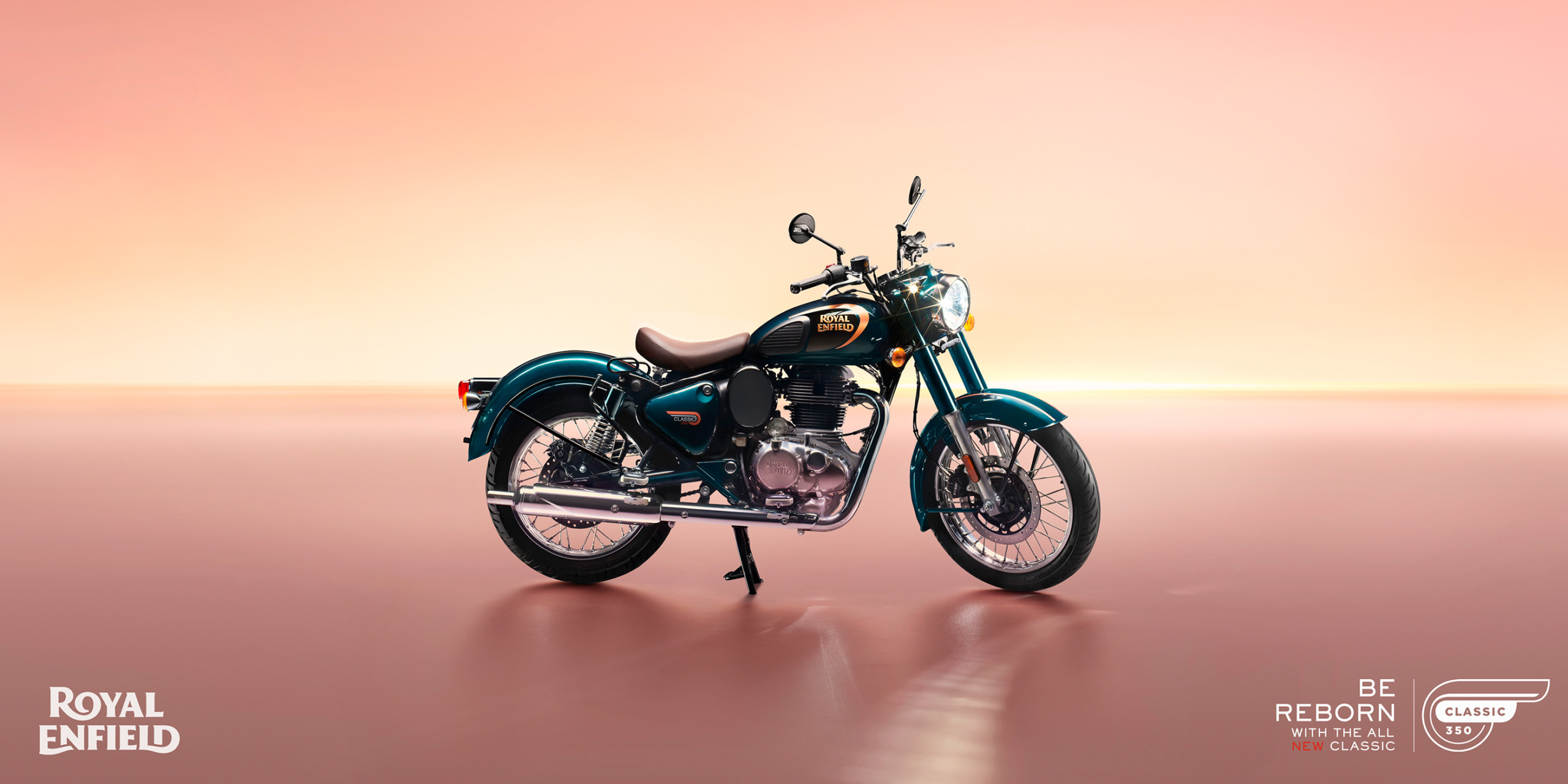
In 2010, Royal Enfield launched the Classic 350. Aesthetically, it looked like a 1950s Bullet — teardrop fuel tank, round side panels, single seat option, chrome headlight nacelle, chrome exhaust. The visual language was pure nostalgia. But underneath: UCE engine, five-speed gearbox, electric start, front disc brake. Old face. New soul.
India lost its mind.
The Classic 350 did something very few mass-market products achieve: it became an emotional object, not a transactional one. Young men in their first jobs bought it as a declaration. IT workers bought it as their second vehicle — something to ride on weekends when the car felt like a cage. Police departments ordered it by the fleet. Forest departments bought it. Army veterans who had ridden Bullets on borders came home, retired, and finally bought the bike they’d always ridden but never owned privately. Fathers approaching retirement bought it, even when family members questioned whether the money could have gone elsewhere. The answer, always: kab tak sapne se door rahega? How long can a man stay away from his dream?
There were quality issues — paint work that faded quickly, sprocket teeth that wore out too fast, vibration so intense that the rear-view mirrors became useless. And when owners complained, the response from the community was often: yaar, yeh Enfield hai. Aise hi chalega. That’s just how Enfield works. The brand’s emotional hold was so strong that acknowledged defects were treated as personality traits rather than failures.
Royal Enfield would eventually fix these issues — but the fact that the brand could sustain loyalty even while they existed says something important about the depth of the emotional connection the Classic 350 had created.
The Numbers — The Full Comeback Data
| Year | Annual Sales (Units) | Key Event |
|---|---|---|
| 2000 | ~20,000 | Near-closure. Siddharth Lal takes charge. |
| 2002 | ~20,000 | Restructuring stabilised. Production maintained. |
| 2008 | 50,000 | Venky joins as CEO. UCE engine launches. |
| 2010 | ~70,000 | Classic 350 launches. Emotional brand surge begins. |
| 2012 | 1,13,000 | New Oragadam factory greenlit. Continental GT comes. |
| 2014 | ~2,50,000 | Continental GT 535 — Indian Motorcycle of the Year. |
| 2018 | ~8,00,000 | Interceptor 650 & Continental GT 650 launched. |
| Oct 2019 | — | Interceptor 650 — UK’s best-selling motorcycle. |
| 2021 | ~5,50,000 | Post-Covid recovery. Global expansion accelerates. |
| 2023 | ~9,00,000 | Himalayan 450, Guerrilla 450, Bear 650 launch. |
| FY 2024–25 | 10,09,900 | First-ever 1 million+ FY sales. Historic record. |
| CY 2025 | 11,80,000 | +26.7% YoY. Third consecutive global sales record. |
To put the 2025 figure in perspective: Royal Enfield’s 1.18 million units exceeds the combined global sales of Harley-Davidson, KTM, BMW Motorrad, Triumph, and Ducati. This is not a niche revival story. It is dominance in a market segment the brand helped create — the mid-size premium motorcycle — and dominance achieved by a company that was 500 units away from shutting down just seventeen years earlier.
Going Global — The Interceptor Conquers Britain
The Interceptor 650 and Continental GT 650 launched in 2018 with twin-cylinder 650cc engines. They were priced, by global standards, as remarkable value — performance and character that other manufacturers charged double or triple for. Reviews across British, American, and European motorcycle press were uniformly enthusiastic.
In October 2019, the Interceptor 650 became the best-selling motorcycle in the entire United Kingdom for that month. Not the best-selling imported motorcycle. Not the best-selling Royal Enfield. The best-selling motorcycle, full stop. In a market saturated with Japanese, European, and American options. In the country where Royal Enfield was born. In the country that had shut the brand’s last factory in 1970.
It was a moment of extraordinary symmetry. The brand that England had abandoned had come back — not as a nostalgia exercise, not as a boutique curiosity — but as the most popular motorcycle on the island.
That same year, 2019, Royal Enfield also launched Motoverse — its annual motorcycling festival in Goa, bringing together tens of thousands of riders. The 14th edition in 2025 drew over 40,000 riders from 60 countries. Royal Enfield was no longer just a motorcycle manufacturer. It was a community platform, a lifestyle identity, a global gathering point for a particular kind of rider — one who values character over speed, journey over destination.
What Comes Next — 2026 and Beyond
Royal Enfield enters 2026 from the strongest position in its 125-year history. Its current lineup spans 350cc to 650cc across multiple segments: the Bullet 350 (the original), the Classic 350 (the sales leader), the Hunter 350 (urban), the Scram 440 (scrambler), the Himalayan 450 (adventure), the Guerrilla 450 (roadster), and the Interceptor 650, Continental GT 650, and Bear 650 at the top.
A 750cc platform is under active development. The Continental GT 750 and Interceptor 750 are reportedly near launch as of April 2026 — the next step up in displacement, aiming at the segment just below the large-capacity European bikes.
The most significant development, however, is electric. Flying Flea — named deliberately after the wartime parachute motorcycle — is Royal Enfield’s electric motorcycle brand, unveiled at EICMA 2024. It represents the company’s first liquid-cooled engine, a significant departure from the brand’s air-cooled heritage. The Himalayan 450 had already demonstrated Royal Enfield’s willingness to update its engineering foundations; the Flying Flea goes further.
The question for the next chapter is whether a brand whose identity is inseparable from the sound, feel, and mechanical physicality of internal combustion can carry that identity into electric. The Flying Flea’s heritage — a bike defined by its adaptability, its willingness to be dropped into new contexts and serve completely different purposes — suggests Royal Enfield has at least chosen the right name for the attempt.
The Anti-Jugaad Manifesto: In an essay for The Morning Context, Venky Padmanabhan argued that India’s manufacturing ambitions — Make in India, becoming a top-5 global economy, achieving scale — will be undermined by jugaad culture at exactly the moment it matters most. Jugaad does not scale. A village pump improvised from a motorcycle engine works for the village. It does not work on an automobile assembly line serving 80 countries. Indian workers deserve real investment: proper machines, proper systems, proper PPE, proper processes. Not improvisation forced upon them because companies refuse to spend the money. Royal Enfield is the proof that this investment pays back.
The Verdict — What This Story Actually Teaches
Royal Enfield did not come back because of nostalgia, although nostalgia helped sell bikes. It came back because a series of people made hard, specific, unglamorous decisions over years: fix the tank dies, change the chrome process, hire two British engineers nobody had heard of, lose an entire selling season on a recall rather than sacrifice reputation, and resist the pressure to scale before quality was genuinely right.
It came back because a 26-year-old son stood up and said give me one chance — and then did the unglamorous work of cutting headcount, closing factories, and reducing production in order to fix the foundation. It came back because an American executive with GM experience learned, in one sharp conversation with Dr. Nair, that the knowledge inside a factory is not transferable — and changed his entire management style to protect it.
Every other British motorcycle manufacturer from Royal Enfield’s era is gone or a shadow. BSA: gone. Vincent: museum piece. Matchless: gone. Norton: technically alive, repeatedly rescued from bankruptcy, a ghost of a brand. Triumph: survived, rebuilt entirely by a British retail magnate who bought it from receivership in 1983 and started from scratch. Royal Enfield is the only one still making motorcycles in continuous production since 1901. Not restarted. Not relaunched. Continuous.
And somewhere in Chennai, in a corner of a factory that now produces over a million motorcycles a year, two brothers — or their sons, or their grandsons — are still painting golden stripes on fuel tanks. One brush. Two strokes. Freehand. Since 1955. No stencil. No error. Every tank unique.
That is not jugaad. That is mastery. And knowing the difference — knowing which one to fix and which one to preserve — is the entire story.