
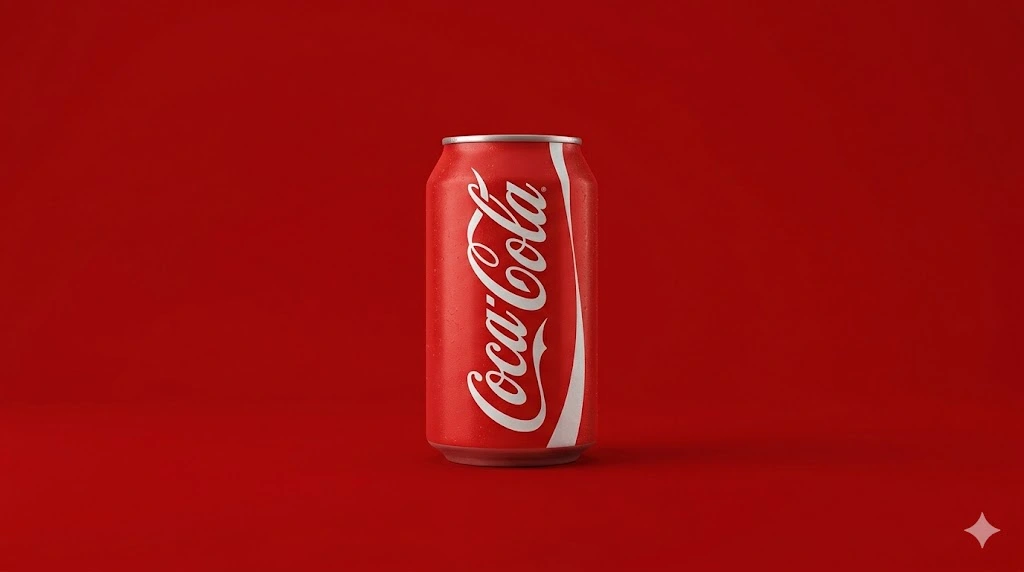


COCA-COLA
What is really in every can — and how the formula changed since 1886
39g of Sugar in One Can — That’s 9.75 Teaspoons
The WHO recommends limiting free sugars to 25g per day (about 6 teaspoons) for health benefits. One 355ml can of Coca-Cola contains 39g of sugar — 156% of that daily limit. All of it is added sugar from High-Fructose Corn Syrup (HFCS), with zero fibre to slow absorption. This makes it a liquid sugar spike with no nutritional buffering.
Sugar cubes in 1 can of Coca-Cola (355ml) — each cube = 4g sugar
■ Red = above WHO daily limit (25g) · ■ Orange = within limit · Total: 39g (9.75 tsp)
Nutrition Facts — Per 355ml Can
Based on the Canadian label (% Daily Values based on a 2,000 calorie diet). This matches the standard international Coca-Cola formulation.
| Nutrient | Per Can (355ml) | % Daily Value | What It Means | Verdict |
|---|---|---|---|---|
| Calories | 140 kcal | 7% | All calories come from sugar — zero nutritional value attached to them | ✖ Empty Calories 140 calories of pure sugar. No vitamins, minerals, fibre, or protein. |
| Total Fat | 0 g | 0% | No fat whatsoever | Zero Not a fat source. But the sugar can be converted to fat by the liver. |
| Saturated Fat | 0 g | 0% | None | ✓ Zero No saturated fat concern. |
| Trans Fat | 0 g | — | None | ✓ Zero No trans fat. |
| Cholesterol | 0 mg | 0% | None | ✓ Zero Not a concern. |
| Sodium | 25 mg | 1% | Small amount — present from carbonated water and HFCS processing | Low 25mg is negligible. Not a sodium concern at normal consumption. |
| Total Carbohydrate | 39 g | 13% | Entirely from added sugars — zero starch, zero fibre | ✖ All Sugar Every single carbohydrate gram is free sugar. Causes rapid blood glucose spike. |
| Sugars | 39 g | — | 100% of carbs are sugar — specifically HFCS (High Fructose Corn Syrup) | ✖ Very High 156% of WHO’s recommended daily free sugar limit. In one drink. |
| Protein | 0 g | — | None | Zero Not a protein source. |
| Vitamin A | 0% | 0% | None | None |
| Vitamin C | 0% | 0% | None | None |
| Calcium | 0% | 0% | None | None |
| Iron | 0% | 0% | None | None |
Every Ingredient Decoded
The full ingredient list for Coca-Cola Original Taste (2025 formula): Carbonated water, High-fructose corn syrup, Caramel color, Phosphoric acid, Natural flavors, Caffeine.
| Ingredient | Category | What It Does | Health Note | Verdict |
|---|---|---|---|---|
| Carbonated Water | Base / Carbonation | The liquid base — water infused with CO₂ gas under pressure creates the fizz | Carbonic acid from CO₂ is mildly acidic but far less erosive to teeth than phosphoric acid | ✓ Safe The most innocent ingredient in the list. |
| High-Fructose Corn Syrup (HFCS) | Sweetener | Provides all 39g of sugar and all 140 calories. Sweeter than regular sugar | HFCS is metabolised differently from glucose — fructose goes directly to the liver, can trigger fat accumulation (hepatic lipogenesis) and insulin resistance with regular high intake | ✖ Primary Concern Replaced original cane sugar in the 1980s. Linked to metabolic syndrome at high consumption. |
| Caramel Color (Class IV) | Coloring | Gives Coca-Cola its distinctive brown colour | Class IV caramel color (made with ammonium compounds) produces 4-MEI, a compound classified as possibly carcinogenic at high doses. The amount in a single can is far below concerning levels | ⚠ Note Safe at normal consumption. Not a reason to panic, but worth being aware of. |
| Phosphoric Acid | Acidity Regulator | Adds the sharp, tangy bite. Balances the sweetness and acts as a preservative | Phosphoric acid binds to calcium in the digestive tract, reducing absorption. Regular high consumption is associated with lower bone mineral density. Also highly erosive to tooth enamel — more so than citric acid | ✖ Tooth + Bone The ingredient most directly linked to dental erosion and bone health concerns with frequent use. |
| “Natural Flavors” | Flavoring | The famous secret formula — the precise blend is one of the most guarded trade secrets in history | Historically included Coca leaf extract and Kola nut extract (1886). Today the exact blend is unknown. “Natural flavors” is a regulatory label that can include hundreds of compounds | ⚠ Undisclosed Technically safe but entirely opaque. You cannot know exactly what you’re consuming here. |
| Caffeine | Stimulant | Adds mild stimulant effect — contributes to Coke’s addictiveness and the “pick-me-up” feeling | A 355ml can contains approximately 34mg of caffeine — less than a cup of coffee (95mg). Caffeine is safe for most adults but can cause sleep disruption, anxiety, and dependency with heavy daily use | ⚠ Mild Stimulant 34mg is a low dose. Avoid in evenings or if caffeine-sensitive. Children should limit intake. |
The Formula: 1886 vs 2025
Coca-Cola has changed dramatically since John Pemberton first brewed it as a patent medicine in Atlanta. The most significant shift happened in the 1980s when original cane sugar was replaced with High-Fructose Corn Syrup in the US market — and that change is still visible on today’s label.
1886 Formula
| Sweetener | Cane sugar |
| Carbonation | Carbonated water |
| Flavoring | Coca leaf extract, Kola nuts |
| Color | Caramel |
| Acidity | Citric & phosphoric acid |
| Caffeine | Included |
| Preservatives | None listed |
| Sugar | Not precisely known |
| Calories | Not precisely known |
2025 Formula
| Sweetener | High-fructose corn syrup |
| Carbonation | Carbonated water |
| Flavoring | “Natural flavors” (undisclosed) |
| Color | Caramel |
| Acidity | Phosphoric acid only |
| Caffeine | Included (~34mg/can) |
| Preservatives | Included |
| Sugar | 65g per 600ml bottle / 39g per can |
| Calories | 140 per can / 240 per bottle |
The Honest Verdict
Coca-Cola is an engineering marvel of taste — addictively sweet, perfectly carbonated, and globally consistent. But nutritionally, it is one of the most problematic beverages you can consume regularly. It delivers 140 empty calories with zero nutritional value, 39g of HFCS that stress the liver and spike blood sugar, and phosphoric acid that erodes enamel and competes with calcium absorption.
The rating below is purely nutritional. As an occasional treat — a cold Coke with a meal, or at a celebration — it’s a completely fine indulgence. As a daily habit, it’s one of the clearest contributors to metabolic disease in the modern diet.
👍 What It Has Going For It
- Zero fat, zero trans fat, zero cholesterol
- Low sodium (25mg) — not a BP concern
- Caffeine dose (34mg) is mild and manageable
- Consistent, high-quality taste profile
- Cane sugar version reportedly coming (Fall 2025)
👎 Why It’s Problematic
- 39g sugar = 156% of WHO daily free sugar limit
- HFCS metabolised differently than glucose — liver stress
- Phosphoric acid — dental erosion and bone calcium loss
- Caramel Class IV color — trace 4-MEI production
- Zero nutritional value — not one vitamin or mineral
- “Natural flavors” = completely undisclosed formula
- Caffeine creates mild dependency and consumption habit
⚠️ This review is based on publicly available nutrition label data and published nutritional science. It is not medical advice. Individuals with diabetes, dental concerns, or caffeine sensitivity should consult a healthcare professional regarding beverage choices.