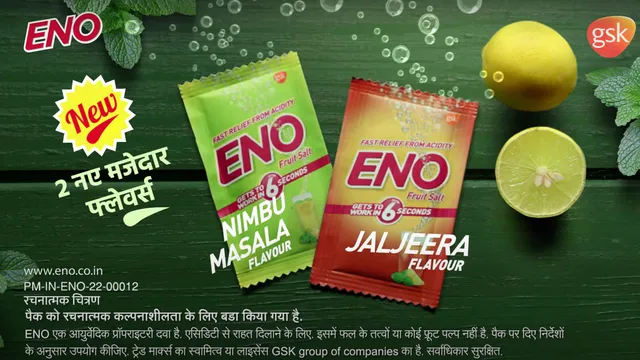


ENO Fruit Salt
India’s go-to antacid for acidity relief in 6 seconds — but is it safe to take every day?
It’s 2pm. You’ve just had a heavy lunch — spicy curry, rice, maybe a sweet. The familiar burning feeling starts rising. You reach for the ENO sachet, tear it open, drop it in a glass of water, watch it fizz, drink it quickly — and within seconds, the relief arrives. If this is your routine, you’re in very good company. ENO is India’s most trusted antacid, dispensed in millions of homes daily.
But here’s the question most people never stop to ask: what exactly is in that little green sachet? How does it work so fast? And when the packet says “don’t take for more than 14 days” — what happens if you ignore that warning? This review decodes every ingredient, explains the science behind the 6-second claim, and gives you the honest truth about whether ENO is safe for everyday use.
Important: ENO is a Medicine, Not a Food Supplement
ENO Fruit Salt is classified as an Ayurvedic Proprietary Medicine by GSK (GlaxoSmithKline), regulated under India’s Drugs & Cosmetics Act. It is not a food product or health supplement. This means different rules apply — dosage limits, contraindications, and the 14-day maximum use warning on the label are not suggestions. They are medical instructions that exist because overuse of ENO can cause clinically significant side effects including electrolyte imbalance, metabolic alkalosis, and kidney stress. Read this review with that context in mind.
How Does ENO Work in 6 Seconds?
The “6 seconds” claim refers to how quickly the effervescent reaction neutralises stomach acid once the solution reaches your stomach. Here’s the mechanism step by step:
The Fizz Reaction in Your Glass
When ENO hits water, the citric acid (Nimbukamlam) reacts with sodium bicarbonate (Svarjiksara) to produce CO₂ gas, water, and sodium citrate: NaHCO₃ + H₃Cit → Na₃Cit + H₂O + CO₂↑. This is what you see fizzing. The solution is now mildly alkaline and ready to neutralise acid.
Reaches Your Stomach in Seconds
Unlike tablet antacids that must dissolve in your stomach, ENO is already a liquid solution when you drink it. It travels from your mouth to your stomach in just seconds via the oesophagus — no dissolution time needed.
Neutralises Stomach Acid on Contact
The alkaline sodium bicarbonate/citrate solution immediately reacts with excess hydrochloric acid (HCl) in your stomach: NaHCO₃ + HCl → NaCl + H₂O + CO₂. This raises the stomach’s pH, reducing the acidity and the burning sensation.
The Burp — Not a Side Effect, It’s Part of the Mechanism
The CO₂ produced in the acid-neutralisation reaction causes the characteristic burp that often follows ENO. This is the mechanism working — the gas needs to escape. It also contributes to the feeling of immediate relief by releasing pressure.
Why 6 Seconds Specifically?
The “6 seconds” in GSK’s marketing refers to the time for the liquid to reach the stomach and begin neutralisation after swallowing — approximately the time for peristaltic transit from oesophagus to stomach. It’s a clinically approximate number, not laboratory-precise, but directionally accurate for liquid antacids vs tablet forms.
Every Ingredient Decoded
Full ingredient list per 5g sachet (as per label): Svarjiksara (Shudhi) 2.91g, Nimbukamlam (Shushkam) 2.04g, Sodium Saccharin 5mg, Permitted Colours (Brilliant Blue FCF & Tartrazine), Permitted Flavours. Contains no fruit pulp or fruit extracts.
| Ingredient | Ayurvedic Name | Amount / 5g | What It Is | How It Works | Verdict |
|---|---|---|---|---|---|
| Sodium Bicarbonate | Svarjiksara (Shudhi) | 2.91g | Common baking soda — NaHCO₃. A mild alkali that reacts with acids to produce CO₂ and water. The dominant active ingredient at 58% of the sachet weight | Directly neutralises HCl in the stomach, raising pH and reducing the acid burning sensation. The fastest-acting antacid available in OTC medicine | ✦ Core ingredient Proven, fast, effective antacid. The concern is its high sodium content — 2.91g NaHCO₃ contributes ~800mg of sodium per sachet. |
| Citric Acid (Dry) | Nimbukamlam (Shushkam) | 2.04g | Dehydrated citric acid from lemon — makes ENO effervescent when it hits water by reacting with sodium bicarbonate | Two roles: (1) Creates the fizzing reaction in water that pre-activates the solution before drinking; (2) Provides mild acidic buffer that partly counteracts the harshness of raw sodium bicarbonate, making the solution gentler on the stomach lining | ✦ Smart formulation The citric acid reaction converts harsh NaHCO₃ into gentler sodium citrate — a more stomach-friendly alkaline salt. This is why ENO is described as “gentle on your stomach.” |
| Ingredient | Amount | What It Is | Role | Safety Note | Verdict |
|---|---|---|---|---|---|
| Sodium Saccharin | 5mg / 5g | A synthetic artificial sweetener — approximately 300× sweeter than sugar. The oldest artificial sweetener, discovered in 1879. Zero calories | Masks the bitter/salty taste of sodium bicarbonate and sodium citrate — without it, ENO would taste like drinking salty washing soda | Approved by FSSAI and Codex for use in medicines and foods. At 5mg per sachet, well within safe limits. Older studies linking saccharin to bladder cancer in rats were at doses thousands of times higher than human consumption — not replicated in human studies. FDA removed saccharin from its potential carcinogen list in 2000 | ✓ Safe at 5mg Negligible dose — no health concern at this level. |
| Tartrazine (FD&C Yellow No. 5) | trace (q.s.) | Synthetic yellow azo dye — the same dye used in many soft drinks, candies, and medicines to achieve a lemon-yellow colour | Creates the lemon-yellow colour associated with the Lemon flavour variant of ENO | Tartrazine is one of the Southampton Six dyes studied for hyperactivity in children. EU requires a warning label. Tartrazine can also trigger allergic reactions and urticaria in aspirin-sensitive individuals. In India, it is permitted in medicines without a mandatory warning. Note: ENO should not be given to children under 12 regardless — making the colour concern secondary to the age restriction | ⚠ Azo dye Southampton Six concern. Aspirin-sensitive people may react. However, given ENO is for 12+ and occasional use, clinically low risk. |
| Brilliant Blue FCF (FD&C Blue No. 1) | trace (q.s.) | Synthetic blue dye — combined with Tartrazine yellow to create the green colour of the powder and solution | Gives ENO powder its characteristic light green colour when combined with Tartrazine. The blue+yellow=green visual associated with the Lemon variant | Brilliant Blue is generally considered safer than Tartrazine. Approved globally at food/medicine levels. Some concerns about high-dose absorption — not relevant at trace amounts in one antacid sachet | ⚠ Synthetic colour Used purely for visual appeal. No therapeutic purpose. At trace amounts in an occasional-use medicine, clinically not significant. |
| Permitted Flavours | q.s. | A blend of natural and/or synthetic lemon flavour compounds — the label states “Contains no fruit pulp or fruit extracts” | Creates the recognisable lemon taste that makes ENO palatable. Without flavouring, the drink would taste of salt and mild acid | Undisclosed specific compounds. “No fruit pulp or fruit extracts” means the lemon taste is entirely synthetic — it is a flavoured medicine, not a fruit-containing product. Safe at food/medicine approved levels | Synthetic lemon No real lemon — entirely nature-identical or artificial flavouring. No concerns at medicine doses. |
Official Dosage & Usage Guidelines
From the ENO label — these are medical instructions, not suggestions:
💉 ENO Fruit Salt — Official Instructions
Who Can Take It
Adults and children aged 12 years and over only. NOT for children under 12.
How to Take
One sachet dissolved in a glass (~150ml) of water. Drink immediately while still effervescent for maximum effect.
Frequency
May be repeated after 2–3 hours if symptoms persist. Maximum 2 doses in any 24-hour period.
Duration Limit — Critical
Do not take for more than 14 consecutive days. If symptoms persist beyond 14 days, consult a doctor immediately — persistent acidity may indicate a more serious underlying condition requiring proper diagnosis.
Who Should NOT Take ENO
People with liver, kidney, or heart disease · High blood pressure · Pregnant women (consult doctor first) · Breastfeeding women (consult doctor first) · Children under 12.
What Happens If You Overuse ENO?
The 14-day limit exists because chronic overuse of sodium bicarbonate-based antacids has documented clinical consequences:
⚡ Metabolic Alkalosis
- Excess bicarbonate absorption raises blood pH above normal range
- Symptoms: nausea, vomiting, muscle twitching, confusion
- Severe cases require hospitalisation and IV fluids
- More likely with daily use over weeks or months
⚙ Sodium Overload
- ~786mg sodium per sachet adds to dietary sodium
- Daily use = chronic sodium elevation → BP spike
- High-risk for people with hypertension or heart conditions
- 2 sachets/day = nearly 80% of WHO daily sodium limit
🧹 Electrolyte Imbalance
- Chronic alkalosis disrupts potassium, chloride, and calcium balance
- Low potassium (hypokalaemia) causes muscle weakness
- Low calcium can cause cramping and bone effects long-term
- Particularly dangerous for elderly users
🧡 Rebound Acidity
- The stomach compensates for alkaline environment by producing more acid
- After stopping ENO, acidity may return worse than before
- Creates dependency pattern — need for ENO increases over time
- Reason why daily ENO users often feel they “need” it
Persistent Acidity Needs a Doctor, Not Just ENO
If you need ENO more than a few times a week, your body is telling you something important. Frequent acidity can indicate GERD (Gastroesophageal Reflux Disease), H. pylori bacterial infection, hiatal hernia, or gastric ulcers — all of which require proper diagnosis and treatment. ENO relieves the symptom but does not treat the underlying cause. Using it daily delays proper diagnosis and can mask conditions that worsen without treatment. Please consult a gastroenterologist if you’re reaching for ENO more than 2–3 times per week.
ENO vs Other Antacids — How Does It Compare?
| Parameter | ENO (Sodium Bicarb) | Gelusil / Digene (Aluminium/Magnesium) | Pantoprazole / Omeprazole (PPI) | Pepto-Bismol (Bismuth) |
|---|---|---|---|---|
| Speed of action | ⚡ Seconds | Minutes | 1–3 hours (takes time to suppress acid production) | Minutes |
| Duration of relief | 30–60 min | 1–3 hours | 12–24 hours | 1–3 hours |
| Mechanism | Neutralises existing acid | Neutralises existing acid | Suppresses acid production at source | Coats stomach lining |
| Sodium content | ~786mg/dose ⚠ | Low | Low | Contains salicylate |
| Safe for daily use | Max 14 days ✖ | Short-term only | Short-term; long-term has Mg/B12 concerns | Short-term only |
| Treats underlying cause | No | No | Partially (reduces acid exposure) | No |
| OTC availability | ✓ Yes | ✓ Yes | Low dose OTC; higher dose prescription | ✓ Yes (not common in India) |
| Best for | Immediate occasional relief | Moderate symptoms, mild GERD | Chronic GERD, ulcers, frequent reflux | Nausea, diarrhoea, indigestion |
The Honest Verdict
ENO Fruit Salt is one of the most elegant and effective OTC antacids ever formulated — sodium bicarbonate and citric acid together create a pre-activated, instantly absorbable alkaline solution that reaches the stomach and works in seconds. For occasional acidity relief after a heavy meal, spicy food, or indigestion, ENO is genuinely excellent. The science behind the “6 seconds” claim is real.
The concerns are about how it’s used, not what it is. Too many people treat ENO as a daily post-meal ritual — a small green sachet after lunch and dinner, every day, indefinitely. The label explicitly prohibits this for good reason: chronic sodium bicarbonate use causes metabolic alkalosis, sodium overload, and rebound acidity. If you need ENO that often, you need a gastroenterologist, not more ENO.
👍 What Works — For Occasional Use
- Fastest-acting antacid available without a prescription
- Simple, well-understood chemistry — sodium bicarb + citric acid
- Liquid formulation means no dissolution delay vs tablets
- Citric acid pre-reaction makes it gentler than plain baking soda
- Highly affordable (₹9 per sachet)
- Widely available — even in remote areas
- Short ingredient list — no complex additives in active fraction
👎 Concerns — For Regular Use
- ~786mg sodium per sachet — high sodium load per dose
- Not safe for people with BP, kidney, heart, or liver conditions
- Maximum 14-day continuous use — not a daily supplement
- Not for children under 12
- Not confirmed safe in pregnancy without doctor guidance
- Rebound acidity with overuse creates dependency cycle
- Tartrazine (hyperactivity-linked azo dye) present as colour
- Treats symptom, not cause — masks serious conditions with daily use
- Contains no real lemon despite “Lemon Flavour” branding