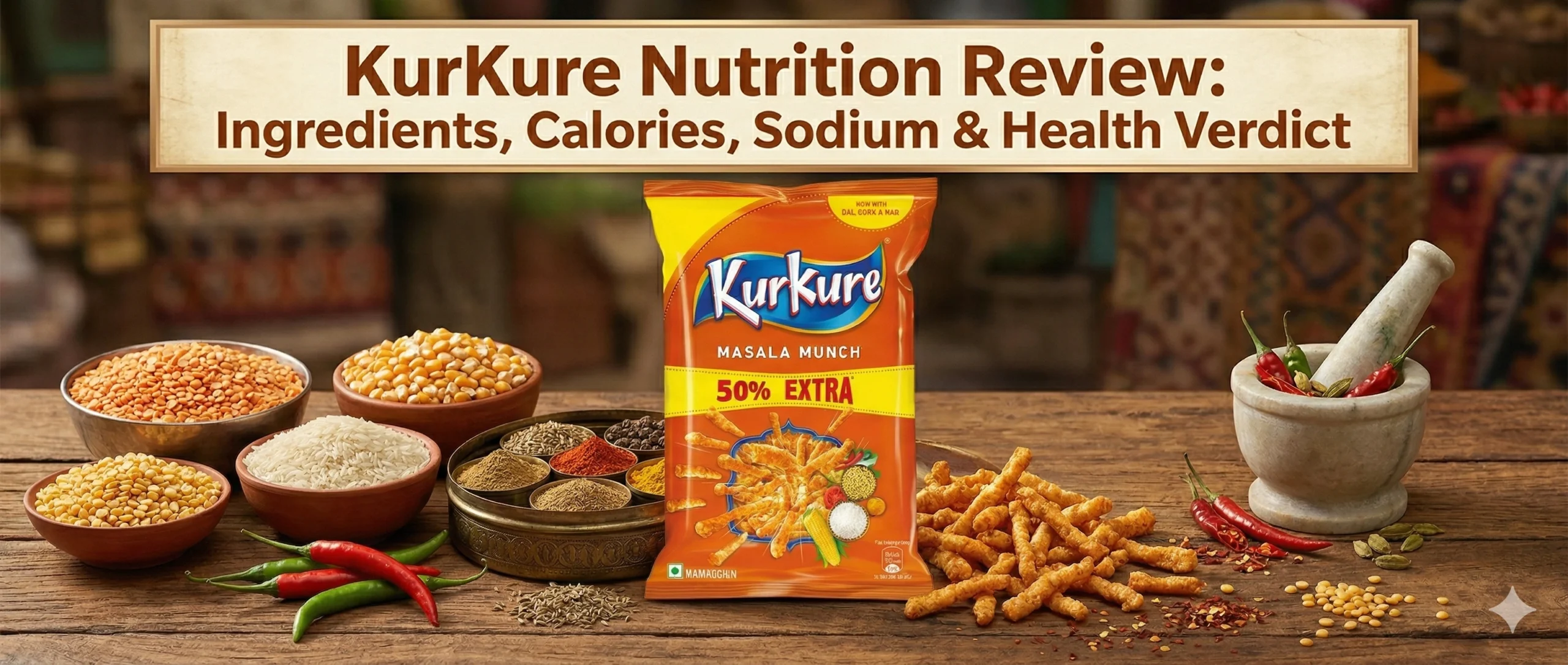

KURKURE MASALA MUNCH
The crunchy Indian classic — but is it just cleverly seasoned junk?
440mg Sodium Per Serving — 18% of Daily Limit in One Snack
The WHO recommends limiting sodium to 2,000mg per day. A single 50g serving of KurKure Masala Munch contains 440mg — 18% of that limit. Most people don’t stop at one serving. Two servings (100g — easy to do while watching a screen) brings you to 880mg, or 44% of your daily sodium budget, before accounting for meals. High sodium intake is directly linked to elevated blood pressure and cardiovascular risk.
Full Nutrition Facts — Per 50g Serving (50 pieces)
Based on the Canadian/international label. % Daily Value is based on a 2,000 calorie diet.
| Nutrient | Per 50g Serving | % Daily Value | What It Means | Verdict |
|---|---|---|---|---|
| Calories | 300 kcal | 15% | 15% of a 2000 cal diet in one snack bag — mostly from fat and refined carbs | ⚠ High for a snack For context, a full meal is typically 500–700 kcal. This snack is half a meal’s worth. |
| Total Fat | 19 g | 29% | Nearly 1/3 of daily fat in one snack — all from frying in vegetable oil | ✖ High 29% DV from a single snack. The frying process adds significant fat to the grain base. |
| Saturated Fat | 2.5 g | 13% | Moderate amount — typical for snacks fried in standard vegetable oil blends | ⚠ Moderate 13% DV is not alarming but adds up if you snack frequently throughout the day. |
| Trans Fat | 0 g | — | No industrial trans fat | ✓ Zero Clean on this front — no hydrogenated oils. |
| Cholesterol | 0 mg | 0% | Plant-based ingredients — no dietary cholesterol | ✓ Zero Not a cholesterol concern. |
| Sodium | 440 mg | 18% | Primary health concern — 18% of daily sodium from seasoning (salt + sodium in maltodextrin) | ✖ High The biggest nutritional flag. 440mg in one snack bag is significant. Easy to double by finishing the pack. |
| Carbohydrates | 28 g | 9% | From the grain blend — cornmeal, ricemeal, chickpea. Some complexity, some refinement | ⚠ Moderate 9% DV. Not as alarming as pure sugar drinks but still largely refined carbs. |
| Dietary Fibre | 2 g | 7% | From chickpea meal and corn — a modest but real contribution | ✓ Some 2g fibre is actually decent for a snack. Chickpea meal contributes meaningfully here. |
| Sugars | 0 g | — | Zero free sugars — the sweetness comes entirely from the seasoning spices, not added sugar | ✓ Zero A genuine positive. No sugar dump unlike most packaged snacks. |
| Protein | 3 g | — | From chickpea meal and enriched cornmeal — a small but real amount | ✓ Modest Not a protein food, but 3g is better than zero (like chips or cola). Chickpea contributes meaningfully. |
| Iron | 8% DV | 8% | From enriched cornmeal fortification — iron added back post-processing | ✓ Noteworthy 8% iron is actually a useful contribution, especially for vegetarians. |
| Niacin (B3) | 6% DV | 6% | From enriched cornmeal — B vitamin added during fortification | ✓ Present Small but real vitamin contribution from the fortified grain. |
| Vitamin A | 2% DV | 2% | Trace amount from spices in the masala seasoning | Trace Negligible — not a meaningful source. |
Every Ingredient Decoded
Full ingredient list: Grain Blend (Ricemeal, Enriched Cornmeal [Cornmeal, Iron, Niacin, Thiamine, Riboflavin, Folic Acid], Chickpea Meal), Vegetable Oil, Seasoning (Spices, Salt, Onion Powder, Corn Maltodextrin, Mango Powder, Garlic Powder, Sugar, Tomato Powder, Natural Flavours [contains Milk, Paprika Extract, Mustard Seed Oil]).
| Ingredient | What It Is | Role | Verdict |
|---|---|---|---|
| Ricemeal | Ground rice — provides lightness and crunch to the texture | Base structure — gives KurKure its hollow, airy crunch when extruded and fried | ✓ Simple A standard, clean grain base. No concerns. |
| Enriched Cornmeal | Ground corn with added B vitamins (Niacin, Thiamine, Riboflavin, Folic Acid) and Iron | Primary grain base — provides most of the carbohydrate structure. “Enriched” means vitamins lost during processing are added back | ✦ Fortified Enrichment is a genuine positive — especially iron and B vitamins for Indian diets where deficiencies are common. |
| Chickpea Meal | Ground chickpea (besan) — adds protein and a slight nuttiness | Contributes the 3g of protein per serving and helps with the 2g dietary fibre. Also adds structural density | ✦ Best ingredient The nutritional hero of this snack — adds real protein and fibre. Classic Indian ingredient used well. |
| Ingredient | What It Is | Role | Verdict |
|---|---|---|---|
| Vegetable Oil | Unspecified blend of plant oils — likely palm oil, sunflower oil or a combination | Used for frying the extruded grain pieces — responsible for the 19g total fat and 171 kcal from fat per serving | ⚠ Opaque “Vegetable oil” without specification is vague. Could be palm oil (high saturated fat) or refined sunflower oil. PepsiCo uses different blends in different markets. Worth noting but not alarming at these saturated fat levels. |
| Ingredient | What It Is | Role | Verdict |
|---|---|---|---|
| Spices | Generic term for the masala base — likely cumin, coriander, chilli, turmeric, and other Indian spices | Core flavour — provides the bold, complex masala character | ✓ Natural Real spices are genuinely beneficial — anti-inflammatory, antioxidant, digestive. No concern here. |
| Salt | Sodium chloride — the primary contributor to 440mg sodium | Flavour intensifier and preservative | ✖ Primary sodium source The main driver of the high sodium concern. Used heavily to enhance the addictive crunch-and-salt experience. |
| Onion Powder | Dehydrated ground onion | Adds savoury, umami depth to the masala | ✓ Natural Derived from real onion. No concerns. |
| Corn Maltodextrin | A processed carbohydrate derived from corn starch — broken down into a fine, neutral-tasting powder | Carrier for seasoning — helps spices adhere evenly to the snack surface. Also improves mouthfeel | ⚠ Processed filler Maltodextrin has a very high glycaemic index (GI ~110, higher than sugar). It spikes blood glucose rapidly. Small amounts in seasoning are generally not a concern, but it is a processed additive — not a natural food ingredient. |
| Mango Powder (Amchur) | Dried green mango powder — a classic Indian souring agent | Provides the characteristic tangy, sour kick in the masala | ✦ Traditional Amchur is a genuinely Indian, natural ingredient. Adds real flavour with no nutritional concerns. |
| Garlic Powder | Dehydrated ground garlic | Adds pungent savoury depth and umami | ✓ Natural Derived from real garlic. Small amounts beneficial. No concerns. |
| Sugar | Regular sucrose — small amount in the seasoning blend | Balances the heat and acidity of the masala — creates the classic “sweet-sour-spicy” balance | Trace Listed late in ingredients — very small amount. Contributes to the 0g sugars on the label (rounds to zero). Not a concern. |
| Tomato Powder | Dehydrated tomato — adds colour and mild acidity | Contributes to colour and adds a subtle tangy-savoury note to the masala | ✓ Natural Real tomato — provides lycopene and natural acids. No concerns. |
| Natural Flavours (contains Milk, Paprika Extract, Mustard Seed Oil) | A blend of flavour compounds derived from natural sources, including dairy and mustard | Enhances and rounds out the masala flavour profile. Paprika extract also contributes to the red-orange colour | ✖ Allergen Alert Contains both MILK and MUSTARD — two of the top allergens. Paprika extract is a natural colourant (safe). The milk component makes this unsuitable for vegans and dairy-allergic individuals despite being a savoury grain snack. |
The Honest Verdict
KurKure is a well-engineered snack — the combination of extruded grain, frying, and a complex masala seasoning creates an addictive sensory experience. The chickpea meal and fortified cornmeal are genuine positives: real protein, some fibre, and iron make this slightly more nutritious than pure-starch crisps.
But the high sodium (440mg), the calorie density from frying (300 kcal/50g), the corn maltodextrin, and the hidden allergens (milk and mustard) mean this is firmly an occasional treat. The real danger is portion size — 50g is not a lot, and most people eat well beyond that in a single sitting.
👍 What Works
- Chickpea meal — real protein (3g) and fibre (2g)
- Enriched cornmeal — iron and B vitamins fortified back in
- Zero trans fat — no hydrogenated oils
- Zero added sugars — surprisingly clean on this front
- Real spices — mango powder, garlic, tomato, spices
- 8% iron DV — useful for vegetarian Indian diets
👎 The Concerns
- 440mg sodium — 18% DV in one serving, easy to double
- 19g fat — 57% of calories from frying oil
- Contains MILK — hidden allergen in natural flavours
- Contains MUSTARD — second hidden allergen
- Corn maltodextrin — high GI processed carb carrier
- “Vegetable oil” — unspecified; may include palm oil
- 300 kcal for 50g is calorie-dense with low satiety
⚠️ This review is based on nutritional label data and ingredient analysis. It is not medical advice. People with milk, mustard, or other food allergies must check labels carefully. Individuals managing blood pressure or cardiovascular conditions should monitor sodium intake from all sources.