Oreo Sandwich Biscuit — Is It Worth the Hype?
An honest look at what’s really inside the world’s favourite cookie
Walk into any grocery store — from New Delhi to New York — and you’ll find the iconic blue packet staring back at you from the biscuit aisle. Oreo is one of the most recognised snack brands on the planet. But once you look past the nostalgia and the satisfying twist-lick-dunk ritual, what are you actually eating?
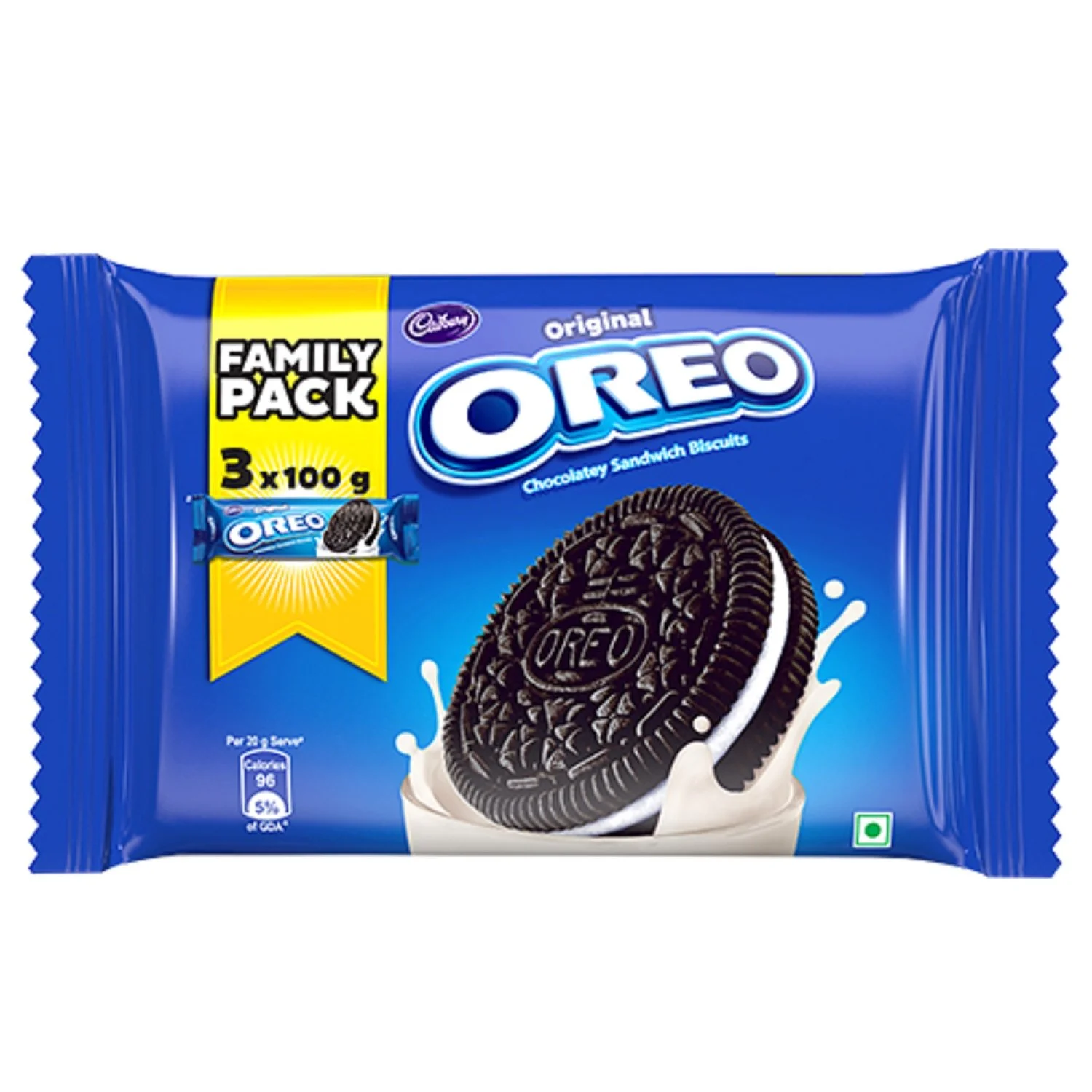
I spent time comparing the US Oreo (made by Nabisco/Mondelez) and the Indian Cadbury Oreo (manufactured locally for the Indian market). The ingredients differ more than you might expect, and neither version earns a clean bill of health for daily snacking.
“There is nothing wrong with enjoying an Oreo. The problem is when the packet becomes a daily ritual.”
Ingredients Comparison
The table below breaks down what goes into each variant and flags ingredients worth knowing about.
| Ingredient | US Oreo (Nabisco) | India Oreo — Choco (Cadbury) | India Oreo — Vanilla (Cadbury) | Health Note |
|---|---|---|---|---|
| Base flour | Unbleached enriched wheat flour | Refined wheat flour (Maida) | Refined wheat flour (Maida) | Refined carb |
| Sweetener | Sugar | Sugar + Invert Sugar | Sugar + Invert Sugar | High sugar |
| Fat / Oil | Palm and/or Canola Oil | Fractionated Fat + Palmolein | Fractionated Fat + Palmolein | Saturated fat |
| Cocoa | Cocoa processed with alkali | Cocoa solids (3%) | Cocoa solids (2%) | Low but present |
| Sweetener (extra) | High Fructose Corn Syrup | None listed | None listed | HFCS — avoid |
| Leavening | Baking soda / Calcium phosphate | Agents 500(ii), 503(ii) | Agents 500(ii), 503(ii) | Generally safe |
| Starch | Not listed | Starch | Starch | Adds carbs |
| Emulsifier | Soy Lecithin | Emulsifier 322 | Emulsifier 322 | Common, safe |
| Flavour | Artificial Flavor | Nature Identical Flavouring | Nature Identical Flavouring | Synthetic |
| Salt | Salt | Iodised Salt | Iodised Salt | Iodised is better |
| Allergens | Wheat, Soy | Wheat, Sulphite, Soy. May contain Milk, Barley | Wheat, Sulphite, Soy. May contain Milk, Barley | Multiple allergens |
Nutritional Snapshot (US Pack)
Per serving of one pack, the US Oreo packs 210 calories, 9g of total fat (12% DV), 2.5g saturated fat, 33g total carbohydrates, and a concerning 18g of sugar — all of which is added sugar, representing 36% of your daily recommended intake in a single small serving. Protein is minimal at just 2g.
Pros and Cons
✔ Pros
- Widely available and affordable
- Satisfying taste and texture
- Shelf-stable, convenient snack
- Indian variant uses iodised salt
- Consistent quality across packs
✘ Cons
- Very high added sugar content
- US version contains HFCS
- Refined flour (Maida) — low fibre
- Palm oil linked to health concerns
- Multiple allergen warnings
- Near-zero nutritional value
- Artificial / synthetic flavouring
Should You Eat Oreos Daily?
The short answer is no. Oreos are an ultra-processed food. They are made primarily from refined flour, added sugars, and processed fats — a combination that nutritionists consistently link to spikes in blood sugar, poor satiety, and long-term metabolic issues when eaten regularly.
The Indian variant uses Maida (refined wheat flour), which is stripped of bran and germ, leaving very little fibre or micronutrient value. The US version adds High Fructose Corn Syrup on top of regular sugar, making it arguably worse on the sugar front. Neither version has meaningful amounts of protein, vitamins, or minerals.
That said, Oreo is honest about what it is: a sweet biscuit, not a health food. It lists its ingredients clearly, and for those without wheat or soy allergies, there is no hidden danger in eating one occasionally. The issue is purely one of moderation and expectation.
The Indian vs US Version — Which Is “Better”?
Neither earns a trophy, but the Indian Cadbury Oreo skips HFCS (a big plus), uses iodised salt, and has a slightly simpler additive profile. The US version benefits from a longer history of regulatory scrutiny. On balance, both are nutritionally poor but broadly equivalent in risk for a healthy adult eating them occasionally.
Final Verdict
Oreo is the world’s best-selling cookie for a reason — it tastes genuinely good. But “tastes good” and “good for you” are very different things. With high added sugar, refined flour, minimal protein, and multiple allergens, it scores a 4 out of 10 overall. Enjoy it guilt-free as a weekend treat or a dessert ingredient. But if you’re reaching for the blue packet every single day, it is time to find a better daily snack habit.