
STING
ENERGY
Caffeine, taurine, ginseng, B vitamins — and a preservative combination worth knowing about
Sting is NOT suitable for: Children, Pregnant Women, or Caffeine-Sensitive Individuals
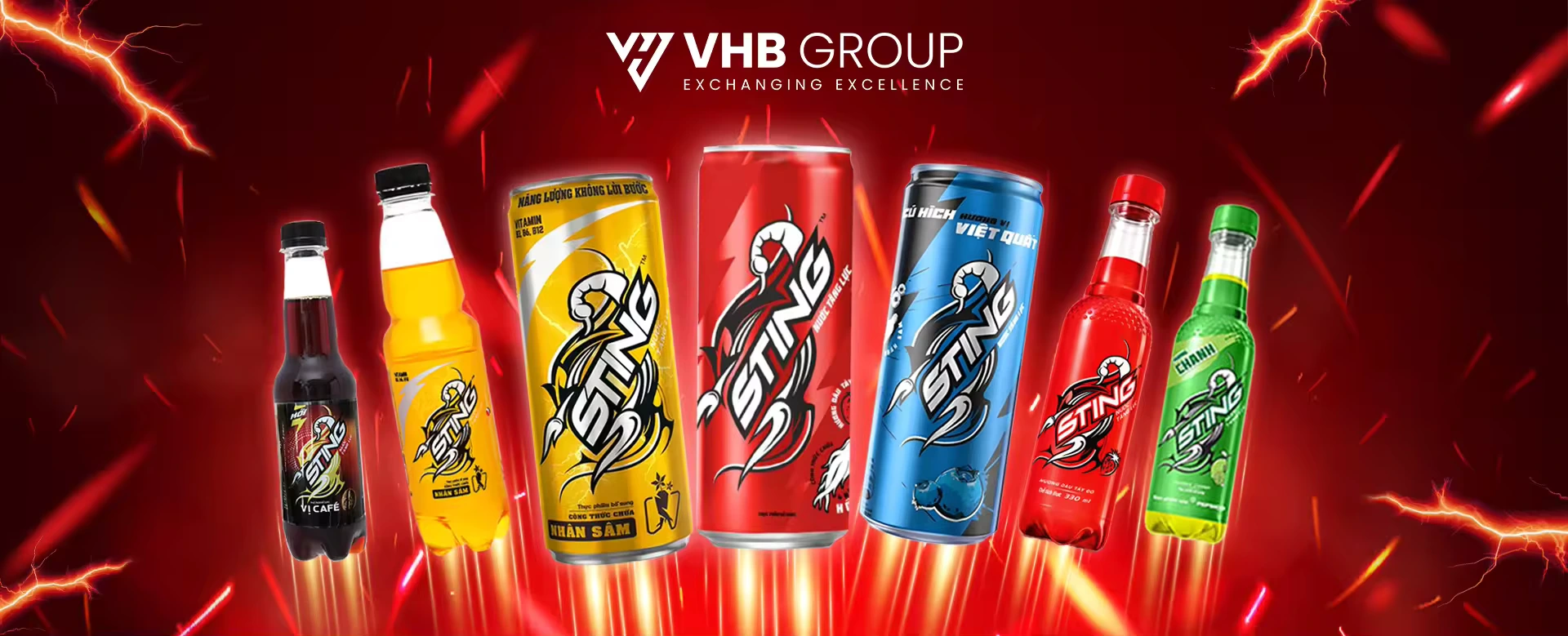
The Vietnamese label (Image 3) carries a statutory warning: “Sản phẩm có thể không phù hợp với người nhạy cảm với cafein, trẻ em và phụ nữ đang mang thai” — which translates to: “This product may not be suitable for people sensitive to caffeine, children, and pregnant women.” This is the standard energy drink warning. With ~32mg caffeine per 100ml (and typical consumption of 250–330ml per serving = 80–105mg caffeine per can), Sting is a stimulant beverage. Children, pregnant women, and people with heart conditions, anxiety disorders, or caffeine sensitivity should avoid it entirely.
All 3 Flavours at a Glance
🍅 Berry Blast / Strawberry
28 kcal · 6.8g added sugar · B3 (25% RDA) · B6 (17%) · B12 (17%) · 32mg sodium
Red can · Carbonated · Contains sugar + B vitamins
⚡ Gold Rush (Original)
~45 kcal (est.) · ~11g sugar · Taurine 305mg/L · Caffeine · Ginseng 40mg/L · B3/B6/B12
Gold/Red can · The flagship formula
🍰 Blue Current (Blueberry)
~29 kcal/100ml · 22.1g sugar/320ml · Taurine 87mg/320ml · Inositol · Sucralose + Acesulfame K · Ginseng
Blue can · Contains two artificial sweeteners
Nutrition Facts — Berry Blast Per 100ml
From Image 2 (red Sting label). This is the most detailed Indian label available. Serving per can = approximately 250ml.
| Nutrient | Per 100ml | Per 250ml Can | % RDA / 250ml | What It Means | Verdict |
|---|---|---|---|---|---|
| Energy | 28 kcal | 70 kcal | ~4% | Lower calorie than fruit drinks but still entirely from sugar — no nutritional value attached | ⚠ Empty calories Sugar calories with zero fibre, fat, or protein buffering. |
| Carbohydrate | 7 g | 17.5 g | — | Almost entirely sugar (6.8g of 7g = 97%) | ✖ Near-total sugar Rapid glycaemic spike with no buffer. |
| Added Sugars | 6.8 g | 17 g | 34% | All sugar is added — no natural fruit sugars. 17g per 250ml can = 68% of WHO daily limit | ✖ High One can = 68% of daily added sugar limit before any food. |
| Total Fat | 0 g | 0 g | 0% | No fat | ✓ Zero |
| Saturated Fat | 0 g | 0 g | 0% | No saturated fat | ✓ Zero |
| Trans Fat | 0 g | 0 g | 0% | No trans fat | ✓ Zero |
| Sodium | 32 mg | 80 mg | 4% | From sodium citrate (acidity regulator) — low, not a concern | ✓ Low Not a sodium concern. |
| Vitamin B3 (Niacin) | 1.4 mg | 3.5 mg | 25% | Added B vitamin — supports energy metabolism in cells | ✦ Meaningful 25% RDA per serving — genuine functional contribution. |
| Vitamin B6 | 0.13 mg | 0.33 mg | 17% | Added B vitamin — involved in protein metabolism and neurotransmitter synthesis | ✦ Meaningful 17% RDA — real nutritional contribution. |
| Vitamin B12 | 0.15 mcg | 0.38 mcg | 17% | Added Cyanocobalamin — critical for nerve function and energy metabolism | ✦ Valuable in India B12 deficiency is common in India. 17% RDA is a genuine positive — especially for vegetarians. |
Caffeine in Context — How Sting Compares
Sting contains approximately 32mg caffeine per 100ml (inferred from industry data and the Blue Current formula which lists “Cafein” in the premix). A typical 250ml serving delivers ~80mg caffeine.
Caffeine per typical serving comparison
Every Ingredient Decoded — All 3 Flavours
| Ingredient | What It Is | Role | Health Note | Verdict |
|---|---|---|---|---|
| Carbonated Water | CO₂-infused purified water | Base of the drink — provides the fizz and effervescence | Safe. Carbonic acid is mildly acidic but far less erosive than citric or phosphoric acid at equivalent pH | ✓ Clean |
| Sugar | Refined cane sugar — primary sweetener | Provides 6.8g added sugar per 100ml and the rapid energy spike associated with the drink | The sugar spike combined with caffeine creates the initial “energy” sensation — but it’s largely a sugar rush, not true sustained energy. Leads to a crash ~30–60 mins later | ✖ Added sugar concern Same issue as all sweetened energy drinks. |
| INS 330 (Citric Acid) | Acidity regulator from citrus fermentation | pH control, tartness, shelf stability | GRAS status. Can contribute to dental enamel erosion — especially with frequent sipping | ✓ Safe |
| INS 331 (Sodium Citrate) | Sodium salt of citric acid — buffer | Stabilises and buffers pH alongside citric acid. Contributes to the 32mg sodium per 100ml | Safe food-grade buffer. No concerns at food levels | ✓ Safe |
| INS 452 (Polyphosphate) | Sodium polyphosphate — stabiliser/sequestrant | Maintains beverage clarity and prevents mineral precipitation during storage and carbonation | GRAS at food levels. Some concerns about very high dietary phosphate intake generally — at amounts in one energy drink, not significant | Acceptable Used in small amounts. No significant concerns. |
| Ingredient | Amount | What It Does | Evidence & Safety | Verdict |
|---|---|---|---|---|
| Taurine | 305mg/L (~76mg per 250ml) | An amino acid naturally found in meat and fish. In energy drinks: claimed to enhance physical performance, reduce mental fatigue, and work synergistically with caffeine | Taurine itself has strong safety data at food levels — it is naturally present in the body and diet. Evidence for performance benefits from taurine supplementation at drink doses is mixed. No known harm at typical energy drink quantities. Concerns: some older animal studies at extreme doses showed cardiac effects — not replicated in humans at food levels | ✓ Generally safe Well-studied, widely used. Benefits at these doses are modest but the safety profile is good. |
| Caffeine | ~32mg/100ml (~80mg per 250ml) | The primary active ingredient — stimulates the central nervous system, enhances alertness, reduces perceived fatigue, and temporarily improves concentration | 80mg per serving is moderate — equivalent to one strong cup of tea or one Red Bull. Safe for healthy adults at 1–2 cans. FSSAI limit is 320mg/L (~80mg per 250ml). Concerns: Insomnia if consumed after 2pm; anxiety/palpitations in sensitive individuals; dependency with daily use; dangerous in excess (FDA considers >400mg/day as above safe daily limit for adults) | ⚠ Stimulant — use mindfully 80mg per can is manageable for healthy adults. Not for children, pregnant women, or heart patients. |
| Inositol | ~15–49mg per serving | A naturally occurring sugar alcohol involved in cell signalling, nerve function, and fat metabolism. Added to energy drinks for cognitive performance claims | Generally recognised as safe. Natural component of many foods. Evidence for performance benefits at energy drink doses is weak — the therapeutic doses in clinical studies are much higher (1–2g/day vs milligrams in a drink) | ✓ Safe but limited benefit Safe ingredient. Dose in Sting is too low for clinically meaningful effect. |
| Ginseng Extract (Panax) | 40mg/L (~10mg per 250ml) | Adaptogenic herb — claimed benefits include reduced mental fatigue, improved physical endurance, and stress resistance | Real ginseng (Panax) has evidence-backed benefits for energy and cognition at 200–400mg/day. 10mg per 250ml can is ~2–5% of the therapeutic dose. The ginseng in Sting is largely a marketing ingredient at this dosage — not a functional dose | ⚠ Token dose Real ginseng is beneficial — but 10mg is below meaningful therapeutic range. Primarily a label claim. |
| Vitamin B3 (Niacin) | 1.4mg/100ml (25% RDA/serving) | B vitamin essential for energy metabolism — helps convert food to cellular energy via NAD+ pathways | At 25% RDA per serving, this is a genuine functional contribution. Niacin at very high doses (1000mg+) causes flushing — at 3.5mg per 250ml serving, absolutely no concern | ✦ Genuine benefit One of the few genuinely useful ingredients in Sting. |
| Vitamin B6 | 0.13mg/100ml (17% RDA/serving) | Essential for protein metabolism, neurotransmitter synthesis (including serotonin and dopamine), and red blood cell formation | 17% RDA per serving is meaningful. At typical dietary intake levels, supplementation is safe and beneficial — especially for vegetarians | ✦ Genuine benefit Another genuinely useful ingredient. |
| Vitamin B12 (Cyanocobalamin) | 0.15mcg/100ml (17% RDA/serving) | Critical for nerve function, DNA synthesis, and energy metabolism. Deficiency causes fatigue and neurological symptoms | B12 deficiency is endemic in India — particularly among vegetarians. 17% RDA per 250ml serving is a meaningful contribution. Cyanocobalamin is the most stable synthetic form | ✦ Most valuable ingredient In the Indian context, B12 supplementation via any source is welcome. One of the best ingredients in Sting. |
| INS Code | Name | Found In | Purpose | Key Concern | Verdict |
|---|---|---|---|---|---|
| INS 211 | Sodium Benzoate | All Sting flavours | Primary antimicrobial preservative — prevents bacterial, yeast, and mould growth | Combined with Vitamin C (ascorbic acid — which may be present as antioxidant or from B-vitamin premix sources), INS 211 can form trace benzene. In acidic carbonated drinks, this reaction occurs more readily. Sting uses INS 211 in an acidic carbonated environment with B vitamins — the benzene risk is low at regulatory levels but worth noting for daily heavy users | ⚠ Benzene-forming potential Regulatory bodies allow it at current levels. Risk is from cumulative daily consumption over years. Prefer not to drink multiple cans daily. |
| INS 202 | Potassium Sorbate | All Sting flavours | Secondary broad-spectrum preservative — complements sodium benzoate | One of the safest preservatives. GRAS status. Does NOT form benzene with Vitamin C | ✓ Safe Well-studied, no significant concerns. |
| INS 385 | Disodium EDTA | Gold Rush, Blue Current | Chelating antioxidant — binds trace metal ions that would otherwise accelerate oxidation and spoilage | GRAS at food levels. Small amounts consumed. EDTA can bind minerals in the gut — high-dose long-term exposure reduces mineral absorption. At one-can-a-day levels, not a significant concern | ⚠ Minor note Safe at food levels. Worth noting for very frequent consumers. |
| INS 133 (Brilliant Blue FCF) | Synthetic blue azo dye | Blue Current only | Provides the characteristic electric blue colour of the Blue Current variant | Brilliant Blue FCF is a synthetic dye. Like other azo dyes, it was included in the UK FSA’s Southampton study. While INS 133 itself is not one of the “Southampton Six” that carry mandatory EU warnings, it is a synthetic dye whose metabolites are not fully characterised. Some countries restrict its use in food for children | ⚠ Synthetic colour — avoid for children The blue colour of this variant serves no nutritional purpose. Parents should avoid Blue Current for young children. |
Blue Current uses a hybrid sugar + artificial sweetener formulation — sugar for initial taste plus sucralose and acesulfame K for sustained sweetness at lower sugar levels.
| Ingredient | INS Code | What It Is | Safety Note | Verdict |
|---|---|---|---|---|
| Sucralose | INS 955 | Chlorinated sucrose derivative — 600× sweeter than sugar. Zero calories. Passes through the body largely undigested | Approved by FSSAI, FDA, EFSA. Recent large European cohort study (2023) associated high sucralose intake with increased cardiovascular event risk — findings not yet confirmed. At one-can-a-day levels, well below concerning doses. Some studies suggest sucralose may alter gut microbiome composition at higher doses | ⚠ Emerging concerns Safe by current regulatory standards. Emerging research on cardiovascular risk warrants monitoring. Not for children or pregnant women. |
| Acesulfame Potassium | INS 950 | Synthetic potassium salt sweetener — 200× sweeter than sugar. Zero calories. Often used alongside sucralose for a rounded sweet taste profile | Approved globally. Some older animal studies raised questions about carcinogenicity at extreme doses — not replicated at food levels in human studies. EFSA reviewed extensively in 2021 and confirmed safety at current intake levels | ✓ Safe by current evidence Widely reviewed and approved. Choose other flavours if you prefer to avoid artificial sweeteners. |
Sting vs Red Bull — How Do They Compare?
| Parameter | Sting Berry (250ml) | Sting Gold Rush (250ml est.) | Sting Blue Current (320ml) | Red Bull (250ml) |
|---|---|---|---|---|
| Calories | 70 kcal | ~112 kcal | 93 kcal | 113 kcal |
| Sugar | 17g | ~27g | 22.1g | 27g |
| Caffeine | ~80mg | ~80mg | ~80mg | 80mg |
| Taurine | ~76mg | ~76mg | 87mg | 1000mg |
| B3/B6/B12 | 25%/17%/17% RDA | Similar | 29%/61.5% RDA | 25%/250%/80% RDA |
| Ginseng | No | Yes (~10mg) | Yes | No |
| Artificial sweeteners | No | No | Sucralose + Ace-K | Sugar-free variant only |
| Preservatives | INS 211 + 202 | INS 211 + 202 | INS 211 + 202 | None (tetrapak aseptic) |
| Synthetic colour | Red dye | Orange/yellow dye | Brilliant Blue (INS 133) | Caramel colour |
| Price (approx.) | ₹20–25 | ₹20–25 | ₹30–40 | ₹120–150 |
The Honest Verdict
Sting is an honest-value energy drink that delivers what it promises — a caffeine + sugar + B vitamin kick at a price point that makes it accessible to every demographic in India. The B vitamins (especially B12) are genuinely valuable additions, and the caffeine dose (~80mg) is comparable to international energy drinks at a fraction of the cost.
The concerns are real: the INS 211 (sodium benzoate) + acidity combination creates a low-level benzene-forming environment. The sugar content (17g per 250ml can) is significant. The synthetic colours (including Brilliant Blue in Blue Current) are unnecessary. And the ginseng at 10mg/250ml is a marketing dose, not a therapeutic one.
Consumed as an occasional energy boost by healthy adults — one can when needed — Sting is a reasonable, inexpensive option. Consumed daily as a habit, the cumulative effects of added sugar, sodium benzoate, and caffeine dependency become genuine concerns.
👍 What Works
- B12 (17% RDA) — genuinely valuable for vegetarians in India
- B3 (25% RDA) and B6 (17% RDA) — real energy metabolism support
- ~80mg caffeine — delivers the alertness promise
- Taurine — good safety profile, modest performance data
- Zero fat, zero trans fat
- Excellent price-to-caffeine ratio vs international brands
- Blue Current: lower sugar with artificial sweeteners (if you prefer less sugar)
👎 The Concerns
- NOT for children, pregnant women, or caffeine-sensitive people
- INS 211 (sodium benzoate) in acidic carbonated drink — benzene risk
- 6.8–11g added sugar per 100ml depending on flavour
- Ginseng at ~10mg/250ml — token dose, not therapeutic
- Synthetic colours — red, orange, Brilliant Blue FCF (Blue Current)
- Blue Current: sucralose + acesulfame K — emerging cardiovascular concerns
- Caffeine dependency with daily habitual use
- EDTA (INS 385) — chelates minerals with very frequent consumption
⚠️ This review is based on ingredient label data and published food science. It is not medical advice. Sting contains caffeine and is not appropriate for children, pregnant women, people with heart conditions, anxiety disorders, or caffeine sensitivity. Do not mix with alcohol. Do not consume while exercising in heat. Maximum 1 can per day for healthy adults.