Are You Addicted to
Social Media?
Billions scroll daily without realising the toll it takes on their mind. Here’s the science — and the escape plan.
Section 01 — Introduction
What Is Social Media Addiction?
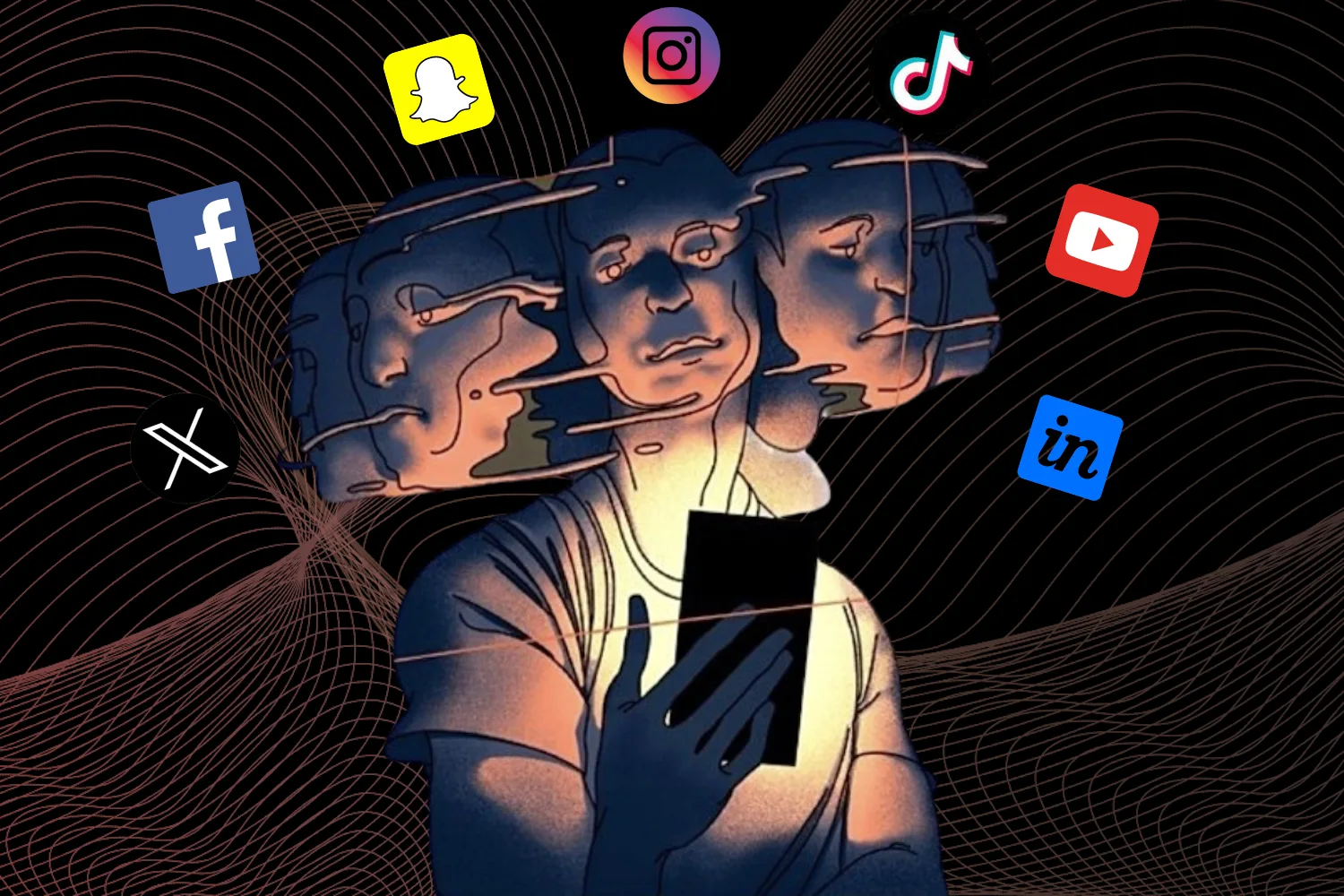
Social media addiction is a compulsive, uncontrollable urge to check, scroll, post, and engage with social platforms — even when it actively harms your health, work, or relationships. It is not about how many hours you spend online; it is about whether you are in control of your use.
While no official DSM-5 diagnosis yet exists, behavioural health experts in 2026 widely classify it under problematic internet use and treat it with the same frameworks as other behavioural addictions such as gambling disorder.
“Social media was designed to be compelling. Understanding that fact is the first act of freedom.”
Some experts estimate that up to 10% of people in the United States meet criteria for social media addiction — and with AI-powered feeds making content infinitely personalised in 2026, that figure is likely climbing. Not everyone who uses social media will develop an addiction. But awareness is your greatest protection.
Section 02 — The Science
Why Is Social Media So Addicting?
The dopamine loop — your brain on social media
Every notification, like, or viral post triggers a dopamine release in your brain’s reward circuit. Your brain learns: social media = pleasure = repeat. As dopamine fades, the craving returns — creating a loop identical to other addictions.
Platforms are not neutrally designed. In 2026, recommendation engines powered by large language models track every micro-interaction — how long you pause, how fast you scroll — to surface content calibrated to your personal psychological triggers.
The variable reward schedule is especially powerful. Sometimes a post gets 2 likes, sometimes 200. That unpredictability mirrors what makes slot machines irresistible. Your brain chases the next hit. Social comparison is another driver — exposure to curated highlight reels triggers inadequacy and FOMO, which you attempt to soothe by returning to the app.
Section 03 — Platforms
How Each Platform Hooks You
Aesthetic highlight reels fuel social comparison. Reels autoplay endlessly, removing natural stopping points from every session.
Outrage-optimised feeds, group notifications, and event alerts constantly pull you back in throughout the day.
X / Twitter
Real-time trending topics and debate threads create anxiety-driven FOMO — the fear of missing a cultural “moment.”
Group chats and broadcasts create social obligation — leaving messages unread feels socially unacceptable.
Snapchat
Streaks and disappearing messages manufacture daily urgency — missing a day feels like losing something real.
YouTube
Autoplay queues and algorithmically perfect recommendations make stopping mid-session feel almost impossible.
Section 04 — Effects
The Downsides of Social Media Addiction
Occasional use is harmless. But overuse carries documented negative effects across every area of your life:
Anxiety & depression
Heavy use is directly linked to increased rates of anxiety, depression, and social anxiety disorder.
Low self-esteem
Comparing your real life to curated highlight reels distorts your self-worth in lasting ways.
Loneliness increases
Online engagement often substitutes for — rather than supplements — real human connection.
Disrupted sleep
Blue light and mental stimulation before bed suppress melatonin and fragment deep sleep cycles.
Poor performance
Scrolling during work or study dramatically reduces focus, creativity, and output quality.
Reduced empathy
Constant screen-based interaction diminishes the capacity for deep emotional attunement with others.
Section 05 — Warning Signs
How to Know If You Are Addicted
The key difference between a habit and an addiction is impairment. Does your use harm any important part of your life?
| Warning sign | What it looks like | Level |
|---|---|---|
| Work or school impact | Scrolling during meetings, missed deadlines | High |
| Use while with others | Checking phone at meals or social events | Moderate |
| Using it to cope | Turning to feeds to escape stress or sadness | High |
| Restless when offline | Anxiety or irritability without access | High |
| Anger when restricted | Strong reaction when someone limits your use | Moderate |
| First thing you reach for | Checking apps before getting out of bed | Moderate |
| Constant mental preoccupation | Planning posts or imagining reactions | Mild |
Quick Self-Check — Tick Honestly
How many of these apply to you right now?
Section 06 — Action Plan
7 Ways to Take Back Control
-
1
Delete apps from your phone
Remove Instagram, Facebook, and TikTok from your device. Browser access creates enough friction to break the reflex-scroll habit within days.
-
2
Turn off all notifications
Disable every badge, banner, and sound for social apps. You decide when to check — not the algorithm.
-
3
Set a daily time budget
Use built-in screen time controls to cap use at 30–60 minutes per day. Start achievable, then reduce week by week.
-
4
Charge your phone outside the bedroom
Eliminates the morning and night scroll reflex — the two highest-risk moments for compulsive checking.
-
5
Replace scrolling with an offline habit
Boredom drives scrolling. A book, sport, art, or cooking class gives your brain the stimulation it craves without the cost.
-
6
Invest in face-to-face connection
The loneliness social media promises to solve is actually made worse by it. Real connection is the antidote.
-
7
Take a structured digital detox
One day per week or one week per season. Evidence shows mood improves within 72 hours of a complete social media break.
Section 07 — FAQs
Frequently Asked Questions
Key Takeaways
- Social media addiction triggers the same dopamine loops as other behavioural addictions — it is by design.
- Instagram, Facebook, X, WhatsApp, Snapchat, and YouTube each use distinct psychological hooks to maximise your time on-platform.
- Overuse is linked to anxiety, depression, loneliness, poor sleep, and reduced performance.
- Red-flag signs include restlessness offline, using it to cope, and impact on work or relationships.
- Practical steps — deleting apps, silencing notifications, setting time limits — are effective starting points.
- CBT is the most evidence-backed treatment for severe cases in 2026.
- Healthy use is possible — it requires intention, firm limits, and regular honest self-review.