
Masaba Gupta Joins One8 —
When Sport Decides It Wants to Be Culture
Virat Kohli’s sportswear label has named Masaba Gupta as its first Indian designer collaborator. The move is less a campaign decision and more a strategic declaration about where One8 is heading next.
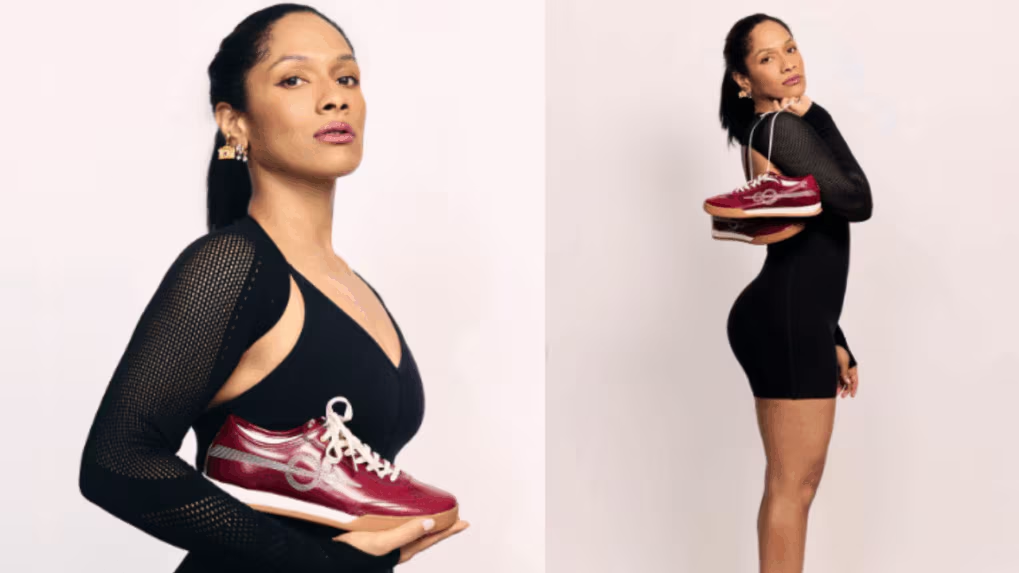
Masaba Gupta has joined One8 — the sportswear brand co-founded by Virat Kohli — as its first Indian designer collaborator. She fronts a new campaign for One8’s footwear and accessories range, including the cricket-inspired Seam XVIII OG shoe. The partnership marks a deliberate strategic shift for One8, which is relaunching and expanding beyond its core cricket and performance audience into lifestyle, fashion and broader Indian culture.
Masaba brings personal cricket heritage — her father is West Indies legend Sir Viv Richards — alongside a cross-industry presence spanning House of Masaba, the LoveChild beauty brand, Netflix, and global fashion appearances. The collaboration is designed to work as a cultural bridge, not just a celebrity endorsement.
What Actually Happened — The Collaboration Explained
One8, the sportswear label co-founded by cricketer Virat Kohli, has announced Masaba Gupta as its first Indian designer collaborator. She is fronting a new campaign for the brand’s latest footwear and accessories range — most notably the Seam XVIII OG, a cricket-inspired shoe that sits between sport heritage and everyday lifestyle wear.
The campaign launched on Instagram, where Masaba introduced the partnership in a way that immediately set the tone for how both parties want this to read. Rather than a straightforward product post, she framed it through heritage and personal identity. “Cricket is in my DNA and inheritance isn’t just about legacy, it’s about responsibility,” she wrote — a line that quietly does a lot of work in a single sentence.
It references her lineage (her father is West Indies cricket legend Sir Viv Richards, her mother is actor Neena Gupta), it connects that lineage to the sport that underpins everything One8 was built on, and it frames the collaboration not as an endorsement deal but as something closer to an inheritance — something she belongs to and is now actively carrying forward. For a brand that has cricket at its core, having a collaborator who can speak about cricket from inside the bloodline rather than from outside the stadium is genuinely unusual.
Why Masaba Gupta? The Strategic Logic Behind the Choice

The intersection of sport and culture has become one of the most contested spaces in Indian brand strategy.
The choice of Masaba Gupta as One8’s first Indian designer collaborator is not arbitrary, and understanding why she specifically was chosen reveals quite a lot about what the brand is trying to do and who it is trying to reach.
Masaba is not simply a fashion designer. She is a multi-platform cultural presence with equity built across genuinely distinct industries. House of Masaba operates at the intersection of Indian textile heritage and contemporary fashion — it has an audience that skews design-literate, culturally aware, and deeply attached to the Masaba brand identity. LoveChild, her beauty label, gives her a foothold in the fast-growing Indian D2C beauty market and a following among younger consumers who discovered her through skincare and makeup rather than fashion shows. Her Netflix series — a fictionalised account of her own life — turned her into a mainstream household name well beyond fashion circles. And her appearance representing India at the RLC Fashion Summit in Milan in 2026 planted a flag on an international stage.
Each of these touchpoints represents a different audience segment — and combined, they add up to a reach that almost no single-industry celebrity can replicate. For One8, which is trying to expand beyond cricket fans and performance wear buyers, Masaba is effectively a shortcut to multiple new audiences simultaneously.
What She Brings That No Cricketer Can
One8 already has Virat Kohli — arguably India’s most recognisable sporting personality — embedded in its identity. What the brand cannot get from cricket alone is credibility in spaces like fashion, beauty, cultural design, and what might be called “aspirational everyday life.” Masaba brings all of that, and she brings it without the brand having to pretend it belongs in those spaces. She legitimises the move.
This is a classic “audience bridge” move — bringing in a collaborator whose followers do not significantly overlap with your existing base, so the collaboration expands total reach rather than just reinforcing what you already have. Masaba’s audience and One8’s core cricket audience share very little. That gap is exactly the point.
One8’s Relaunch: What the Brand Is Actually Trying to Become
One8 is in the middle of what the brand itself describes as an aggressive relaunch. To understand what that means, it helps to understand what the brand has been — and what the gap is between that and where it wants to go.
One8 was built primarily around Virat Kohli’s sporting identity and his association with cricket performance. Its core audience has been cricket fans, sports enthusiasts, and buyers of performance-linked sportswear. That is a significant and loyal audience — but it is also a bounded one. The ceiling on a purely sport-performance brand in India, even one backed by Kohli’s star power, has a natural limit.
The relaunch appears to be designed around two simultaneous moves. First, moving the brand into lifestyle and fashion-adjacent territory — hence new footwear and accessories ranges like the Seam XVIII OG, products that are designed for daily wear rather than athletic performance. Second, building cultural relevance through collaborations and storytelling rather than relying solely on Kohli’s sporting credentials. The Masaba collaboration is the clearest visible expression of both moves at once.
The Seam XVIII OG — A Product That Tells the Story
The cricket-inspired Seam XVIII OG shoe is worth examining as a product because it illustrates exactly what One8 is trying to pull off. “Seam” references the seam of a cricket ball — deeply sport-embedded. “OG” is streetwear and sneaker culture shorthand for “original” — a signal to fashion and youth culture consumers. The combination in a single product name is not accidental. It is an attempt to straddle two audiences and two cultural codes simultaneously, using the language of both without fully belonging to either. Whether it works as a product will depend on execution — but as a strategic statement, it is coherent.
One8’s expansion into lifestyle mirrors moves made by global sportswear giants over the past decade. Nike’s collaborations with Off-White and Travis Scott, Adidas’s Yeezy partnership, and Puma’s long history of fashion collaborations all follow the same underlying logic: performance credentials alone do not build the kind of cultural relevance that drives aspirational consumer desire. Storytelling and cultural association do.
“Cricket is in my DNA and inheritance isn’t just about legacy, it’s about responsibility.”
— Masaba Gupta, on joining One8
The Narrative Layer: Why Cricket Lineage Makes This Collaboration Stick
Brand collaborations in India are common. What makes this one worth paying closer attention to is the narrative architecture underneath it — the layers of meaning that prevent it from reading as a straightforward transactional deal.
When Masaba writes that “cricket is in my DNA,” she is not speaking metaphorically. Her father is Sir Viv Richards — one of the most celebrated West Indian cricketers of all time and one of the most recognisable names in global cricket history. Her relationship to the sport is biological and biographical before it is commercial. That is genuinely unusual territory for a brand collaboration, and it fundamentally changes how the association reads.
For One8, which needs to build credibility in new spaces without abandoning the cricket identity at its core, Masaba functions as a living narrative bridge. She connects cricket’s past (her father’s legacy), fashion’s present (her own brand), and One8’s desired future (sport as culture) in a single figure. The collaboration makes the brand feel continuous rather than discontinuous — it is not One8 abandoning cricket for fashion, it is One8 discovering that cricket has always been part of culture, and choosing to make that visible.
The “Responsibility” Frame
The word “responsibility” in Masaba’s campaign launch post is also doing quiet but important work. It reframes the collaboration from a commercial arrangement into something with genuine weight — an inheritance she is choosing to honour rather than a brand deal she has signed. Whether or not that framing is literally true to the arrangement is almost beside the point. The emotional register it creates is rooted, purposeful and authentic-feeling — exactly the register that resonates with audiences who have grown increasingly sceptical of manufactured brand associations.
The most durable brand collaborations in 2026 are the ones with a coherent story that does not require the audience to do too much work. Masaba × One8 has an unusually clean story — sport heritage meets design heritage, passed down rather than manufactured. That story is easy to understand, easy to share, and importantly, hard to credibly dismiss as inauthentic.
The Bigger Picture: How Indian Sport Brands Are Chasing Culture

The line between sportswear and lifestyle wear has been dissolving for years — One8’s move accelerates that shift in the Indian market.
One8’s collaboration with Masaba Gupta does not exist in isolation. It is the most visible recent expression of a significant structural shift happening across Indian sportswear — one where brands built on performance and sport association are expanding aggressively into lifestyle, culture and identity.
For years, the Indian sportswear market was largely about function: apparel and footwear that helped you perform better, endorsed by athletes who performed at the highest level. The implicit consumer proposition was direct — if Virat Kohli wears it, it will perform like Virat Kohli needs it to. That worked. But it also set a ceiling on who the brand could relevantly speak to.
The Three Forces Pushing Sport Brands Toward Culture
India’s Gen Z consumers — now the primary growth engine in fashion and lifestyle — do not separate what they wear from who they are. A shoe is not just a shoe; it is a signal about values, taste, and cultural belonging. Pure performance messaging does not activate that register. Storytelling and cultural association do.
The clean boundary between sportswear, fashion, streetwear, and lifestyle wear has already dissolved in the most commercially active parts of the Indian market. Consumers buy from all four in a single shopping session without thinking about category. Brands that still operate within a single category are increasingly at a structural disadvantage.
Nike, Adidas, New Balance and others have spent over a decade building cultural relevance through designer collaborations, artist partnerships and streetwear adjacency. That playbook has proven commercially effective at a global scale. Indian brands are now internalising it and adapting it to local context — and the One8-Masaba collaboration is one of the clearest examples of that adaptation arriving at scale.
Expanding from sport into culture is not without risk. Brands that move too fast or with insufficient authenticity can alienate their core audience while failing to gain the new one. The collaborator choice matters enormously — a fashion designer who has no credible connection to sport would make One8’s move feel like a category abandonment. Masaba’s cricket lineage makes it feel like an expansion. That distinction is critical and it will not always be this straightforward to find.
Four Things This Collaboration Signals for Indian Brand Marketing
Collaborations Are Becoming Category Strategies, Not Campaigns
Bringing in a designer collaborator at the level of Masaba Gupta is not a single campaign decision. It is a visible signal of a category expansion — and it sets expectations for what comes next. The Indian market is beginning to see collaborations used the way mature markets have used them for years: as strategic declarations rather than promotional tools. This shifts how brands need to approach partnership selection, because a misaligned collaboration now sends a louder wrong signal than no collaboration at all.
Narrative Depth Is Now a Brand Asset, Not a Bonus
The reason the Masaba-One8 collaboration has generated genuine industry interest is not the product or the campaign imagery — it is the story underneath. Her cricket lineage, her multi-industry identity, and the “inheritance” frame she applied to the launch all add up to a narrative that has genuine texture and meaning. In a market saturated with endorsements and partnerships, narrative depth has become a meaningful differentiator. Brands that can construct collaborations with genuine story architecture — not just recognisable faces — will hold attention longer.
Multi-Platform Equity Matters More Than Single-Category Fame
Masaba Gupta’s value to One8 comes from the combination of her presence across fashion, beauty, entertainment, digital and now international fashion platforms — not from any single credential. This reflects a wider evolution in how Indian brands are selecting collaborators. Single-category celebrities (a cricketer, a Bollywood star, a fashion designer) reach one segment clearly but limit cross-audience potential. Multi-platform figures with credibility across categories are increasingly more valuable, particularly for brands undergoing strategic expansions.
The “First Indian Designer” Frame Is Part of the Launch Strategy
One8 designating Masaba as “the first Indian designer collaborator” is not incidental — it is a structural element of the announcement. The “first” frame generates news, creates a milestone moment in the brand narrative, and sets up a precedent that implies more designer collaborations may follow. It positions One8 as a brand beginning a journey into design culture, not one making an isolated campaign choice. For media coverage and audience attention, “first” is almost always more valuable than “latest.”
One8: Before vs. After — A Brand Direction Comparison
How does One8’s identity and positioning appear to be shifting as a result of this relaunch and the Masaba collaboration? Here is a side-by-side read of the key dimensions.
| Dimension | One8 — Before Relaunch | One8 — Post Masaba / Relaunch Direction |
|---|---|---|
| Core Identity | Cricket performance brand | Sport-rooted lifestyle and culture brand |
| Primary Audience | Cricket fans, performance sportswear buyers | Cricket fans + fashion / culture / Gen Z audiences |
| Collaborator Profile | Athletes, sport-adjacent personalities | Cross-industry cultural figures (designers, creatives) |
| Product Focus | Performance apparel and sport gear | Lifestyle footwear, accessories, heritage-inspired product |
| Campaign Tone | Performance credentials, athlete aspiration | Narrative depth, identity, cultural belonging |
| Communication Channel | Traditional sports media and endorsement | Instagram-first, creator-led, community storytelling |
| Brand Ambition | Leading Indian performance sportswear | A culturally relevant Indian lifestyle brand at the sport-fashion intersection |
| Global Parallel | Early-stage Nike / Adidas performance positioning | Moving toward Nike’s post-2010 cultural collaboration era |
What One8 Needs to Get Right From Here
- Consistency across touchpoints: A single collaboration with Masaba only signals intent. The product range, retail experience, digital presence, and future partnerships all need to tell the same story or the move stalls.
- Not losing the cricket core: The risk of expanding into culture is alienating the sport audience that built the brand. One8 needs to frame each new move as an addition, not a replacement — the Seam XVIII OG’s cricket-to-street name is one example of how to do this at a product level.
- Depth over frequency in future collaborations: The “first designer” designation sets a standard. A follow-up collaboration with a less narratively rich figure will feel like a downgrade. One8 needs to be selective, not prolific, in who comes next.
- Giving Masaba genuine creative input: Fashion and design audiences are sophisticated. If Masaba’s involvement is purely front-facing (campaign face only), that audience will recognise it. Real creative collaboration — even in limited ways — is what makes these partnerships feel legitimate to the communities they are trying to reach.
Frequently Asked Questions
Masaba Gupta has partnered with One8, the Indian sportswear brand co-founded by Virat Kohli, as its first Indian designer collaborator. She is fronting a new campaign for the brand’s footwear and accessories range, including the cricket-inspired Seam XVIII OG shoe. The campaign launched on Instagram and positions the collaboration at the intersection of sport, design and Indian cultural identity.
One8 is an Indian sportswear and lifestyle brand co-founded by cricketer Virat Kohli. The brand was built around cricket performance and Kohli’s sporting identity. It is currently undergoing an aggressive relaunch, with a clear strategic intention to expand beyond cricket and performance wear into lifestyle, fashion and broader cultural relevance in India. The Masaba Gupta collaboration is the most prominent public signal of that relaunch direction.
It is significant for several interconnected reasons. First, Masaba is the first Indian designer to collaborate with One8, marking a deliberate departure from the brand’s previous sport-only collaborator strategy. Second, Masaba brings genuine cricket heritage through her father, West Indies legend Sir Viv Richards, making the story rooted rather than manufactured. Third, her cross-industry presence across fashion, beauty, Netflix and global fashion events gives One8 access to multiple new audience segments simultaneously. And fourth, the “first designer” designation suggests this is the beginning of a collaboration strategy, not a one-off campaign decision.
The Seam XVIII OG is a cricket-inspired footwear product from One8’s new range, positioned at the centre of the Masaba Gupta collaboration campaign. The name references the seam of a cricket ball (“Seam”) alongside streetwear and sneaker culture terminology (“OG,” meaning “original”). It is designed to sit between sport heritage and everyday lifestyle wear — targeting both cricket-aware consumers and fashion-forward buyers. The product itself illustrates One8’s dual audience ambition in a single object.
Masaba Gupta’s connection to cricket is genuinely personal — her father is Sir Viv Richards, the celebrated West Indies cricket legend widely regarded as one of the greatest batsmen in the history of the game. Her mother is Indian actor Neena Gupta. This lineage gives Masaba a biographical and emotional connection to cricket that sits well outside the typical brand-collaborator relationship, and it is central to how the One8 campaign has been framed and why it resonates differently from a standard endorsement deal.
One8’s move reflects a wider structural shift in how Indian sportswear brands are redefining their purpose — from pure performance to identity, culture and lifestyle. It mirrors a global trajectory already completed by Nike, Adidas and others, where cultural collaborations became as central to brand building as athlete endorsements. For the Indian market, where Gen Z consumers increasingly demand identity-building products rather than purely functional ones, this kind of shift from sport-only positioning to sport-plus-culture storytelling is becoming necessary for any brand that wants to remain relevant beyond its core audience.
Masaba Gupta’s commercial presence spans multiple categories. She is the founder of House of Masaba, a fashion label known for bold Indian prints and contemporary silhouettes. She also founded LoveChild, a beauty and skincare brand. She is the subject of a fictionalised Netflix original series based on her own life. In 2026, she represented India at the RLC Fashion Summit in Milan. Together, these touchpoints make her one of the most commercially multi-dimensional figures in Indian creative and consumer culture — which is precisely why One8’s collaboration with her has weight beyond a typical fashion endorsement.
What One8 Is Really Telling the Market
Brand announcements rarely say exactly what they mean in the headline. The Masaba Gupta-One8 collaboration says it is about a new footwear range and a designer partnership. What it is actually saying is something more significant: that One8 believes its next decade of growth will come not from deepening its cricket audience but from expanding beyond it, and that the way to do that is through cultural storytelling rather than performance claims alone.
That is a genuinely interesting strategic bet in the Indian market. It requires One8 to hold two audiences simultaneously — the cricket-core consumers who built the brand and the fashion-culture consumers it wants to add — without losing either in the attempt to gain the other. Masaba Gupta, with her cricket bloodline and fashion industry presence, is probably as close to an ideal bridge figure for that challenge as One8 could have found.
Whether the bet pays off commercially will depend on execution across many touchpoints beyond this single campaign: the product quality, the retail experience, the consistency of future collaborations, and ultimately whether the Seam XVIII OG and the products that follow it are things people actually want to wear. But as a statement of strategic intent — a brand publicly declaring that it is done being only a sport brand and ready to become a culture brand — the Masaba Gupta collaboration makes the case as cleanly as anything One8 has done.
One8 has not just hired a designer. It has chosen a story. The story is: sport and culture were never separate to begin with — and we are the brand that is going to make that visible. Whether India’s consumers agree will be the most interesting brand marketing question in Indian sportswear for the rest of 2026.

Pankaj Dubey is an entrepreneur, business analyst, digital marketer, financial researcher, and brand strategist. He specializes in developing marketing strategies, building and positioning brands, and conducting in-depth business and financial research. He is also known for creating detailed case studies on reputed brands, analyzing market trends, and sharing insights through his writing and blogging. His work combines business intelligence, strategic thinking, and digital innovation to help businesses grow and strengthen their market presence.