
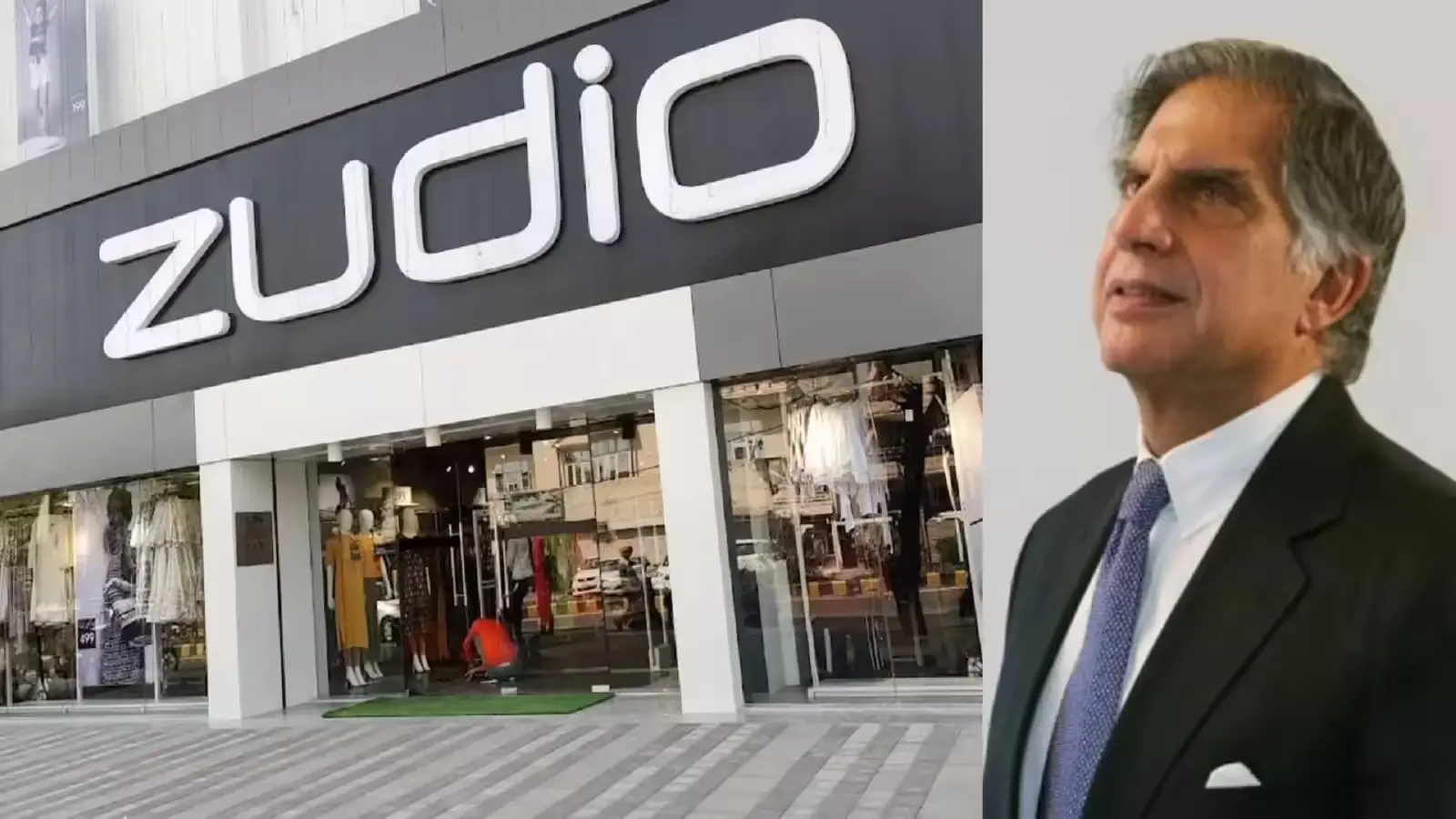
The Origin Story
From a hypermarket apparel counter to India’s largest value-fashion empire
In 1998, the Tata Group established Trent Limited using proceeds from the sale of Lakmé Cosmetics to Hindustan Unilever. They opened Westside — a premium lifestyle brand — and grew cautiously for nearly two decades. Then, they spotted a massive gap nobody else was addressing: the vast middle-class Indian consumer who wanted trendy fashion but couldn’t afford organised retail prices.
The 2016 launch of Zudio was Trent’s answer: India’s first 100% private label, under-₹999 value fashion brand, built specifically for the country’s aspiring middle class — not just metros, but every Tier 2, 3, and 4 city in between.
While the broader retail industry chased premiumisation, Zudio sprinted in the opposite direction — building the value apparel brand that 95% of India actually needed.
— Industry Analysis, 2025Company Overview
Numbers that tell a story of disciplined, relentless execution
Zudio is wholly owned by Trent Limited, a Tata Group company (NSE: TRENT) led by Noel Tata. The brand now contributes approximately 95% of Trent’s profits — a remarkable reversal from when Westside was the flagship. The target customer is ages 15–45, budget-conscious but trend-aware, spanning men, women, and children, with a focus on Tier 2, 3, and 4 cities representing 60% of India’s fashion market.
Business Model — The 4Ps
Strategic restraint in four dimensions, each reinforcing the next
- 100% private label — no third-party brands
- Trend-inspired apparel: men, women, kids
- Footwear, accessories, beauty add-ons
- Weekly launches — fresh collections every week
- Limited depth per design — avoids overstocking
- Fashion freshness, not durability, is the core proposition
- 100% of products under ₹999 — always
- Sweet spot: ₹299–₹799 for most apparel
- Standardised points: ₹199, ₹299, ₹399, ₹499
- EDLP — no complex discounts, no seasonal sales
- Removes decision fatigue; trains “buy now” behaviour
- Average transaction under ₹1,500
- Almost zero mass-media advertising
- No celebrity brand ambassadors
- Word-of-mouth and social media haul culture
- Micro-influencer marketing over traditional media
- Strong in-mall visual branding
- Store opening in Tier 2/3 cities becomes a local event
- Physical-retail-first — deliberately no e-commerce
- Large-format stores: ~10,000 sq ft
- High-traffic locations near colleges, offices, markets
- Requires 2,000+ target customers in 3km radius
- Aggressive Tier 2 & 3 city penetration
- International: Dubai Silicon Oasis, Sept 2024
The FOCO Model — Zudio’s Secret Weapon
Franchise Owned, Company Operated — the engine behind explosive growth
The FOCO model allows Trent to expand at a pace that would be impossible with traditional company-owned stores, without straining its balance sheet. Franchisees provide the capital; Trent provides the expertise and operational control. The result: one new store every three days at peak.
Store Expansion — The Numbers
Supply Chain & Operations
Proving that supply chain speed can be a brand asset
Zudio designs all products in-house but outsources production to large domestic manufacturers in India. This eliminates the cost of running a manufacturing plant while retaining design control. Bulk orders keep per-unit costs low. The brand can respond to trends in weeks, not months.
The 15-Day Design-to-Store Cycle
Operational Pillars
- 100% local sourcing: Almost all products manufactured in India for speed and cost control
- Weekly product launches: Fresh collections every week — mimicking Zara’s agility at dramatically lower price points
- Data-driven regional assortment: Each store’s inventory planned based on local demand signals
- Low markdown dependency: Limited depth per design means fewer unsold units and less discounting pressure
- No e-commerce complexity: Offline-only eliminates return logistics and delivery costs entirely
Marketing Strategy
Deliberately minimalist — letting price and product do the heavy lifting
In a market where brands fight for eyeballs with celebrity endorsements and TV campaigns, Zudio does almost none of it — and grows faster than almost everyone.
What Zudio Doesn’t Do
- No mass-media advertising (TV, print, outdoor)
- No A-list celebrity brand ambassadors
- No complex seasonal discounting or sale events
- No major e-commerce marketplace presence
What Zudio Does Instead
- Store as event: A new Zudio opening in Tier 2/3 cities generates genuine local buzz — free PR at scale
- Haul culture: Micro-influencer “Zudio haul” videos drive millions of organic views at zero cost
- Scarcity mechanics: Limited stock creates urgency — “buy now or miss out” is the implicit message
- Price as communication: The ₹999 cap is itself a marketing statement — it builds trust and sets expectations
- In-mall branding: Bold red signage and high product density create strong store presence
Competitive Landscape
Zudio’s edge: price-speed-scale, not brand aspiration
| Brand | Price Range | Model | Key Strength | Gap vs Zudio |
|---|---|---|---|---|
| ZUDIO | ₹199–₹999 | FOCO / Offline | Price + speed + Tier 2/3 reach | — |
| Reliance Trends | ₹199–₹1,499 | Company-owned | Scale & distribution | Less fashion-forward, higher prices |
| Max Fashion | ₹299–₹1,999 | Company-owned | Quality perception | Higher ASP, slower refresh |
| Pantaloons | ₹499–₹2,999 | Multi-brand | Brand portfolio depth | 4–6x price of Zudio |
| H&M India | ₹799–₹4,999 | Company-owned | Global brand appeal | Metro-only, expensive |
| Meesho / Online | ₹199–₹999 | Online-only | Selection breadth | No physical experience |
| Yousta (Reliance) | ₹199–₹999 | Emerging | Reliance distribution | Early stage vs Zudio’s scale |
New entrants like Yousta, Style-Up (ABFRL), and InTune (Shoppers Stop) are entering value fashion, validating Zudio’s thesis. But replicating Zudio’s supplier network, FOCO infrastructure, and cultural resonance built over 9 years will take years — not months.
SWOT Analysis
Honest assessment of where Zudio stands in 2025
- 100% private label — complete margin control
- 15-day design-to-store cycle vs. industry 3–6 months
- FOCO model: capital-light, rapid expansion
- ₹999 price cap — unbreakable consumer trust
- ₹16,300/sq ft — 2x the industry average
- Tata Group brand halo — trust, credibility, governance
- Dominant Tier 2/3 presence ahead of competition
- Thin margins — volume-dependent profitability
- No online presence limits reach to non-store markets
- Low brand aspiration ceiling — hard to premiumise
- “Cheap brand” perception can deter aspirational buyers
- Domestic supplier quality variance risk at scale
- No loyalty programme or meaningful CRM
- India value fashion market growing to $170B by 2026
- Zudio Beauty — affordable beauty category
- International: GCC markets, SE Asia next
- Innerwear and footwear gaining traction (20%+ revenue)
- Tier 4 & rural penetration largely untouched
- AI-powered demand forecasting and local assortment
- Yousta, Style-Up, InTune entering value fashion
- Online fast fashion (Shein, Meesho) on mobile-first India
- Rising input costs squeeze thin margins
- Real estate rental inflation in high-traffic areas
- Fast fashion environmental and sustainability scrutiny
Financial Analysis
Trent’s extraordinary journey — powered by Zudio
| Fiscal Year | Zudio Stores | Trent Revenue (₹Cr) | Trent Profit (₹Cr) | YoY Growth | Bar |
|---|---|---|---|---|---|
| FY21 | 232 | ~3,800 | ~148 | –18% (COVID) | |
| FY22 | 275 | ~5,360 | ~289 | +41% | |
| FY23 | 342 | ~8,022 | ~553 | +50% | |
| FY24 | 545 | 12,375 | 1,477 | +54% | |
| Q3 FY25 (qtr) | 635 | 4,656 (qtr) | 496 (qtr) | +34.3% YoY |
Source: Trent Limited Annual Reports & BSE Filings. Zudio-specific revenue not separately disclosed.
- Revenue per sq ft: ₹16,300 — more than double the industry average
- Franchisee payback period: 30–36 months with ~16% fixed return
- Zudio contribution to Trent profits: approximately 95%
- Emerging categories (beauty, innerwear, footwear): now contribute over 20% of revenue
Challenges & Response
Strategic restraint meeting operational aggression
Consumer Perception & Cultural Connect
How Zudio rewired India’s relationship with affordable fashion
Zudio has achieved something rare: customers talk about it with pride, not apologetically. “I got this from Zudio for ₹399” has become a flex, not an embarrassment. Before Zudio, a middle-class consumer in Lucknow or Coimbatore had two options — expensive organised retail or low-quality local markets. Zudio destroyed that false choice.
Value is not the opposite of fashion — in India, value is fashion’s biggest accelerator. Zudio understood this before everyone else.
— Zudio Case Study, afaqs! 2026The Haul Culture Effect
One of Zudio’s most powerful organic marketing channels is the “Zudio haul” — customers filming themselves trying on their purchases. These videos routinely garner millions of views on YouTube and Instagram Reels, creating a self-sustaining content engine that Zudio pays nothing for. It is modern word-of-mouth, amplified by algorithms.
Future Outlook
What comes next for India’s fastest-growing fashion brand
Key Takeaways
What every business builder can learn from Zudio’s rise
Frequently Asked Questions
Questions students, professionals, and investors ask about Zudio
Yes, Zudio is 100% owned by Trent Limited, a publicly listed Tata Group company (NSE: TRENT). Noel Tata — Chairman of Trent and half-brother of the late Ratan Tata — has led the company since 1999 and was the driving force behind Zudio’s conception and launch in 2016.
FOCO stands for Franchise Owned, Company Operated. A franchisee invests ₹75 lakh–₹1 crore to own the physical store space. Trent manages everything operationally — supply chain, inventory, pricing, and brand standards. The franchisee earns ~16% fixed return plus profit sharing, recovering their investment in 30–36 months. For Trent, this enables expansion at one new store every three days without straining its balance sheet.
Zudio’s profitability is built on volume, not margin per item. Key factors: (1) 100% private label eliminates licensing costs; (2) Domestic bulk-order manufacturing keeps per-unit costs low; (3) Zero advertising spend saves crores; (4) FOCO model — Trent doesn’t invest capex in store assets; (5) No e-commerce eliminates return and delivery costs; (6) EDLP removes costly markdown cycles. Result: ₹16,300 revenue per sq ft — double the industry average.
This is Zudio’s most debated strategic choice — and arguably its most brilliant. Online fashion in India comes with 25–40% return rates, delivery costs, and platform commissions of 15–25%. For a brand on thin margins, these costs would erode profitability significantly. By going offline-only, Zudio forces customers into stores where impulse purchasing drives higher average transaction values. Every rupee of revenue flows directly to Zudio with no intermediary commission.
Four primary risks: (1) Competitive encirclement — Yousta, Style-Up, and InTune all entering value fashion with deep pockets; (2) Margin compression — rising input costs in a fixed ₹999 price cap model; (3) Operational complexity — managing 1,000+ stores consistently; (4) Sustainability scrutiny — fast fashion’s environmental impact is under increasing regulatory and consumer pressure. Zudio’s 9-year head start and Tata Group backing are its primary defenses.
The FOCO model is the answer. Because Trent retains operational control of every store — regardless of franchisee ownership — it enforces consistent merchandise standards, visual merchandising guidelines, pricing, and staff training across all 765+ outlets. Data-driven regional assortment planning means each store gets products tailored to its local market, improving sell-through rates and reducing excess inventory.
Zudio and H&M/Zara serve fundamentally different customer segments. H&M India targets ₹1,500–₹5,000 per item; Zudio targets ₹199–₹999. Limited direct overlap exists. However, Zudio has indirectly pressured brands like Max Fashion and Pantaloons to sharpen their value propositions. More importantly, Zudio has expanded the overall organised fashion pie — bringing millions of first-time shoppers into stores, some of whom will eventually trade up to pricier brands.
Zudio grows through: (1) Store openings as local events in Tier 2/3 cities; (2) Micro-influencer and customer-generated “Zudio haul” videos generating millions of organic views; (3) EDLP pricing removing the need for promotional advertising; (4) Word-of-mouth from satisfied customers who find ₹399 buys them something genuinely trendy. The brand’s marketing ROI is higher precisely because it spends almost nothing.