Inditex Group · Founded 1975 · Arteixo, Spain · 214 Markets Worldwide
Introduction
From a small Spanish factory to the world’s most powerful fashion brand
In the fiercely competitive world of fashion, where trends fade faster than the seasons, one brand has managed to rewrite every rule in the playbook. Zara — the flagship brand of Spanish conglomerate Inditex — is not merely a clothing store. It is a precision-engineered business machine that converts runway inspiration into store-ready clothing in as little as two to three weeks, a feat that leaves rivals scrambling to keep pace.
With over 5,563 stores across 214 markets and annual revenues exceeding €38.6 billion (FY2024), Zara is the undisputed titan of fast fashion. What truly separates Zara is the seamless integration of design, manufacturing, distribution, and retail into one vertically controlled ecosystem.
The Founding Story — Amancio Ortega
From Errand Boy to World’s Richest Man
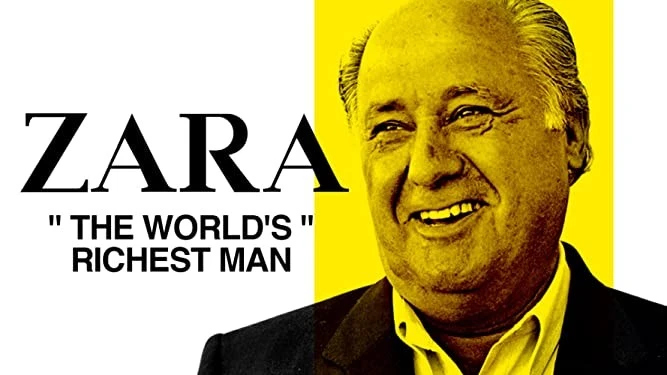
Born in 1936 in León, Spain, Amancio Ortega dropped out of school at 14 to work as a shirt-maker’s errand boy in A Coruña. By 1963, he had saved enough to start making quilted bathrobes in his living room. In 1975, he opened the first Zara store in Arteixo, Galicia. His philosophy was radical for the era: fashion should be affordable, trend-responsive, and constantly refreshed. Inditex went public in 2001, and by 2015 Ortega briefly became the world’s richest person, surpassing Bill Gates with a net worth exceeding $80 billion. Today he retains approximately 59% of Inditex through his holding company Pontegadea Inversiones.
Fashion is not something that exists in dresses only. Fashion is in the sky, in the street — Zara’s genius is capturing it before anyone else can.
— Adapted from the Zara Business PhilosophyWhat Makes Zara Unique
- Near-real-time consumer feedback loop feeding directly into design decisions
- Hyper-responsive production with a 2–3 week design-to-store cycle vs. the industry’s 6–9 months
- Deliberately scarce product runs creating urgency and reducing markdown risk
- Store location strategy that functions as premium marketing — less than 0.3% spent on ads
- Vertical integration giving total supply chain control and unmatched speed
- RFID tracking and daily store manager feedback informs every collection decision
Company Overview
The Inditex empire — numbers that define an industry
Industria de Diseño Textil, S.A. (Inditex), headquartered in Arteixo, Spain, is the world’s largest fashion group by revenue. The conglomerate owns eight retail brands: Zara, Pull&Bear, Massimo Dutti, Bershka, Stradivarius, Oysho, Zara Home, and Lefties. Zara alone accounts for approximately 73% of total group sales.
Inditex went public on the Madrid Stock Exchange in 2001 and today employs over 165,000 people globally. In FY2024, the company grew revenues with 2.3% fewer stores — proving that larger, smarter, better-integrated stores outperform raw store count. Online sales reached €9.1 billion in FY2023 (up 16% year-on-year).
The Zara Business Model
Speed, scarcity, and vertical control — the holy trinity
1. Fast Fashion Concept
Traditional fashion retailers work on six-month production cycles. Zara releases new items two to three times per week. Some analysts estimate Zara introduces over 10,000 new designs annually, creating perpetual discovery for shoppers who know that hesitating means missing out.
2. Vertical Integration
Zara owns or tightly controls every step of its value chain. Roughly 50–60% of production happens in Spain, Portugal, Morocco, and Turkey — within close range of headquarters. This proximity-over-cost philosophy is the opposite of typical offshore-everything fast fashion.
3. Limited Inventory Model
Zara deliberately produces less than demand. Inventory levels were 1.7% lower in mid-2024 even as revenues rose — a masterclass in demand management that drives urgency and reduces markdowns.
4. The 2–3 Week Production Cycle
Industry average: 6–9 months. Zara’s average: 2–3 weeks. This is not incremental improvement — it is transformation.
Supply Chain & Operations
How Zara turned logistics into a strategic weapon
Design → Production → Distribution
At Inditex headquarters in Arteixo, over 200 designers work alongside market specialists and store managers. Designs are approved, prototyped, and sent to nearby factories — many within a 500km radius — for production. Finished goods flow back to Arteixo’s logistics hub for sorting and global distribution.
Technology & Data
RFID chips embedded in garment security tags give headquarters real-time inventory visibility across all locations. Store managers submit daily feedback on what customers are asking for and what is sitting idle. This reaches designers within 24 hours. Inditex committed €2.7 billion in capital expenditure in FY2024 — largely directed at store-technology integration and logistics automation.
Spain-Based Distribution Hubs
All merchandise passes through Spain regardless of destination. The Arteixo logistics centre operates nearly 24 hours a day, 364 days a year. Any store on earth can receive new inventory within 48 hours of an order. A new Zaragoza II distribution centre is expected to begin operations in summer 2025.
Marketing Strategy
Spending almost nothing on ads — and dominating anyway
While competitors like H&M and Gap spend 3–4% of revenues on advertising, Zara historically spends less than 0.3% on traditional advertising. Yet it remains one of the world’s most recognised fashion brands.
Store Location as Marketing
Zara’s primary marketing investment is real estate. Stores occupy the highest-footfall streets in major cities — Fifth Avenue, Oxford Street, Champs-Élysées. Flagship stores are architecturally striking with theatrical lighting. The store is the advertisement.
The Scarcity Principle
Limited production runs create urgency. Customers who see something they like know they must act immediately — the item may be gone in days. This psychological trigger drives higher conversion rates and creates organic word-of-mouth buzz.
Zara’s best advertisement is an empty shelf. When customers can’t find what they saw yesterday, they come back tomorrow — and they bring a friend.
— Retail Strategy InsightCompetitive Advantage
Why nobody has truly cracked the Zara code
| Metric | ZARA | H&M | Uniqlo | Shein |
|---|---|---|---|---|
| Design to store | 2–3 weeks | 3–5 months | 1–3 months | 3–7 days (online) |
| New styles / year | ~10,000+ | ~3,000 | ~1,000 | ~6,000/day |
| Ad spend | <0.3% revenue | ~3.5% | ~3% | Heavy influencer |
| Price positioning | Mid-premium | Budget-mid | Quality basics | Ultra-budget |
| Physical stores | 5,563 | ~4,300 | ~2,500 | Minimal |
| FY2024 Revenue | €38.6B (Inditex) | ~€22B | ~€20B | ~$45B (est.) |
Zara’s deepest competitive moat is structural. Its feedback loop — store data → designers → production → distribution → store — is so tight that competitors cannot replicate it without rebuilding their entire operational DNA over a decade.
SWOT Analysis
A structured look at Zara’s strategic position in 2025
- World’s fastest design-to-retail cycle (2–3 weeks)
- Vertical integration — total supply chain control
- Extremely high gross margin (~57.8%)
- Minimal advertising cost structure (<0.3% revenue)
- Strong brand recognition across 214 markets
- Real-time customer data via RFID & daily feedback
- European manufacturing raises unit costs vs. Asia
- Single global distribution hub — concentration risk
- Scarcity model can frustrate loyal customers
- Late e-commerce mover vs. digital-native rivals
- Other Inditex brands underperform vs. Zara’s 73% share
- Rapid growth in Southeast Asia & Africa markets
- AI-powered trend forecasting & personalisation
- Premiumisation — moving further upmarket
- Zara Pre-Owned & circular fashion revenue streams
- Online-only expansion across 214+ markets
- Shein’s ultra-fast, ultra-cheap digital model
- Increasing EU sustainability regulations
- Currency volatility (–1% FX impact expected 2025)
- Consumer shift toward secondhand & slow fashion
- Geopolitical disruption to European supply chains
Financial Analysis
Five years of consistent, profitable growth
| Fiscal Year | Revenue (€B) | Net Income (€B) | Gross Margin | YoY Growth | Bar |
|---|---|---|---|---|---|
| FY2020 | 20.4 | 1.1 | 55.8% | –28% (COVID) | |
| FY2021 | 27.7 | 3.2 | 57.5% | +36% | |
| FY2022 | 32.6 | 4.1 | 57.4% | +18% | |
| FY2023 | 35.9 | 5.4 | 57.8% | +10% | |
| FY2024 | 38.6 | 5.9 | 57.8% | +7.5% |
Source: Inditex Annual Reports. Fiscal year ends January 31.
Key Highlights — FY2024
- EBITDA reached €10.7 billion, up 8.9% year-on-year
- EBIT: €7.6 billion, up 11.0%
- Net cash position: €11.5 billion — zero net debt
- Online sales ~€9.1 billion in FY2023 (~25% of total sales)
- Dividend increased 9% to €1.68 per share
- Revenue grew 7.5% with 2.3% fewer stores
Challenges & Criticism
The darker side of fashion’s fastest machine
Sustainability & Environmental Impact
The fast fashion industry is responsible for approximately 10% of global carbon emissions and is the second-largest consumer of water worldwide. Critics argue that Zara’s “Join Life” collection represents only a fraction of total output and constitutes greenwashing rather than systemic change.
Labour & Ethical Issues
Despite proximity manufacturing advantages, Zara has faced labour violations in supply chains in Brazil and Argentina. Ongoing scrutiny of Tier-2 and Tier-3 suppliers remains a reputational risk even after overhauled auditing processes.
The Shein Threat
Shein’s algorithmic model — producing thousands of new SKUs daily at prices 50–70% lower than Zara — targets the same 18–35 demographic entirely online. Shein’s estimated revenues of ~$45 billion in 2024 now rival Inditex’s total.
Sustainability Initiatives
Ambitious targets — and the scrutiny that accompanies them
Join Life & Zara Pre-Owned
The “Join Life” label uses organic cotton, recycled polyester, and Tencel lyocell. Zara partnered with biotech firm Circ to create collections using recycled blended textiles, and developed the Air Fiber Washer that reduces microfibre shedding by up to 60% in early washes.
Zara Pre-Owned — launched in the UK in November 2022 and expanding to the US by late 2024 — allows customers to buy, sell, and donate second-hand Zara items. The secondhand market is projected to reach $350 billion by 2027.
Future Outlook
Where Zara is heading — and why the best may be yet to come
Zara is also moving deliberately upmarket — collaborations with renowned photographers, editorial-quality campaigns, and higher-quality fabrics signal a push toward aspirational premium positioning, competing less with H&M and more with COS and & Other Stories.
Key Takeaways
What every business can learn from the Zara model
Frequently Asked Questions
The questions business students and professionals ask most
Zara achieves this through vertical integration and proximity manufacturing. Around 50–60% of production happens in Spain, Portugal, Morocco, and Turkey. Design, sampling, and production decisions happen in parallel rather than sequentially. RFID tracking and daily store feedback eliminate bureaucratic delays. The result is a design-to-store cycle that is structurally impossible to replicate without rebuilding an entire supply chain from scratch.
Zara’s marketing is built on prime retail real estate, word-of-mouth driven by scarcity, and the in-store experience itself. Flagship stores on the world’s most prestigious streets act as permanent billboards. The limited-quantity model creates organic conversation. High-quality editorial campaigns and strategic collaborations generate media coverage worth far more than equivalent paid advertising spend.
Scarcity is a deliberate strategic decision. By producing less than forecast demand, Zara creates urgency that drives immediate purchase decisions, dramatically reduces unsold inventory and the need for heavy discounting, maintains brand desirability, and reduces the financial risk of fashion misses. Inventory was 1.7% lower in mid-2024 even as revenues grew — proof the approach delivers.
Shein is a pure-play digital platform producing thousands of SKUs daily at ultra-low prices, primarily targeting under-25 consumers. Zara is a premium physical-digital hybrid with 5,563 stores and a focus on mid-to-upmarket shoppers. Shein’s revenues (~$45B in 2024) rival Inditex’s total, but Zara’s physical experience, brand prestige, and quality positioning create meaningful differentiation that Shein cannot easily replicate.
Three primary risks: (1) EU textile sustainability regulations could impose significant compliance costs. (2) Younger generations are increasingly drawn to secondhand and slow fashion alternatives. (3) If a fully AI-driven, no-inventory, on-demand manufacturing model matures, it could structurally challenge Zara’s store-heavy model. The company’s €11.5B net cash position and Ortega family’s long-term ownership are its primary defenses.
Amancio Ortega retains approximately 59% of Inditex through his holding company Pontegadea Inversiones. His daughter Sandra Ortega Mera holds ~7%. Inditex is publicly traded on the Madrid Stock Exchange (ticker: ITX). The Ortega family’s controlling stake ensures strategic decisions align with the founder’s long-term vision rather than short-term market pressure — a key competitive advantage.
Economically, Zara’s model is extremely sustainable — consistent 57%+ gross margins and €11.5B net cash. Environmentally, more complex. Fast fashion inherently generates textile waste. Zara’s Join Life collection and Pre-Owned platform represent meaningful steps, but critics argue these are a small fraction of total output. Inditex’s 2030 and 2040 sustainability targets, if met, would represent genuine progress — but external verification and structural changes are required.
RFID chips in garment tags provide real-time inventory visibility across all 5,563 stores. Store managers submit daily structured feedback using handheld devices — reporting what customers ask for, what sells quickly, and what is being ignored. This data reaches designers within 24 hours. AI is now being layered on top for demand forecasting, personalised app recommendations, and automated replenishment decisions — potentially compressing the design-to-store cycle below two weeks.