
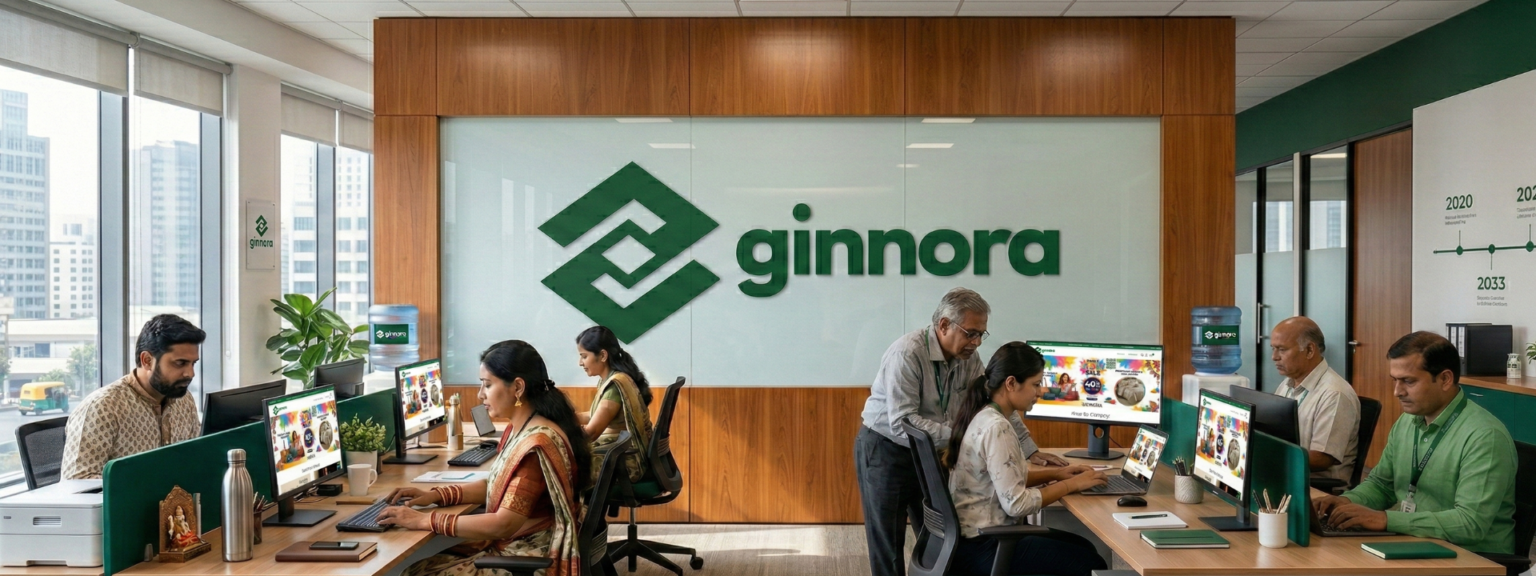
From SEO Screens
to Silk Bedsheets.
One Founder’s
Lifestyle Dream.
How Pankaj Dubey turned a digital marketing career and a passion for quality home & fashion products into Ginnora — a rising D2C lifestyle brand serving thousands across India.
The Scene That Started Everything
Imagine a laptop screen at midnight in Noida. An SEO executive is running keyword audits for a client’s e-commerce brand, pulling organic traffic reports, and building content calendars for someone else’s dream. He’s good at what he does. Grapes Digital, then Buddy Deals — credible stops on a digital career that would have kept many people comfortable indefinitely.
But Pankaj Dubey wasn’t satisfied building someone else’s online presence. He could read traffic patterns the way a craftsman reads wood grain. He understood what makes Indian consumers click, trust, and buy. The question was: could he use that understanding to build something of his own?
The answer became Ginnora — a Noida-based lifestyle brand selling premium bedsheets with the soul of Rajasthani craftsmanship and women’s handbags with metropolitan design sensibility. Today, Ginnora serves 3,000+ customers, supplies 15+ hotels, runs through 10+ stores, and is building a digital-first D2C presence that is quietly but deliberately growing.
This is not a story of overnight scale. This is a story of a founder who understood the internet before he understood retail — and then used that advantage to build differently.
Meet the Founder — Pankaj Dubey
Pankaj Dubey is a founder who wears multiple hats — not because there aren’t enough people around him, but because he genuinely enjoys the intersection of creation and customer. He is the kind of entrepreneur who does not delegate the customer experience to a team and then review it in a monthly report. He is in it.
He comes from Azamgarh — a small town in Uttar Pradesh that most startup narratives would skip over. It is not IIT. It is not IIM. It is not a metro city. It is the kind of origin story that quietly says: the ambition was always there, even when the resources were not.
His professional journey before Ginnora moved through the SEO and digital marketing industry — from executing campaigns at Grapes Digital Pvt Ltd to working as an SEO Specialist at Buddy Deals Internet Pvt Ltd. He also founded Harver Era Digital Pvt Ltd, building his own digital services company before pivoting fully into product.
He is also the CEO of Ginnora — meaning the vision and the execution converge in one person. In a startup’s early years, that is both a risk and a strength.
From Azamgarh to Noida — The Origin Story
Azamgarh, in eastern Uttar Pradesh, is known for producing journalists, poets, and thinkers — a town with cultural depth that rarely makes business headlines. From this background, Pankaj Dubey made his way to Noida, the satellite city of Delhi that has become one of India’s most vibrant hubs for digital businesses, e-commerce startups, and D2C brands.
Noida offered what Azamgarh couldn’t: proximity to the capital, digital infrastructure, talent pools, and logistics networks. But the values Pankaj carried from his origins — a sense of quality, an understanding of what everyday Indian households need and want, and a distrust of overpriced mediocrity — became the invisible architecture of Ginnora.
Ginnora is headquartered at Noida Sector 22, Uttar Pradesh 201301. It is not a Silicon Valley garage story. It is an Indian founder, in an Indian city, building for Indian customers — and increasingly, doing it with craft rooted in Indian heritage.
The distance from Azamgarh to Noida is not just geographic. It is the distance between knowing what people need and having the tools to serve them at scale. Pankaj Dubey made that journey twice — once physically, and once digitally, from SEO professional to product founder.
Digital Roots — From SEO to D2C Founder
The single most underrated advantage Pankaj Dubey brought to Ginnora was not capital. It was not a network of investors. It was something rarer in the traditional Indian retail space: he understood how the internet finds, evaluates, and buys things before he ever sold a single product.
Most founders who start product companies learn digital marketing after launch — often painfully, often expensively. Pankaj reversed this order. Years spent running SEO campaigns, understanding keyword intent, building content hierarchies, and measuring conversion funnels meant that when Ginnora launched, it was already thinking like a digital-native brand rather than a traditional retailer trying to go online.
SEO Executive at Grapes Digital Pvt Ltd — one of India’s established digital agencies. Learned campaign architecture, client management, and organic search at scale.
SEO Specialist at Buddy Deals Internet Pvt Ltd — deeper focus on e-commerce SEO, understanding how product pages rank, how buyers search, what converts in the Indian online shopping environment.
Founded Harver Era Digital Pvt Ltd — his own digital services company. Ran campaigns for clients, built revenue, and proved he could build and manage a business. The entrepreneur muscle was exercised.
Founded Ginnora Lifestyle — the pivot from selling digital services to building a physical product brand with a digital-first distribution strategy. The complete entrepreneur’s evolution.
Why Bedsheets & Handbags? — The Market Logic
At first glance, bedsheets and women’s handbags seem like an unusual combination for a single brand. They are different product categories, different customer use cases, different purchase occasions. Why this combination?
The answer lies in a coherent brand identity rather than product randomness. Ginnora positions itself as a lifestyle brand — not a bedsheet company or a bag company, but a brand that serves the aesthetics of Indian women’s daily life. The bedroom is a personal space. The handbag is a personal statement. Both are expressions of identity, taste, and self. Both are categories where Indian consumers have historically been underserved between the extremes of cheap-and-forgettable and luxury-and-unaffordable.
Ginnora occupies the middle — premium quality at accessible prices. Bedsheets starting from ₹499. Handbags from ₹799. Products that feel considered, look designed, and do not require the buyer to compromise on quality or empty their wallet.
This positioning is not accidental. It is the result of a founder who understood search behaviour — who knew that Indian buyers search for “best bedsheet under 1000” and “premium handbag under 1500” in far greater volumes than they search for luxury alternatives. The sweet spot was visible in the data. Ginnora was built for that sweet spot.
Rajasthani Craft Meets Modern Commerce
Ginnora’s bedsheet collection is not generic. It draws explicitly from the handloom and craft traditions of Rajasthan — specifically Sanganeri and Jaipuri print styles that have centuries of heritage behind them.
Sanganeri prints originate from Sanganer, a town near Jaipur. They are characterised by fine block-printed floral motifs on white or light backgrounds — delicate, intricate, and historically produced by hand using carved wooden blocks dipped in natural dyes. The craft has been a UNESCO-recognised art form. Bringing it into bedsheets that ordinary Indian families can afford — that is a genuine act of democratisation.
Jaipuri bedsheets are among India’s most beloved home textile products. Lightweight, soft, breathable — suited to India’s climate in a way that imported synthetics are not. The designs are bold, colourful, and identifiably Indian without being kitschy. The market for Jaipuri bedsheets online is enormous, and Ginnora has positioned itself squarely within it.
The sourcing and design philosophy connects Ginnora to something larger than just e-commerce. It connects the brand to Indian artisans, to regional craft economies, and to a customer who wants beautiful things for their home that also carry cultural meaning. In a market flooded with generic imports, this is a competitive edge that cannot be easily replicated.
The Product Lines — What Ginnora Sells
Ginnora’s product range is focused but expanding. The core categories as of 2026 are bedsheets and women’s handbags, with the brand having previously explored adjacent categories including apparel, accessories, and homeware.
Bedsheets — The Foundation
The bedsheet collection covers cotton, silk, satin, linen, polyester blends, and velvet options — a range that addresses every climate, season, and aesthetic preference. Sizes cover single, double, and king. Most products come with matching pillow covers. The range spans from everyday practical cotton to festive satin sets.
5-star rated. Elite range. Cotton blend, all-season comfort.
Elite range. Vibrant design, soft finish. Top seller.
Traditional Jaipuri print. Breathable cotton. Best for summer.
Hand-block inspired print. Delicate floral motifs. Gift-worthy.
Women’s Handbags — The Fashion Play
The handbag range targets urban Indian women who want structured, well-designed bags without paying luxury prices. The designs are contemporary — structured handheld bags, shopper totes, and swagger bags that work for office, shopping, and outings alike.
Available in multiple colours. Structured shape, premium finish.
Bold design for confident carry. Best seller in the bag range.
Roomy, casual, and stylish. Perfect daily companion.
New arrival. Classic black. Formal and casual versatility.
Serving Hotels — The B2B Breakthrough
One of Ginnora’s most significant strategic moves has been penetrating the B2B hospitality market. The brand currently supplies 15+ hotels — a number that may seem modest in isolation but is enormously significant for a young D2C brand.
Hotel procurement is not impulsive. Hotels buy in volume, demand consistency, require reliability in delivery, and are unforgiving of quality variation. If a hotel’s procurement manager places a repeat order, it means the product passed a standard of scrutiny that individual retail consumers rarely apply. It means thread counts held up through dozens of industrial wash cycles. It means sizes were accurate. It means deliveries arrived on time.
For Ginnora, 15+ hotel accounts is a form of third-party quality certification that no marketing budget can buy. When a consumer sees that Ginnora serves hotels, the implied message is: this brand is good enough for professional hospitality standards. That is a powerful trust signal in a market where online shoppers are rightly skeptical of product quality they cannot physically feel before purchase.
The hotel channel also provides revenue stability. Hotel procurement cycles are predictable. They reorder on schedules. Unlike D2C sales that can fluctuate with seasons, sales events, and algorithm changes, hotel accounts offer a base of recurring revenue that funds growth in other areas.
Serving 15+ hotels is not just a revenue line — it is a credibility statement. Hotels apply durability and consistency standards that individual consumers cannot. When Ginnora passes their test, it passes with a quality certificate that money cannot buy directly.
The Team Behind the Brand
Every founder’s vision is only as good as the team that executes it. At Ginnora, Pankaj Dubey has assembled a small but focused leadership group around the brand’s core functions.
Syed Sharjeel Hasan, the Commercial Director, brings multi-year marketing industry experience that has been critical to Ginnora’s commercial positioning. Hareesh Dubey, as COO, manages the operational depth that keeps a product business running — procurement, logistics, fulfillment, and market intelligence. Shivani, who “loves what she does” by her own description, oversees a community of quality developers — 100+ people — which signals that Ginnora’s quality commitment is not just a homepage promise but a staffed and managed function.
How Ginnora Grows — The Digital Strategy
Pankaj Dubey’s professional background makes Ginnora’s digital strategy unusually coherent for a brand of its size. Most small D2C brands either over-invest in paid ads (burning cash without building assets) or under-invest in organic (missing long-term compounding). Ginnora, led by an SEO professional turned founder, treats organic search as a primary channel — not an afterthought.
SEO-First Content Architecture
The Ginnora website is structured with content depth that goes beyond a typical small e-commerce store. Category pages address not just product listings but buyer questions — what fabric to choose, what thread count means, how to care for different materials. This content architecture is the signature of a founder who knows that search traffic earned through helpful content compounds indefinitely, while paid traffic stops the moment you stop paying.
Social Presence & Community
The brand maintains a Facebook Pixel setup, Instagram presence, and WhatsApp integration — the holy trinity of Indian D2C customer acquisition and retention. WhatsApp chat is directly embedded on the Ginnora website, reducing friction for customer queries in a market where WhatsApp is the default communication layer.
Coupon & Loyalty Mechanics
The “HAPPY100” welcome coupon visible on the homepage is a classic D2C first-purchase conversion tool — lowering the barrier for first-time buyers to try the brand. First-purchase conversion is the hardest problem in D2C; Ginnora addresses it directly with an upfront offer.
Trust Signals
100% authentic products, doorstep return pickup, secure payments, PAN India delivery, and a 4.5-star average rating are all prominently displayed — each one addressing a specific fear that online shoppers have when buying home textiles from a brand they haven’t previously bought from. This is not accidental trust-building. It is a founder who has spent years understanding why Indian e-commerce shoppers abandon carts, and who built the antidotes directly into the homepage.
The D2C Model — India’s Biggest Opportunity
Ginnora operates in one of India’s most rapidly expanding market contexts: the Direct-to-Consumer (D2C) home and lifestyle segment. India’s D2C market, valued at over $12 billion in 2023, is projected to reach $61 billion by 2027, according to industry estimates. Home textiles and fashion accessories are among the fastest-growing subcategories.
The opportunity is real. So are the challenges. Indian consumers are sophisticated online shoppers but deeply value-conscious. They will abandon a cart over ₹50 in shipping costs. They will leave a one-star review over a single delivery delay. They will compare products across five platforms before buying. Winning in Indian D2C requires product quality, customer service responsiveness, logistics reliability, and digital marketing precision — all simultaneously, often with limited resources.
Ginnora’s model addresses this by combining:
The Numbers at a Glance
| Metric | Current Status | Significance |
|---|---|---|
| Customers Served | 3,000+ | Happy customers — a verified repeat-buyer base |
| Hotels Supplied | 15+ | B2B credibility — institutional quality validation |
| Physical Stores | 10+ | Offline discovery driving online trust |
| Average Rating | 4.5 ★ | High for a young brand in a quality-skeptical market |
| Product Rating | 5.0 ★ | Top-rated individual products — Gray & Yellow bedsheets |
| Price Range (Bedsheets) | ₹499 – ₹1,499 | Premium-accessible sweet spot for Indian D2C |
| Price Range (Handbags) | ₹799 – ₹1,499 | Competes where fashion-conscious buyers shop most |
| Delivery Coverage | PAN India | All pin codes — no geographic limitation on growth |
| Headquarters | Noida Sector 22, UP | Delhi-NCR base — logistics and talent hub |
Challenges & What’s Next for Ginnora
Being honest about where Ginnora stands requires acknowledging that 3,000+ customers and 15+ hotels, while meaningful milestones, represent the beginning of a journey rather than its destination. The Indian D2C landscape is crowded with well-funded competitors. The home textiles market has both massive incumbents (Bombay Dyeing, Raymond Home, Spaces) and fast-scaling D2C challengers (Wakefit, Sleepy Cat, Urban Space). The handbag market at accessible price points faces competition from aggregators like Meesho, Myntra, and Amazon itself.
The Differentiation Imperative
For Ginnora to grow beyond its current base, the craft heritage differentiator — Sanganeri and Jaipuri prints — needs to become more visible and more celebrated in the brand’s storytelling. These are not just design choices; they are cultural statements. The brand that successfully tells the story of Rajasthani artisans, of handblock printing traditions, of heritage fabric in modern homes, will build loyalty that price-competitive brands cannot erode.
Scale Without Losing Soul
The paradox of growing an artisan-adjacent brand is that scale can dilute what made it special. As Ginnora adds volume, the challenge will be maintaining product consistency, quality standards, and the authentic connection to craft that distinguishes it from generic competitors. The quality developer community that Shivani oversees — 100+ people — suggests this concern is already on the team’s radar.
What’s Next
Based on Ginnora’s current trajectory and category signals, the logical next moves include expanding the hotel and hospitality B2B portfolio (the credibility compound), deepening the Rajasthani craft story through artisan partnerships and documentary content, expanding the handbag range into seasonal collections, and potentially adding adjacent lifestyle categories — towels, curtains, cushion covers — that serve the same home aesthetic customer.
Ginnora’s biggest asset is not its product range. It is its founder’s ability to see what people search for, understand why they buy, and build systems that serve those insights. That is a skill most product companies rent expensively. At Ginnora, it lives in-house — in the founder’s DNA.
The Verdict — What Ginnora Teaches
Ginnora’s story is not yet complete. It is chapter three of an entrepreneurial arc, not the final page. But the chapters written so far teach something important about how Indian D2C brands can be built differently.
Most product founders come from product. They know what they want to make, and then they scramble to figure out how to sell it online. Pankaj Dubey came from digital. He knew the online market deeply before he knew exactly what to put in it. When he chose bedsheets with Rajasthani craft roots and fashion-forward handbags, the choice was informed by market intelligence, not just personal passion.
The 15+ hotels are proof that when you make something good enough to survive institutional scrutiny, consumers notice. The 4.5-star average is proof that quality claims, when kept, become reviews. The 3,000+ customers are proof that in a market this large, even early traction is a foundation worth building on.
Ginnora is a brand in motion. It serves a market that will only grow — India’s middle class is expanding, home aesthetics are increasingly prioritised, and digital commerce is the default channel for a generation that shops on phones before visiting stores. The founder has the digital fluency to ride those waves. The product has the craft roots to stand for something beyond a price point.
From Azamgarh to Noida. From SEO spreadsheets to Sanganeri silk. The journey is real. The brand is real. And the next chapter, by every measure that counts, is just beginning.