

Amul Cow Ghee Is the “1 Spoon a Day” Claim Backed by Science?
What Is Cow Ghee, Really?
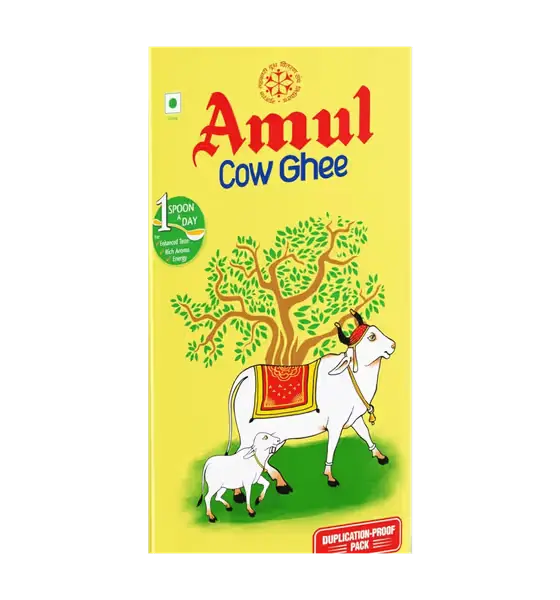
Amul Cow Ghee is pure clarified butter made from cow’s milk. The clarification process removes water, milk solids, casein (protein), and lactose — leaving behind almost 100% fat. This makes it shelf-stable, high-smoke-point, and tolerable for most lactose-intolerant people. The single ingredient is: cow milk fat.
Unlike buffalo ghee, cow ghee gets its characteristic golden colour and Beta Carotene content from the carotenoids in grass-fed cow milk, which the body converts to Vitamin A.
Full Nutritional Breakdown
| Nutrient | Per 100g | Per Serving (13.5g) | % RDA | What It Means |
|---|---|---|---|---|
| Energy | 897 kcal | ~121 kcal | 6% | ⚠ Dense One of the most calorie-dense foods. Even 1 tbsp adds ~121 kcal — but it’s satiating. |
| Total Fat | 99.7 g | 13.5 g | 20% | High Virtually all calories come from fat. Avoid if on a strict low-fat diet. |
| Saturated Fat | 60.0 g | 8.1 g | 37% | ⚠ High 60% of fat is saturated. Moderate consumption is key — not avoidance. |
| Trans Fat | 0.0 g | 0 g | 0% | ✓ Clean Zero industrial trans fats. Any trace naturally-occurring ruminant trans fats (like CLA) are beneficial. |
| Cholesterol | 280 mg | 37.8 mg | — | ⚠ Note Dietary cholesterol impact on blood cholesterol is modest for most people. Monitor if you have existing lipid issues. |
| Carbohydrates | 0.0 g | 0 g | — | ✓ Zero Lactose and milk sugars are completely removed during clarification. Keto-friendly. |
| Total Sugars | 0.0 g | 0 g | — | ✓ Zero No sugars whatsoever. |
| Added Sugars | 0.0 g | 0 g | 0% | ✓ Zero Pure product — nothing added. |
| Protein | 0.0 g | 0 g | — | Zero All milk proteins (casein, whey) are removed during ghee-making. Not a protein source. |
| Sodium | 0 mg | 0 mg | 0% | ✓ Zero Naturally sodium-free. Safe for those on low-sodium diets. |
| Vitamin A | 600 μg | ~81 μg | — | ⭐ Key Expressed as Beta Carotene — the plant-form of Vitamin A. Supports vision, immunity, and skin health. |
Fat Composition — The Real Story
The “fat is bad” narrative is outdated. What matters is the type of fat. Here’s how ghee’s fat breaks down and what each type does:
| Fat Type | Approx. Amount | Role in the Body | Verdict |
|---|---|---|---|
| Saturated Fat | ~60g/100g | Energy storage, cell membrane structure, hormone production | ⚠ Moderate Not inherently harmful in whole food form, but excess raises LDL in some. 1–2 tsp/day is the sweet spot. |
| Monounsaturated Fat (MUFA) | ~28g/100g | Heart-friendly fats (same family as olive oil). Lowers bad LDL, raises good HDL | ✓ Beneficial The 28% MUFA content is a genuine positive for ghee’s cardiovascular profile. |
| Butyric Acid (Short-chain FA) | ~3–4g/100g | Gut lining repair, anti-inflammatory, colon health | ⭐ Standout Ghee is one of the richest dietary sources of butyrate. Excellent for gut health. |
| Conjugated Linoleic Acid (CLA) | ~2–3g/100g | Fat metabolism, muscle preservation, anti-cancer properties | ⭐ Standout Found primarily in ruminant animal fats. Cow ghee is a natural CLA source. |
| Polyunsaturated Fat (PUFA) | ~5g/100g | Essential fatty acids — cannot be made by the body | ✓ Safe Small but meaningful amount of Omega-3 and Omega-6 fats. |
The Honest Verdict
Amul Cow Ghee is exactly what the label says — pure, unadulterated cow milk fat with zero additives. Its profile is genuinely impressive: no trans fats, no sugars, no sodium, no lactose, and meaningful Vitamin A. The saturated fat content is high, but in the context of 1–2 teaspoons per day (as the “1 Spoon a Day” messaging suggests), it’s within the bounds of a healthy diet for most adults.
👍 Why It’s Worth It
- Zero trans fat — cleaner than many refined oils
- Rich in Butyric Acid — excellent for gut health
- Natural CLA source — supports fat metabolism
- Vitamin A from Beta Carotene — supports vision and immunity
- Lactose-free — safe for most lactose-intolerant people
- High smoke point (~250°C) — safe for Indian high-heat cooking
- Zero carbs, zero sugars — keto and diabetic-friendly in small amounts
👎 Use Mindfully
- 897 kcal/100g — extremely calorie-dense
- 60g saturated fat — high if consumed in excess
- 280mg cholesterol — monitor if lipid levels are already elevated
- Zero protein — not a nutritional substitute, just a cooking fat
- Not suitable for those with dairy fat allergies (rare but real)
How Much Should You Actually Eat?
The “1 Spoon a Day” on the Amul label is solid advice. One serving (13.5g / about 1 tablespoon) gives you ~121 kcal — manageable within a 2000 kcal daily budget. Used to cook dal, spread on roti, or drizzle on rice, this amount delivers the butyric acid and Vitamin A benefits without overloading on saturated fat.
Where ghee gets problematic is portion creep — 3–4 generous tablespoons in one meal can push saturated fat intake well beyond healthy limits. Moderation, not avoidance.
⚠️ This review is based on nutritional label analysis and published food science. It is not medical or dietary advice. Individuals with cardiovascular conditions, high cholesterol, or specific dietary needs should consult a registered dietitian before making changes.