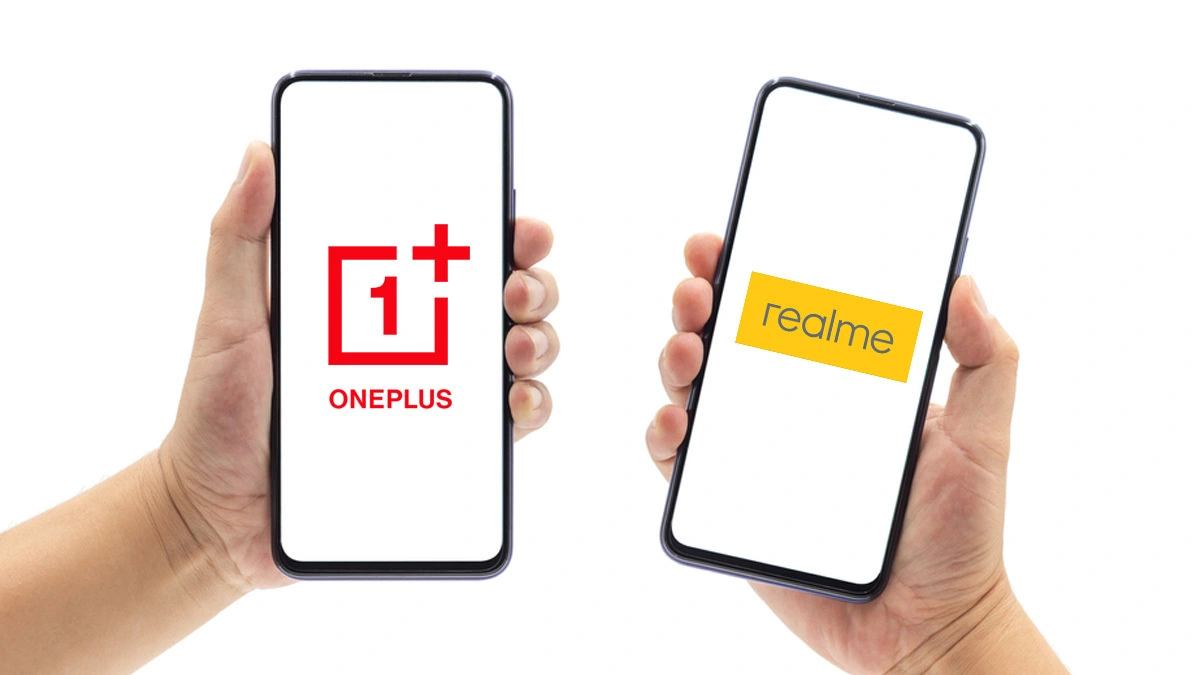
OnePlus + Realme The Merger That Changes Everything
BBK Electronics’ biggest internal shake-up in a decade. OnePlus and Realme have officially merged into a single “Sub-Product Business Unit” under OPPO — here’s what it means for you, your devices, OxygenOS, and the future of both brands.

What Happened & Why It Matters
In one of the most significant restructuring moves in the smartphone industry in years, OnePlus and Realme have officially merged into a unified “Sub-Product Business Unit” under their shared parent company OPPO — itself a part of the massive BBK Electronics conglomerate.
The news, first reported on April 29–30, 2026, by prominent Chinese tech leaker Digital Chat Station on Weibo, was corroborated by 9to5Google, Business Standard, Business Today, NDTV Profit, and PhoneArena.
📡 Source: Digital Chat Station (Weibo) reported that both brands’ global and domestic China operations have been brought under a new “sub-product center.” This was independently corroborated by multiple major tech outlets.
Why Did This Happen?
Declining Global Sales
OnePlus saw sharp declines in Q1 2026. The brand was reportedly evaluating its entire US market presence after failing to gain traction.
The “AI Tax” & Rising Costs
Component costs have surged as chipmakers impose premiums for AI-capable silicon. Two separate global R&D and marketing teams became too expensive.
BBK Consolidation Strategy
Realme had already begun reintegrating into OPPO as a sub-brand in January 2026. The OnePlus merger is the next logical step.
🔑 Key Context: Realme spun out of OPPO in 2018. It operated independently for 8 years before BBK began pulling it back in January 2026. OnePlus (founded 2013) had already seen design and R&D teams quietly merged with OPPO years prior to this announcement.
The BBK Electronics Empire
BBK Electronics — the Dongguan-based conglomerate — controls some of the world’s most powerful smartphone brands. Most people don’t know BBK, but they almost certainly own a BBK product.
🌐 Market Scale: Together, BBK brands rank consistently in the global top 5 smartphone manufacturers by quarterly shipments, dominating South & Southeast Asia, the Middle East, and China.
| Brand | Founded | Segment | 2026 Status |
|---|---|---|---|
| OPPO | 2004 | Mid-range to Premium | Parent Company |
| OnePlus | 2013 | Flagship / Premium | Merging with Realme |
| Realme | 2018 | Budget / Mid-range | Merging with OnePlus |
| Vivo | 2009 | Camera / Lifestyle | Independent |
| iQOO | 2019 | Gaming / Performance | Independent (Vivo sub) |
New Management Structure
The new unified business unit has a clear hierarchy. Here is who is in charge and what it means for strategic direction.
Ex OnePlus China President
Ex Realme Vice President
Ex Realme
⚠️ Notable departure: OnePlus India CEO Robin Liu stepped down earlier in 2026 amid declining shipments — a signal that the merger groundwork was laid months before the official announcement.
OnePlus vs Realme — Who Are They?
Despite the merger, both brands retain separate names and market positioning. Their distinct identities explain why BBK keeps both alive.
🔁 Already happening: The upcoming OnePlus Nord CE6 Lite is reportedly a direct rebrand of the Realme P4X — same Dimensity 7400 chipset, same 7,000mAh battery. This 1:1 rebranding strategy saves R&D costs and is set to become common.
What Happens to OxygenOS?
For millions of OnePlus fans, OxygenOS has always been the soul of the brand — praised for its speed, clean Android experience, and thoughtful customizations. Now its future is the most sensitive topic of this merger.
✅ Short term (2026): OxygenOS 16 is currently rolling out and will continue for all committed devices on their original update schedule.
🚨 Long term (Late 2026+): Both OnePlus and Realme will transition to a Universal ColorOS framework. The visual skin may retain cosmetic differences, but the underlying code, AI engine, and update infrastructure will be fully standardised.
| Software Aspect | OxygenOS (Today) | ColorOS Transition (Late 2026+) |
|---|---|---|
| Codebase | Partially distinct | Unified ColorOS base |
| Update Engine | OnePlus-specific | Standardised across brands |
| AI Features | OnePlus AI (limited) | Identical AI across all devices |
| Visual Skin | Distinct OnePlus look | Slightly different, same core |
| Existing Devices | Continue on OxygenOS 16 | Warranty & updates honoured |
Full Timeline of Events
OnePlus is Born
Pete Lau and Carl Pei launch OnePlus with the OnePlus One — a “flagship killer” instantly beloved by enthusiasts worldwide.
Realme Spins Out of OPPO
Sky Li founds Realme as an independent brand targeting budget-conscious younger buyers in India and SE Asia.
OxygenOS & ColorOS Begin Quietly Merging
OxygenOS 12 begins sharing ColorOS code — the first public sign of deeper OPPO integration. Fans push back.
Realme Re-integrated into OPPO
Realme formally announces its re-integration into OPPO as a sub-brand, sharing resources to cut costs. The first domino falls.
OnePlus Closure Rumours & Leadership Changes
Reports emerge that OnePlus may exit global markets. India CEO Robin Liu steps down. OnePlus denies closure but stays silent on other markets.
Merger Confirmed by Insiders
Digital Chat Station posts detailed merger structure on Weibo. Corroborated by 9to5Google, Business Standard, NDTV Profit, BusinessToday, and PhoneArena.
ColorOS Universal Transition Begins
Both brands transition to unified ColorOS. Products continue launching under OnePlus and Realme names.
What Does This Mean for You?
Whether you own a OnePlus 15, a Realme GT 7, or you’re planning to buy a new phone — here is exactly what changes and what doesn’t.
- 🛡️Your warranty is fully safe Existing warranties remain valid. In markets like Malaysia, OnePlus service is already integrated into the My OPPO service network.
- 🔄Software updates continue as committed OxygenOS 16 rolls out now. Long-term, a ColorOS-based framework replaces it — but existing phones will be honoured.
- 📦Both brands stay on shelves Neither OnePlus nor Realme is disappearing. The merger is a backend operational move — both continue as separate consumer product lines.
- 🔁Expect more rebranded devices The Nord CE6 Lite = Realme P4X situation will become more common. Same internals, different branding. Saves costs but reduces differentiation.
- 🌍US market future is uncertain Realme has no US presence. With OnePlus already evaluating an exit, the merger may accelerate withdrawal from North America.
- 🤖AI features will be unified Both brands will share the same AI features, update cadence, and feature set. No more OxygenOS-exclusive innovations.
- 💰Pricing may become more competitive Shared R&D and production costs could allow both brands to compete more aggressively on price — especially in the mid-range overlap.
Complete Comparison
| Aspect | Before Merger | After Merger |
|---|---|---|
| Corporate Structure | Two separate sub-brands under OPPO | Single Sub-Product Unit |
| R&D Teams | Separate product development | Unified research base |
| Marketing | Independent campaigns | Combined under Xu Qi |
| Software | OxygenOS / Realme UI | Universal ColorOS (late 2026) |
| Brand Identity | Fully independent identities | Retained — both names survive |
| Product Roadmaps | Independent launch cycles | Joint planning & coordination |
| Service Centers | Separate (OnePlus / Realme) | Unified OPPO service hubs |
| Device Sharing | Rare / minimal | Active rebranding (e.g. Nord CE6 Lite) |
| US Market | OnePlus present; Realme absent | OnePlus exit likely |
Frequently Asked Questions
The Verdict
Consolidation over competition — and that’s not necessarily bad.
The OnePlus–Realme merger is less a shock and more the inevitable conclusion of a strategy BBK Electronics has been quietly executing for years. The two brands were never truly independent — they shared parent infrastructure, supply chains, and increasingly, software. Making it official just removes the pretence.
For everyday users, the immediate impact is minimal. Your phone still works. Your warranty is valid. Updates continue. But for enthusiasts who loved OxygenOS’s clean, speed-focused philosophy — the writing is on the wall.
The real story is what this signals: the era of identity-driven Android sub-brands is ending. As Samsung and Apple dominate premium AI devices, and component costs rise, challenger brands must consolidate or fade. BBK is choosing consolidation — smart, if a little heartbreaking.
Short-term: Nothing changes
Warranties, updates, and service continue. Both brands stay on sale. Pricing may even improve.
Long-term: Identity dilution
OxygenOS fans will feel the loss. Future OnePlus phones will increasingly feel like OPPO phones in different packaging.
📰 Sources: hi-tech.ua · Business Standard · PhoneArena · Digital Chat Station (Weibo) · 9to5Google · BusinessToday.in
Published: May 1, 2026 | Updated: May 2, 2026