
India’s Social Media Dream
— Who Will Win?
The story of ShareChat, Moj, ₹7000 crore bets, TikTok’s ghost — and why India still doesn’t have its own Instagram.
The Beginning
The Question No One Answered
Founded
2015
Open your phone right now. Go to your app drawer. Instagram — American. YouTube — American. WhatsApp — American. Even the phone itself is probably assembled in China with chips designed in America.
Now ask yourself one honest question: In 2025, which truly Indian social media platform do you use daily?
Think hard. Take your time.
Nothing came to mind, did it? Or maybe a faint memory of something you downloaded once, tried for two days, then quietly deleted. That’s the story of India’s social media dream — brilliant in concept, brutal in execution, and still unfinished.
India has a billion-plus people. India has the world’s cheapest data. India has some of the most creative people on the planet — from the chaat-wallah making Reels to the college student building memes at midnight. And yet, when it comes to the platform they post on? It’s always someone else’s kitchen.
This is the story of why that happened. And why, even after losing billions of rupees and years of effort, one company is still standing in the ring — bruised, bleeding, but not done yet. That company is ShareChat.
The Global Context
India vs The World in Social Media
Let’s zoom out for a second. Every major country has some skin in the social media game. America basically invented it — Facebook, Instagram, Twitter, Snapchat, LinkedIn. China built its own internet empire behind its Great Firewall — WeChat, Weibo, Douyin (which you know as TikTok), Bilibili. Even South Korea has Kakao. Japan has Line.
But India? A country of 1.4 billion people, with 800 million+ internet users, a booming creator economy — and yet not a single homegrown platform that competes at scale globally.
And the worst part? It’s not like people didn’t try.
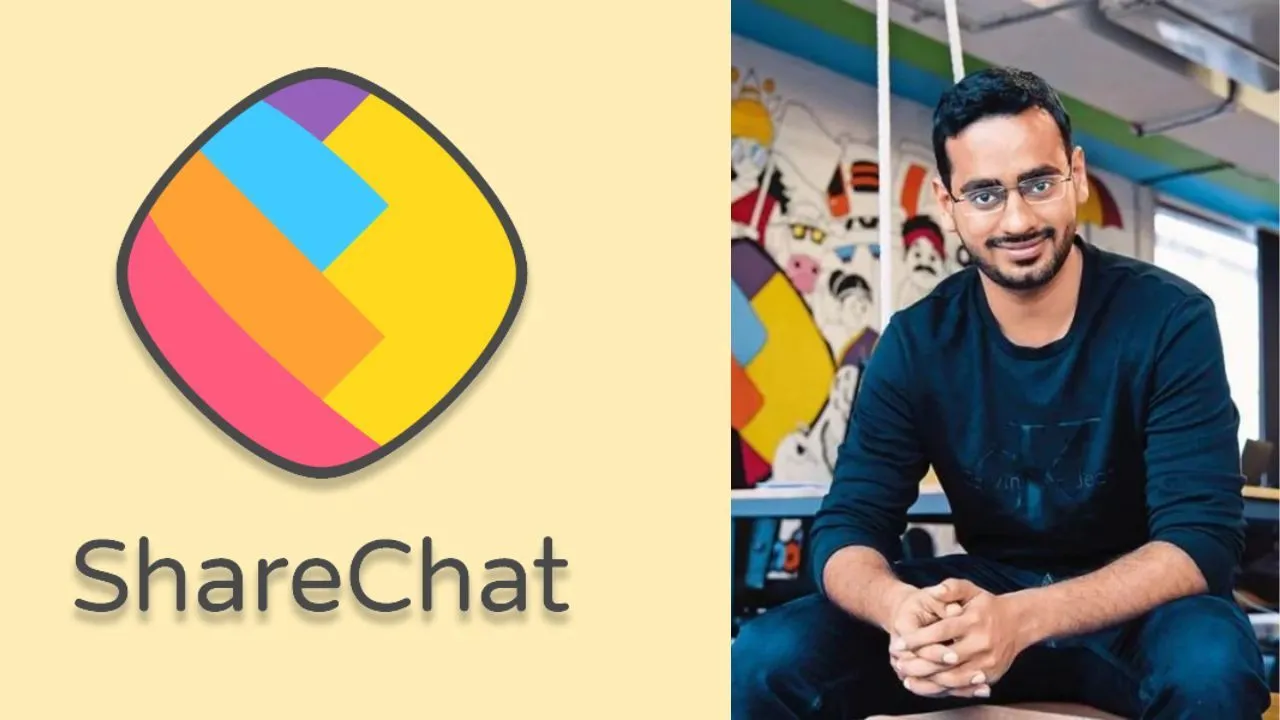
ShareChat was founded in 2015 by three IIT Kanpur graduates — Ankush Sachdeva, Bhanu Pratap Singh, and Farrukh Dhondi. Their idea was deceptively simple: Millions of Indians speak Hindi, Tamil, Telugu, Marathi, Bengali — but Facebook and Instagram are basically English-first platforms. Why not build something in their language, for their culture?
🎯 The Core Insight That Built ShareChat
India’s next 500 million internet users wouldn’t come from English-speaking metros. They’d come from Sitapur, Siwan, Sivaganga — small towns where people speak Bhojpuri, Rajasthani, Odia. ShareChat was built for them, not for us.
And for a few years, it worked beautifully.
The company grew fast. Google invested. Tiger Global invested. Lightspeed invested. By 2021, ShareChat had crossed a valuation of $2.1 billion — making it one of the first Indian social media unicorns. That’s roughly ₹17,000 crore in value, built by a homegrown team, for a homegrown audience.
It looked like India was finally getting its answer. Then things got… complicated.
The Turning Point
The Big Opportunity: TikTok Ban
TikTok India DAU
200M+
June 2020. India and China are in a standoff at the Galwan Valley. Soldiers are killed. The country is furious. And the Indian government does something dramatic — it bans 59 Chinese apps overnight. The biggest name on the list? TikTok.
At the time, TikTok wasn’t just an app in India. It was a phenomenon. A cultural force. A livelihood for millions of creators. With over 200 million daily active users, it had single-handedly created a new kind of digital creator in India — the Tier 2 and Tier 3 content star. The person from Muzaffarpur or Madurai who became famous making 15-second videos about nothing and everything.
In terms of business, TikTok had already earned around $6–7 million in ad revenue from India — and this wasn’t money stolen from Google or Facebook. It was fresh money pulled out of traditional media — local TV, print, radio. It was a brand new pie, and TikTok had baked it.
🇮🇳 June 15, 2020
Galwan Valley clash between India-China troops. 20 Indian soldiers killed.
📵 June 29, 2020
Indian government bans 59 Chinese apps including TikTok, ShareIt, UC Browser.
📲 July 2020
Indian short-video apps see 10x download spikes overnight. The gold rush begins.
💰 2020–2022
Over $1 billion invested in Indian short-video apps. Moj, Josh, MX TakaTak, Chingari, Mitron all launch or scale.
For Indian startups, this was like someone handing you a loaded gold mine and saying — “It’s yours. Go dig.” The question was: who would dig fastest, and who would dig smartest?
The Rush
The Gold Rush of Indian Apps
What happened next was equal parts inspiring and chaotic. Overnight, every founder in India suddenly had a TikTok clone idea. Every VC suddenly wanted to back it. And every app had the same tagline — three words that became the rallying cry of a generation: “Made in India.”
The apps that launched or scaled furiously in this window were staggering in number:
Moj by ShareChat
ShareChat’s own short-video bet. Launched overnight. Clocked 100M+ users.
Josh by DailyHunt
Backed by Google. Had IPL sponsorship. Spent big on influencer tie-ups.
MX TakaTak
By Times Internet’s MX Player. Had existing distribution — movie content fans.
Chingari & Mitron
Became viral overnight. Chingari crossed 3.5 crore downloads in weeks.
💸 The Investment Numbers Were Staggering
In 2020 alone, Indian short-video apps raised over $700 million. By 2021, that number crossed $1 billion. DailyHunt’s parent company Verse Innovation raised a whopping $450 million in a single round. ShareChat raised over $500 million across rounds.
In total, between 2020 and 2022, an estimated ₹7,000–8,000 crore was poured into this sector. That’s not a gold rush — that’s a gold stampede.
There were five things VCs were told — five reasons why this was a once-in-a-generation opportunity. And honestly? They all sounded completely logical at the time.
One: TikTok’s ₹500 crore ad revenue was now up for grabs. Two: TikTok’s Tier 2-3 audience was still hungry for content. Three: Organic downloads were already happening — momentum was real. Four: India was becoming a video-obsessed country. Five: Nationalism was running hot — Indian apps were being called patriotic choices.
It sounded perfect. It looked perfect. Every metric was pointing up. Every founder was excited. Every investor was writing cheques.
• • •So why did almost all of it fail?
The Cracks Appear
Why Everything Started Falling Apart
Avg User Acq Cost
₹80–120
The first crack showed up within weeks of the gold rush. Those massive download numbers? They were real, but they were also misleading.
Here’s what actually happened: When TikTok got banned, people were angry and curious. In that emotional state, they downloaded Indian apps — Moj, Josh, Chingari, Mitron. It was part curiosity, part patriotism. The download charts went crazy.
But within a few weeks, the organic wave died. The novelty wore off. The content wasn’t as good. The app experience wasn’t as smooth. Users started drifting away. And suddenly, every single app company realized the same horrifying truth at the same time: we need to spend money to keep users here.
Some startups were burning ₹100 crore+ per year just on user acquisition. They were essentially handing money to their biggest competitors to survive. The irony was almost poetic, if it wasn’t so painful.
Fake Traction Problem
Initial downloads were emotion-driven, not habit-driven. Retention rates were terrible — under 15% in 30 days for most apps.
Content Quality Crisis
Most apps skipped creator management entirely. Instead of building ecosystems, they just paid per video. Quality tanked immediately.
Dark Pattern Disasters
Some apps downloaded TikTok videos via VPN and reuploaded them. Fake likes, fake comments — investors were being shown fabricated numbers.
Technology Desert
None of them had TikTok’s core asset — the recommendation engine. Without smart AI, videos felt random and boring to users.
The Real Secret
The Real Power: Creators & Technology
Here’s something nobody talked about publicly during the gold rush: TikTok’s real competitive moat wasn’t the app — it was the AI recommendation engine.
Think of it this way. If Netflix is like a well-curated library, TikTok’s algorithm was like a librarian who had read everything you’d ever thought, dreamed, or whispered — and had the exact book ready before you even walked through the door.
TikTok’s algorithm could detect micro-signals — the 0.3 seconds you paused on a video before scrolling, the slight hesitation before clicking away, the videos you replayed twice at midnight. It used all of this to build a feed that felt almost supernatural. Indian apps simply didn’t have this technology.
🤖 The TikTok Algorithm Secret
TikTok had a dedicated team of 1,000+ people in India just managing the creator ecosystem. They ran programs to identify emerging stars early, gave them tools, promoted them, and shared ad revenue with them. It wasn’t just a platform — it was a career launchpad with infrastructure.
Indian apps? They paid creators ₹5,000 per video and called it a day. No strategy. No ecosystem. No future.
And on the creator side, it got worse. Creators are smart people. They saw multiple platforms throwing money at them. So what did they do? They took money from all of them — and uploaded the same video everywhere. When the money stopped flowing, so did the content. Simple as that.
This is a fundamental truth that Indian apps missed completely. Building a creator economy isn’t about paying per video. It’s about building tools, data dashboards, growth support, monetization infrastructure — turning hobbyists into professionals. That takes years and millions of dollars. Most apps wanted results in months.
The Real Competition
Enter the Giants: Instagram & YouTube
Reels Launch
Aug 2020
Here’s the part of the story that nobody in the Indian startup ecosystem was accounting for when TikTok got banned: The vacuum wasn’t only for Indian startups.
Facebook saw the same opportunity. And instead of building a new app, they did something much smarter — they added a feature to an app 400 million Indians already had. In August 2020, Instagram launched Reels in India. The timing was surgical.
Then Google did the same thing. YouTube Shorts launched in India in September 2020 — again, an addition to an existing app that over 450 million Indians already used every month.
| Feature | Indian Apps (Moj/Josh) | Instagram Reels | YouTube Shorts |
|---|---|---|---|
| Existing user base | Had to build from scratch | 400M+ in India | 450M+ in India |
| AI recommendation | Basic / None | World-class | World-class |
| Creator monetization | Limited | Growing | YouTube Partner Program |
| Video quality / streaming | Often laggy | Seamless | Seamless |
| Brand ad budgets | Near zero | Massive | Massive |
| Cross-platform discovery | No | WhatsApp/FB/Instagram | Google Search/Gmail |
The result was inevitable. TikTok had created a short-video habit in India. That habit didn’t disappear — it just migrated. And it migrated to platforms that already had everything Indian apps were desperately trying to build. The market TikTok created? Instagram and YouTube absorbed it in under 18 months.
The Protagonist
ShareChat’s Gamble and Mistakes
Now let’s talk about the company that’s still in the game: ShareChat. Because unlike Chingari, unlike Mitron, unlike half the other apps that vanished — ShareChat is still alive. Still fighting. Still burning money with some hope of turning it around.
But survival doesn’t mean success. ShareChat made some spectacular bets and some spectacular mistakes along the way.
The smart bets: Launching Moj immediately after TikTok’s ban. Raising $500M+ in funding. Focusing on vernacular languages as a core differentiator. Acquiring AI talent and building a recommendation system.
The mistakes: Spending too aggressively on user acquisition without fixing retention. Relying on creator payments instead of creator ecosystems. Trying to build too many things simultaneously — ShareChat (social) + Moj (short video) + monetization products, all at once with limited bandwidth.
📉 The Losses Tell the Story
ShareChat’s net losses in FY23 were over ₹4,100 crore. Revenue was growing, but so was the cash burn. The company has never turned a profit in its entire 10-year history.
This isn’t unique to ShareChat — most social platforms burn money for years before profitability. But in India’s market conditions, with limited ad budgets and intense competition, the path to profit is especially long and uncertain.
There have been rounds of layoffs — 200 people in 2022, another major round in 2023. Valuation has dropped significantly from its peak of $5 billion. Investors are watching nervously.
And yet — ShareChat hasn’t shut down. Its founders are still there. The product is still evolving. And something new is quietly beginning to take shape that might — just might — change everything.
What if the future of Indian social media isn’t short videos at all — but something nobody predicted?
• • •The New Chapter
The New Hope: Microdrama Trend
Global Micro-Drama Market 2024
$6B+
Here’s where things get genuinely interesting. While everyone was busy analyzing ShareChat’s losses and writing obituaries, a new format was quietly exploding globally — Microdramas.
What are microdramas? Think of them as mini-series designed for your phone screen. Each episode is 1–3 minutes long. They’re usually melodramatic, addictive, and designed to make you watch “just one more.” Think soap operas, but faster, shorter, and made for your phone while you’re waiting for chai to boil.
In China, this format became a ₹45,000 crore industry seemingly overnight. Apps like ReelShort and DramaBox took the US market by storm. And now — the format is arriving in India.
🎭 Why Microdramas Could Be Different
Monetization is built-in: Users pay to unlock episodes. It’s like a freemium model — first 5 episodes free, then ₹30 to unlock the rest. No dependence on brand ads.
Vernacular advantage: Microdramas in Hindi, Telugu, Tamil, Bengali — this is exactly where ShareChat has been playing for years. They know these audiences. They know these languages. They have the distribution.
Content cost is manageable: A microdrama series can be produced for ₹5–15 lakh. That’s a fraction of what OTT originals cost. And if one hits, it can earn 10x that from in-app purchases.
ShareChat and Moj are reportedly investing in this format. The bet is: if we can’t win on user-generated content against Instagram, can we win on scripted micro-entertainment that Meta and YouTube aren’t doing?
It’s an intriguing pivot. And it might be the smartest idea they’ve had in years.
Reality Check
Can This Really Work?
Honest answer? Maybe. But maybe isn’t a business plan.
For microdramas to work for ShareChat, several things need to line up perfectly. First, Indian users need to develop a habit of paying for short content — and India remains one of the most price-sensitive digital markets on Earth. People who happily pay ₹149 for Hotstar often balk at paying ₹30 for a drama episode.
Second, content quality needs to be high enough to retain subscribers. This means investing in production, writers, directors, actors — which sounds simple until you realize you’re now competing with Netflix, Hotstar, Sony Liv, Amazon Prime, ZEE5 — all of whom have massive content budgets.
Third — and most critically — ShareChat needs runway. Money. Time. And patience from investors who have already been waiting for returns for years.
The economics could work — but only if the content hooks users hard enough to pay. And only if ShareChat can build a content pipeline faster than competitors. It’s a race against time, capital, and a market that has burned everyone who tried before.
The Bigger Picture
The Harsh Reality of Indian Startups
ShareChat — Still Fighting Since 2015
The ShareChat story isn’t just about one company. It’s a window into a deeper, more uncomfortable truth about the Indian startup ecosystem.
India produces brilliant engineers, creative founders, and genuinely innovative ideas. But the environment around consumer internet companies — particularly social media — is uniquely brutal. Here’s why:
Ad market imbalance: India has 800M+ users but its digital ad market is a fraction of the US or China. Brand budgets are thin. CPMs (cost per thousand impressions) are some of the lowest in the world. A platform that would earn ₹30 per user per month in the US earns ₹2–3 in India.
Paying user problem: India’s UPI revolution made payments easy. But habitual digital payments for content — music, video, apps — are still nascent. People pay for Jio, but not always for what comes over Jio.
Regulatory uncertainty: Between IT Rules, data privacy debates, and sudden policy changes, building a long-term social media business in India requires navigating a constantly shifting legal landscape.
And yet — every generation of Indian founders tries again. Because the opportunity is real. The users are real. The creativity is real. The frustration of watching foreign companies dominate your own country’s social fabric is real.
The Verdict
Final Thoughts: Win or Another Failure?
So, will ShareChat win? Or will it become another cautionary tale — another tombstone in the graveyard of Indian social media dreams?
Here’s the honest answer: We don’t know. And that’s actually what makes this story worth watching.
ShareChat has survived longer than anyone expected. It’s still experimenting. Still pivoting. Microdramas, AI tools for creators, deeper vernacular content — these are real bets, not desperation moves. The team has learned hard lessons that money alone can’t teach.
The digital media landscape is also changing faster than ever. AI is disrupting content creation. Short video attention spans are fragmenting. New monetization models are emerging. In a period of maximum disruption, agility matters more than size. And ShareChat — battered, leaner, and more focused — might just be more agile than it’s been in years.
The Real Question Isn’t ShareChat.
It’s About India.
India deserves its own social media platform. Not because of nationalism — but because culture, language, humour, emotion, and community deserve a platform that truly understands them. Instagram doesn’t know what “thoda aur” means to a Lucknow grandma. YouTube’s algorithm doesn’t understand why a Bhojpuri comedy clip hits differently than a Hindi one.
That gap — cultural, linguistic, emotional — is the only real moat available to an Indian social media company. ShareChat understands this better than anyone else. The question is whether it can survive long enough to capitalize on it.
The story isn’t over. Not by a long shot. 🇮🇳
Did this story make you think differently about Indian social media?
Share this with someone who’s never heard of ShareChat — and ask them which Indian app they use daily. The silence says everything.