The Silent Billionaire
How WhatsApp Makes Billions
While Charging You Nothing
From a Ukrainian refugee’s dream to Zuckerberg’s $19 billion gamble — and the deceptive moves that built the world’s most profitable free app.
Introduction
The World’s Most Profitable Free App
Apple sells iPhones for lakhs of rupees. Google harvests billions from every search. Netflix takes your money every month. But WhatsApp — the app you open before your morning tea — gives you unlimited global messaging, voice calls, video calls, and file sharing for ₹0 per year.
Yet in 2014, Mark Zuckerberg paid $19 billion for a company generating virtually zero revenue. In 2024, that “free” app generated $1.78 billion in revenue, projected to hit $2.4 billion in 2026. By 2026, WhatsApp will have over 3.5 billion monthly users — nearly half of humanity.
This is the story of the silent billionaire. A story of privacy, betrayal, metadata, and one of the most sophisticated money machines ever built inside a chat window.
“If you are not paying for the product, you are the product.”
— The oldest truth in Silicon Valley, never more relevant than todayChapter 01 · The Founding Story
The Rejection That Built an Empire
Jan Borysovych Koum grew up in Soviet Ukraine where state surveillance was daily life — the KGB listened to phone calls and privacy was a luxury the government denied. At 16, Koum emigrated to California with his mother, qualifying for food assistance. He taught himself computer networking from used bookstore manuals, eventually meeting Brian Acton at Yahoo!.
In 2007, both men left Yahoo!, applied to Facebook — and were rejected. In January 2009, Koum bought his first iPhone, saw the App Store’s potential, and incorporated WhatsApp Inc. on his 33rd birthday. Acton joined with $250,000 in seed funding. Their philosophy was taped to Koum’s desk:
“No Ads. No Games. No Gimmicks.”
— The original WhatsApp manifesto, Jan Koum’s desk, 2009WhatsApp Founded
Koum incorporates on his 33rd birthday. Acton seeds $250K. The app evolves from status updates to messaging after Apple enables push notifications.
Sequoia Capital Invests $8M
After 8 months of pursuit, Sequoia gets a meeting. WhatsApp hits 1 billion daily messages by October. Reaches 200M active users by April 2013.
Facebook’s $19 Billion Acquisition
Zuckerberg negotiates personally with Koum at his home. Deal: $4B cash + $12B Facebook stock + $3B RSUs. The largest-ever acquisition of a venture-backed company.
Data Sharing Begins
WhatsApp introduces E2E encryption. Updated ToS reveal data sharing with Facebook has been happening since 2014. EU fines Facebook €110M.
The Founders Walk Out
Acton leaves, forfeiting ~$850M in unvested stock. Koum resigns in April 2018. Both cite irreconcilable conflicts over privacy and monetisation.
$1.78B Revenue + Meta AI Launches
Almost entirely from the Business API. Meta AI appears inside WhatsApp. India crosses 535M users. The super-app vision accelerates.
Chapter 02 · The Deal
Zuckerberg’s $19 Billion Gamble — Or Was It Genius?
The tech world reacted to the 2014 acquisition with disbelief: Mark has lost his mind. WhatsApp had 55 engineers, no revenue model, and was losing $138 million per year. Facebook paid $42 per user. But Zuckerberg wasn’t buying an app — he was buying a network effect, adding one million new users every single day.
Cash Component
$4 billion in cash paid upfront — the most direct portion of the acquisition price.
Facebook Stock
$12 billion in Facebook shares — which have since multiplied many times over in value.
Restricted Stock Units
$3 billion in RSUs for employees vesting over 4 years — a retention mechanism that caused the infamous fallout.
Chapter 03 · The Fallout
The Silicon Valley Civil War — Privacy vs. Profit
Three years after the acquisition, the clash of worldviews became undeniable. Zuckerberg saw a data goldmine. The founders saw a betrayal of user trust.
Acton resigned in September 2017, walking away from approximately $850 million in unvested Facebook stock. Koum followed in April 2018. Acton then donated $50 million to co-found Signal — a privacy-first open-source competitor — as a direct response to what WhatsApp was becoming.
“I sold my users’ privacy to a larger benefit. I made a choice and a compromise. And I live with that every day.”
— Brian Acton, Forbes interview, 2018Chapter 04 · The Money Machine
How WhatsApp Actually Makes Money — The Invisible Toll Booth
Revenue Stream 1: The WhatsApp Business API
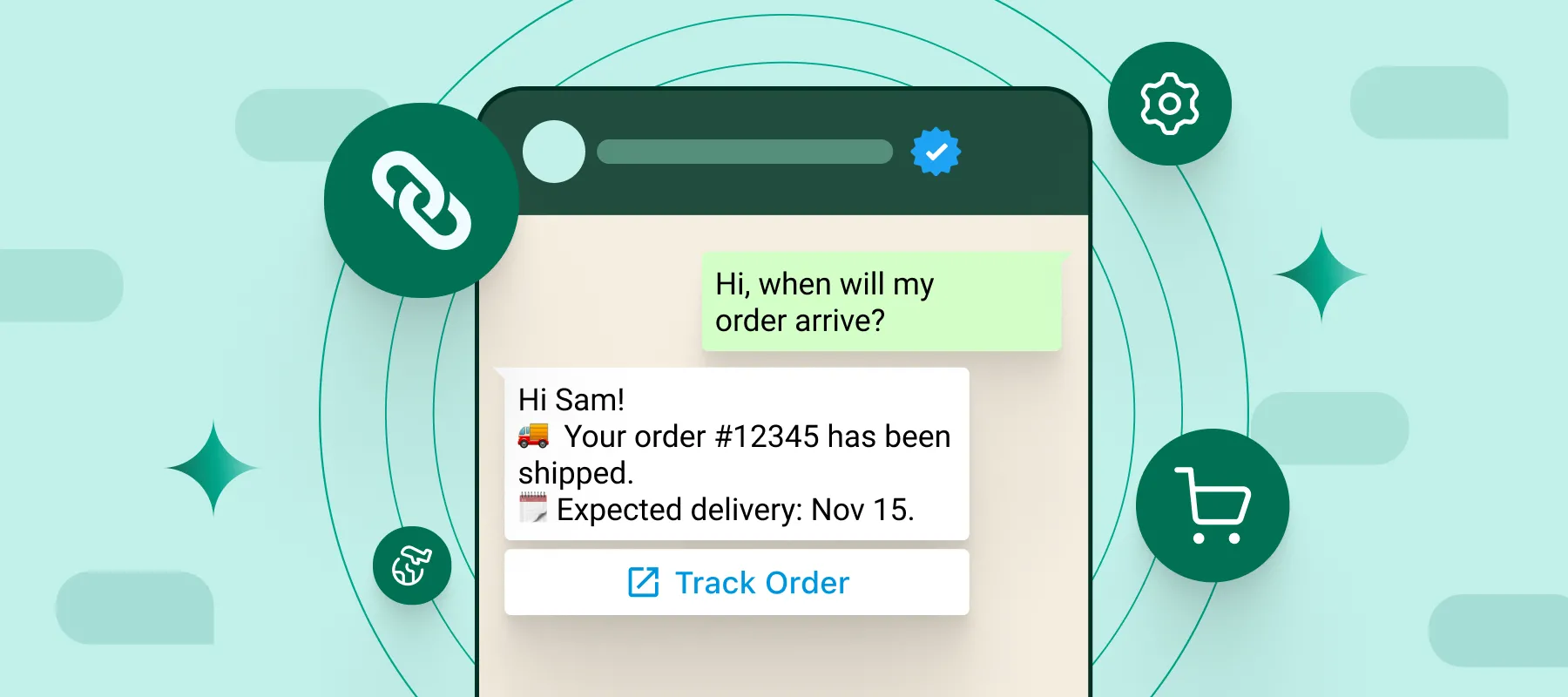
Meta charges companies per conversation after the first 1,000 free monthly conversations. Four categories, each priced differently:
| Category | What It Means | Real-World Example | Approx. India Cost |
|---|---|---|---|
| Utility | Transactional alerts | HDFC OTP, Flipkart order update | ~₹0.40/msg |
| Authentication | Login codes, 2FA | Swiggy OTP, Zepto verification | ~₹0.35/msg |
| Marketing | Promotions, offers | Myntra 50% sale, Zomato Gold offer | ~₹0.75/msg |
| Service | Customer-initiated chats | Airtel complaint, Amazon return | ~₹0.30/msg |
WhatsApp messages have a 98% open rate and are read within 5 minutes by 80% of recipients. No spam folder. No promotional tab. Businesses pay happily.
Revenue Stream 2: Click-to-WhatsApp Advertising
The Double Revenue Funnel
Step 1: A business pays Meta to show an ad on Facebook or Instagram. Meta earns advertising revenue.
Step 2: The user clicks and is redirected into a WhatsApp conversation with the business.
Step 3: The business pays for WhatsApp Business API tools to manage that conversation.
Meta earns twice. Its VP of Business Messaging confirmed this stream alone is worth “several billions of dollars” annually.
Revenue Stream 3: WhatsApp Pay
WhatsApp Pay runs on India’s UPI rails. Its strategic weapon: you’re already inside the app. One tap on the rupee icon — no app switch, no login, zero extra friction.
Chapter 05 · The Hidden Architecture
Your Privacy Illusion — The Metadata Economy
WhatsApp’s most reassuring message: “Your messages are end-to-end encrypted.” True. But there is a critical difference between content and metadata — and it’s in metadata where the surveillance economy operates.
Who You Talk To
Every contact you message. Meta builds your complete social graph and infers relationship types.
When You Talk
Time and frequency of conversations. Late-night patterns reveal lifestyle, relationships, and stress.
Professional Contacts
Messages to doctors, lawyers, real estate agents — revealing intentions before you act on them.
“We kill people based on metadata.”
— Former NSA Director Michael Hayden, 2014 — illustrating metadata’s real powerChapter 06 · The India Strategy
India: WhatsApp’s Future Bank — The Super-App Ambition
| Rank | Country | Monthly Active Users | % of Global Base |
|---|---|---|---|
| 🥇 1 | India | 535.8 million | ~17% |
| 🥈 2 | Brazil | 139.3 million | ~4.2% |
| 🥉 3 | Indonesia | 86.9 million | ~2.6% |
| 4 | United States | 124 million | ~3.8% |
| 5 | Germany | ~60 million | ~1.8% |
Commerce (JioMart)
Browse, order, and pay for groceries from JioMart directly inside a WhatsApp chat — no separate app needed.
Public Transport
Delhi Metro and Bengaluru Metro tickets bookable directly through WhatsApp — no queues, no extra apps.
Government Services
DigiLocker documents, vaccination certificates, and government notifications — all through WhatsApp.
The day WhatsApp wins India’s payments trust, Zuckerberg becomes the gatekeeper of the entire Indian economy.
— The strategic reality behind WhatsApp Pay’s India pushChapter 07 · The Future
The AI Revolution — WhatsApp’s Final Frontier
In 2024, a blue sphere appeared inside WhatsApp: Meta AI. Most users treated it as a novelty. Zuckerberg knows it’s the final piece of the business model. Meta holds the world’s largest conversational dataset — billions of human exchanges spanning languages, cultures, and decades.
WhatsApp AI Agent — The Digital Employee Model
A small kirana store owner cannot be available 24/7 to answer queries, take orders, and collect payments.
WhatsApp will deploy an AI agent inside their business account — one that answers in natural language, processes orders, sends payment links, and handles follow-ups automatically.
The owner pays Meta a monthly subscription. The AI worker never sleeps, never asks for a raise, and generates data that makes Meta’s advertising models even more precise.
Multiply by India’s 63 million small businesses — each paying a monthly fee — and you see Zuckerberg’s final revenue mountain.
Chapter 08 · The Uncomfortable Truth
Meta’s “Smart Scam” — How 3 Billion Users Were Brilliantly Outsmarted
Let’s be precise. What Meta did was not fraud in the legal sense — no one stole your money. But across fifteen years, a sequence of carefully constructed moves — each deniable in isolation — resulted in billions of people surrendering something far more valuable than money: their data, their trust, and their ability to leave.
This is the most sophisticated user manipulation playbook in tech history — executed in plain sight, protected by legalese, and ultimately punished by regulators on three continents.
⚡ The Anatomy of the Con
Five moves. Fifteen years. Three billion users. Multiple billion-dollar regulatory fines. Here is exactly how Meta engineered one of the greatest data heists in history — and made you say thank you for it.
-
01
The Promise That Was Never Meant to Be Kept
When Facebook acquired WhatsApp in 2014, Zuckerberg publicly promised: WhatsApp would remain independent, ad-free, and privacy-first. European regulators approved the acquisition based on Facebook’s claim that cross-platform data merging was “technically impossible.” By 2016, it was happening. The EU fined Facebook €110 million for providing “incorrect or misleading information” during the merger review. The data? Already harvested. The promise? Already broken.
-
02
The “Take It or Leave It” Privacy Ultimatum of 2021
In January 2021, WhatsApp notified 2+ billion users: accept new privacy terms by February 8 or lose your account. The new terms removed the opt-out that had existed since 2016 and mandated sharing user data — device details, IP addresses, transaction data, and metadata from all business interactions — with the entire Meta ecosystem. Panic spread. Telegram added 25 million users in three days. Signal crashed under server load. WhatsApp was forced to delay the deadline by three months and take out full-page newspaper advertisements trying to calm the backlash.
-
03
The Notification That Never Stopped
After the backlash, WhatsApp promised that policy acceptance prompts would not “become persistent” and would not “limit the functionality of the app.” The European consumer rights organisation BEUC documented that WhatsApp continued showing these prompts on an “almost daily basis” for nearly two years — until late December 2022. Courts ruled this placed “undue pressure on users and unfairly impaired their freedom of choice” — violations of European consumer protection law. Many users accepted under nag-screen duress, not genuine informed agreement.
-
04
The Network Effect Trap — You Can’t Leave Even If You Want To
The most devastating move required zero engineering. Even when users wanted to switch to Signal or Telegram in protest, most couldn’t. WhatsApp isn’t just an app — it’s where your family group chat lives, your office communicates, and your children’s school sends updates. Surveys across Spain, Mexico, South Africa, and the UK found that users who wanted to leave after the 2021 policy change largely failed — not because they changed their minds, but because they couldn’t convince their entire network to move with them. The lock-in was social, not technical. Meta spent a decade building it deliberately.
-
05
The Consent That Was Never Consent
India’s Competition Commission (CCI) summarised it most precisely in its 2024 ruling: “Consent obtained where users lacked realistic alternatives cannot qualify as freely given.” When a platform hosts your entire social and professional life, the word “consent” on a pop-up is theatre. You are not choosing to share your data — you are told that sharing is the price of staying in a room you built your relationships inside, a room you cannot leave without losing those relationships. Regulators in India, the EU, and the United States have formally agreed.
The Regulatory Reckoning — Governments Fight Back
Meta’s playbook didn’t go unpunished. Across multiple jurisdictions, regulators imposed landmark fines — though critics note they remain a fraction of what Meta earns from the practices they penalise.
| Year | Event | What Was Promised | What Actually Happened |
|---|---|---|---|
| 2014 | Facebook Acquisition | WhatsApp stays independent; ad-free; no data sharing | Data sharing began quietly by 2016 |
| 2016 | Terms Update | Optional opt-out from Facebook data sharing | EU fined Facebook €110M for misleading regulators |
| 2021 Jan | Privacy Policy Bomb | “Accept or lose your account” — Feb 8 deadline | 25M fled to Telegram in 3 days; Signal crashed |
| 2021 Mar | Policy Delay | Notifications won’t become persistent or limit app | Daily nag screens continued for 2 years until Dec 2022 |
| 2021 Sep | GDPR Fine | Transparency about data use (WhatsApp’s claim) | €225M fine for failing to disclose full data practices |
| 2024 Nov | India CCI Ruling | User consent (WhatsApp’s claim) | ₹213 Crore fine — “Consent without choice is not consent” |
🔴 The Verdict: Brilliant, Legal, and Deeply Deceptive
What Meta executed was not a crime. It was a masterclass in regulatory arbitrage — moving faster than governments, monetising data before laws could catch up, and using the irreplaceable social networks people had built inside WhatsApp as leverage against their ability to leave.
Every broken promise was wrapped in plausible deniability: “We never said forever ad-free.” “The policy was clarified, not changed.” “Users consented by continuing to use the app.”
Brian Acton said it most honestly: “I sold my users’ privacy to a larger benefit. I made a choice and a compromise. And I live with that every day.” The most effective deception is performed so slowly, so incrementally, that by the time people realise what’s happened — leaving feels more painful than staying.
Chapter 09 · The Data
Revenue, Growth & Business Numbers
| Year | Revenue (USD) | Primary Driver | YoY Growth |
|---|---|---|---|
| 2018 | $443 million | Business API Launch | — |
| 2019 | $630 million | API expansion | +42% |
| 2021 | $800 million | COVID digital shift | +27% |
| 2023 | $1.279 billion | Business API + Click-to-chat ads | +60% |
| 2024 | $1.785 billion | API + AI tools + India growth | +39% |
| 2026 (Proj.) | $2.4 billion | AI agents + Meta AI + Payments | +34% |
| Metric | Figure |
|---|---|
| Monthly Active Users (WhatsApp Business) | 764 million (Q4 2024) |
| Message Open Rate (Business Messages) | 98% |
| Messages Read Within 5 Minutes | 80% of users |
| Click-Through Rate (Promotional Content) | 45–60% |
| Customer Efficiency Improvement (Businesses) | +225% |
| WhatsApp Business Downloads — India (All-Time) | 481 million |
| Daily Messages Processed (Platform-wide) | 150 billion |
| Global Business Spending on Platform (2024) | $3.6 billion |
| App | MAU | Region | Revenue Model |
|---|---|---|---|
| 3.3 billion | Global (180 countries) | Business API, Ads funnel | |
| 1.41 billion | China | Payments, games, mini-programs | |
| Telegram | 1 billion | Global | Premium subscriptions, ads |
| Facebook Messenger | 947 million | US, Europe | Ads, business tools |
| Snapchat | 932 million | Global (youth-focused) | Advertising |
| Signal | ~40–60 million | Privacy-conscious users | Donations (non-profit) |
Chapter 10 · FAQ
Frequently Asked Questions
Chapter 11 · Conclusion
You Are the Product — And That’s Just the Beginning
WhatsApp’s story is the defining parable of the digital age. A Ukrainian refugee who survived surveillance built an app to escape it — and then sold it to one of the world’s most sophisticated data collection empires. Two principled engineers walked away from nearly a billion dollars to protect values that made their product worth billions. And the man who bought it constructed the most comprehensive commerce and communication infrastructure in human history.
When WhatsApp goes offline — even for an hour — thousands of businesses stop operating, supply chains freeze, and families lose contact. WhatsApp is not an app anymore. It is critical infrastructure — as essential as electricity in the countries where it dominates.
Mark Zuckerberg paid $19 billion not for an app. He paid for your time. And every second you spend inside WhatsApp — every message you send, every business you chat with — he is collecting interest on that investment.
In the attention economy, the most valuable thing you own isn’t your house or your car. It’s the minutes of your day. And WhatsApp has been quietly renting them since 2009.
— The core thesis of WhatsApp’s business modelThe next time you open WhatsApp to send a “free” message, remember what Jan Koum intended it to be — and what it became. The silent billionaire is not silent at all. It speaks the language of data, metadata, and monetised attention. Fluently. Continuously. In every message you send.