
Here’s the information you provided, rewritten without using numbers:
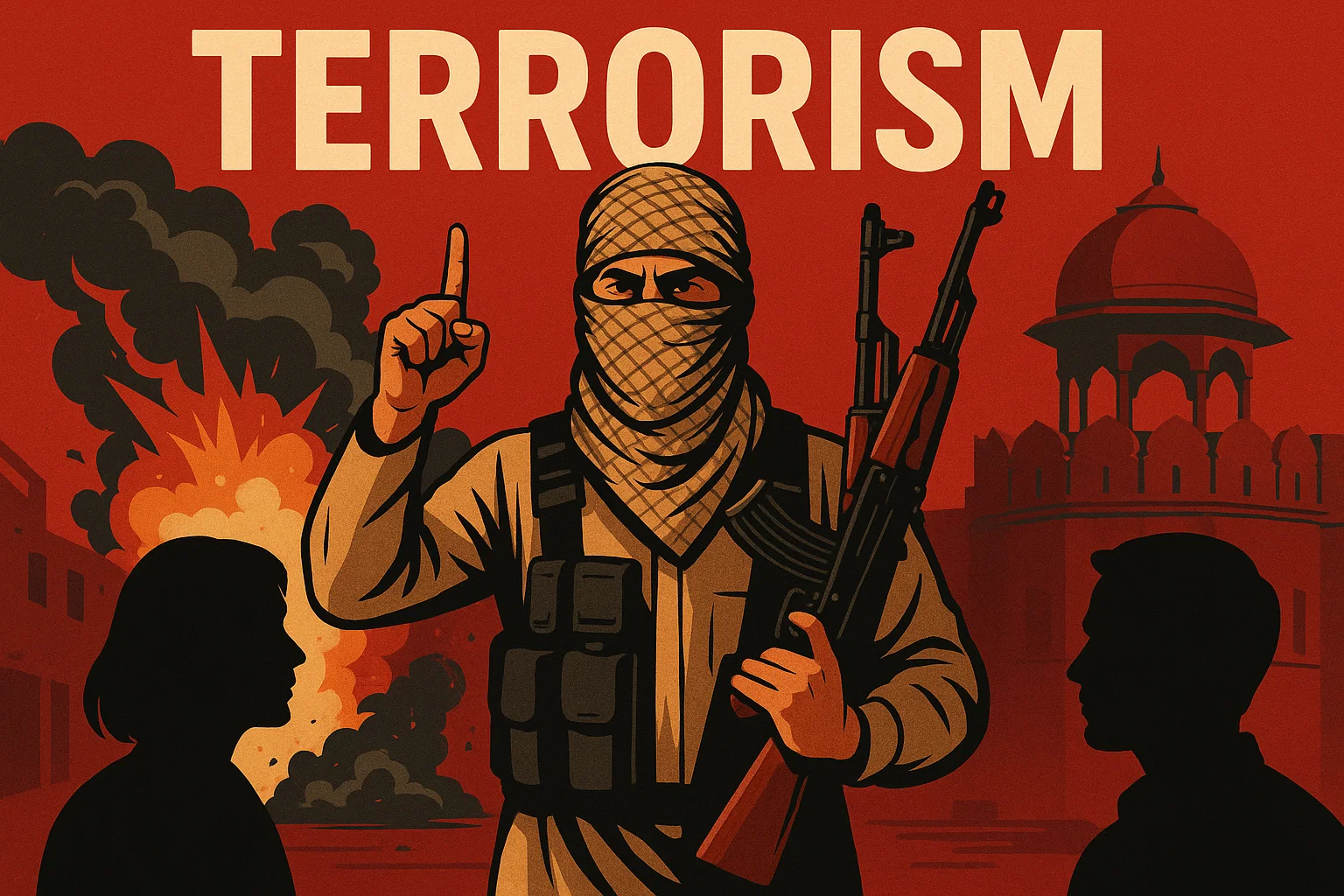
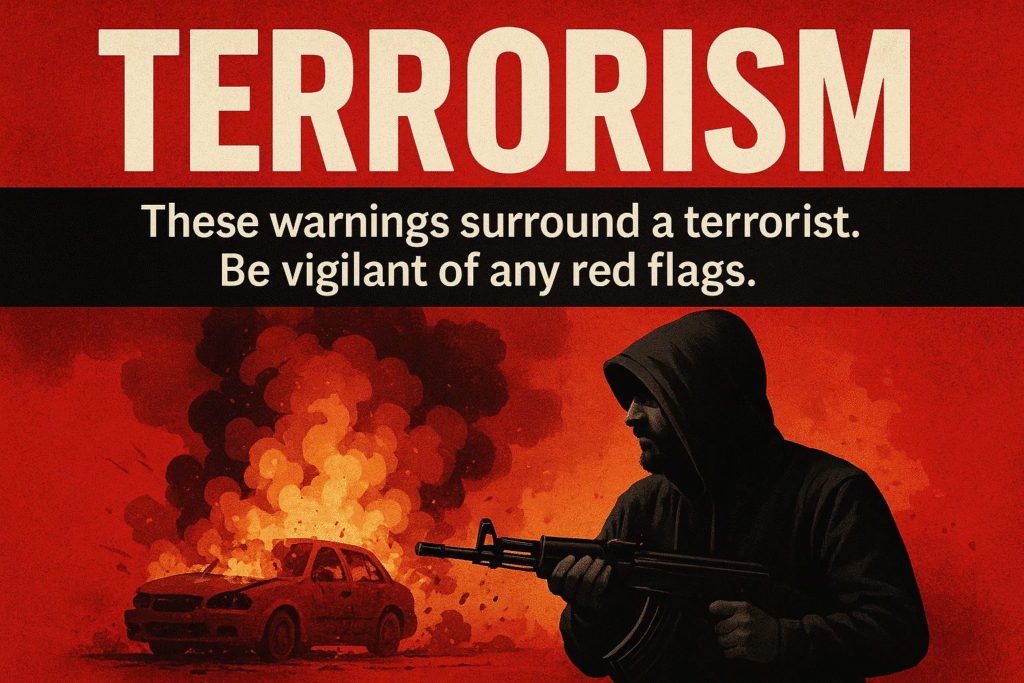
If a terrorist is ever caught near you, your life could be completely ruined. If you’re from a college or university, the students who were with that terrorist are also questioned, and if you’re employed, even your neighbourhood comes under scrutiny, as is happening after the blast near the Red Fort in Delhi. You must not have forgotten Dr Priyanka Sharma, a resident of Rohtak, Haryana. When the blast occurred near the Red Fort, DDrSharma was also detained by the counterintelligence team in Jammu and Kashmir and questioned about Dr Drdil Ahmed, who was arrested in the terrorist module. Do you know what Dr Drarma’s mistake was? Her only mistake was that she didn’t see the red flags that always surround a terrorist. These are the warnings I’ll share today because you could be in Dr Priyanka’s place, I could be there, or someone close to us could be there.
A few days ago, an explosion occurred near the Red Fort in Delhi. This wasn’t just a tragedy; it was a warning of terrible times to come. The accused in this incident weren’t illiterate terrorists, but educated doctors with prestigious college and university degrees. They used their labs and access to chemicals to plan the terrorist attack. This face of terrorism is educated, socially connected, and present in common places among us. Organisations like Lashkar-e-Taiba, Jaish-e-Mohammed, and the Islamic State have now gone even further. They are using new technology, encrypted apps, and social media to specifically target college students. From Kerala to Kashmir, numerous cases have emerged where students are selected from online groups and recruited from mosques and madrasas.
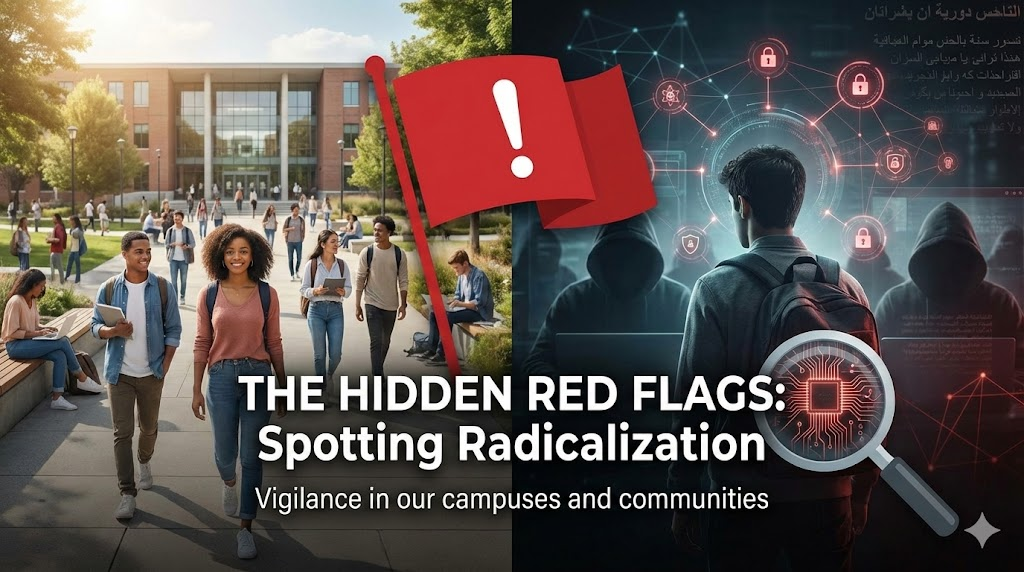
If you’re a college student, be sure to carefully look for these red flags around you and then, instead of ignoring them, keep an eye on them.
First, pay attention if a boy or girl suddenly withdraws from their friends and becomes isolated. This means that a friend who used to be cheerful and social suddenly becomes introverted, and when you ask them something, they may become irritated by the slightest thing or give evasive answers.
The next sign is that their behaviour suddenly becomes mysterious. Their body language becomes less meaningful and more secretive or suspenseful. This means that the friend who used to share everything with you is now unable to read your mind, and they are not sharing anything with anyone.
The third sign is a sudden increase in their interest in radical or extremist ideas. You can understand this by reading hateful, inflammatory messages, videos, or the couplets and poetry of a cleric on social media. For example, they become addicted to watching and listening to figures like Dr Zakir Naik. If you express your opinion on them, they are ready to break off their friendship immediately.
Apart from this, they start posting strange and radical types of content on social media. This means that your friend, who till now was only watching or reading such content, now he has now started creating and sharing such content with pride. Sometimes he expresses grief over the martyrdom of Babri, and sometimes he starts worrying about the independence of Kashmir. And your friend who has never read or heard English, even by mistake, is seen reciting these slogans to you in an Arabic accent. This means that if a person starts seeing the pain of Muslims in Gaza and Palestine more than the common issues of the streets and neighbourhoods, understand that this is also a red flag.
Another important sign is that he or she begins to gain access to sensitive college labs or chemical rooms, which are usually off-limits to everyone. A camp where only he or she can enter, not you.
Secret travel is also a symptom. Friends have no idea where the person has gone. That friend with whom you used to plan trips to Goa or Shimla has secretly started visiting various famous or unknown locations, without you even noticing. Terrorists can carry out serial bomb blasts and terrorist attacks like 26/11 because they have already conducted reconnaissance of these locations.
The next warning sign is a completely distorted, one-sided hatred of social or political issues. This means that their balance and wisdom are zero. They don’t care about the right or left side of a discussion. They simply stick to their own line and try to prove it right. For example, you may have seen many people creating conspiracy theories about the Pulwama terrorist attack.
Next comes online propaganda or disinformation campaigns. Specifically, by making baseless accusations against courts or government institutions, they fuel a foreign narrative. Promoting one’s own or one’s community’s victimhood and placing the narrative of one’s own oppression at the centre of every discussion. And blaming the country, history, democratic systems, and society for all these evils in a way that makes you feel guilty. For example, blaming Hindus for stone-pelting on Ram Navami processions or the destruction of a temple.
The final and most serious sign is a sudden increase in interest in research into weapons, drones, explosives, or surveillance technology.
Now think about it: didn’t you see the same red flags I mentioned in these people when you heard that Burhan Wani was fifteen years old when he left home to join Hizbul Mujahideen ten days before his exams? Or that Zabiuddin Ansari, an electrician from Beed, Maharashtra, who used to come to the homes of people like you and me to repair or fit switchboards, suddenly disappeared for two years. Then he returned home for a few days but left forever. After that, he appeared directly in Karachi, where he was also giving instructions to Mumbai attack terrorist Kasab in the Lashkar control room. He was the one who taught Hindi with a Mumbai accent to ten Pakistani terrorists, including Ajmal Kasab, and also trained them on how to mingle with people in Mumbai. Don’t you see these red flags when you hear the names of other doctors from Faridabad, including Dr Muzamil? All of them were educated doctors, knew about chemicals, also offered prayers, and ultimately, one of them, Dr Umar, carried out a suicide attack near the Red Fort.
These signals in the office or campus are not trivial. The story often begins with these symptoms, which we often overlook. The question arises: what should you or we do when we see such red flags around us? If you see such signs, do not ignore them. Report them to elders around you, trusted teachers, colleagues, college or workplace administration, local police, or the NIA helpline. If necessary, you can even report anonymously, as every report related to national security matters. If you don’t get support from a mainstream reporting agency, there are many social organisations concerned about the country and society that can help you.
Terror networks flourish because you and I ignore such signs. But awareness and prompt action also help to cut them off. So, we must be vigilant. Today’s Islamic terrorism is even more cunning, connected, and difficult to detect than before. These activities are carried out using constitutional rights as a pretext to flout the Constitution. But with awareness, education, and courage, we can keep our campuses, workplaces, and societies safe. Stay vigilant, stay informed, and remember that these red flags are not just warnings but an opportunity to take timely action before it’s too late.