The Problem No One Talks About — But Every Business Suffers From
Picture this: It’s the last week of the month. The accounts team at a mid-sized logistics company in Pune is drowning in a pile of fuel receipts, toll tickets, and food bills submitted by 60 drivers across 8 states. Some bills look legitimate. Some are suspiciously round numbers. A few are from petrol pumps in cities where no driver was supposed to be.
Sound familiar? It should — because business expense fraud is one of India’s most underreported financial problems. Studies estimate that companies lose anywhere between 5% and 8% of their annual revenue to expense fraud and mismanagement. For a company turning over ₹10 crore a year, that’s ₹50–80 lakh quietly disappearing every year through inflated receipts, cash advances that never come back, and reimbursements for expenses that were never incurred.
The traditional solutions haven’t worked. Corporate cards? High issuance friction and no category control. Prepaid wallets? They work for personal spending but give businesses zero programmatic control. Excel sheets and manual audits? Time-consuming, error-prone, and always one step behind.
What India needed was a solution that rode the UPI wave — a payment infrastructure that 500 million Indians already trust and use daily — while layering on the control, transparency, and accountability that businesses desperately need.
That solution is CotoPay.
What Is CotoPay, Really?
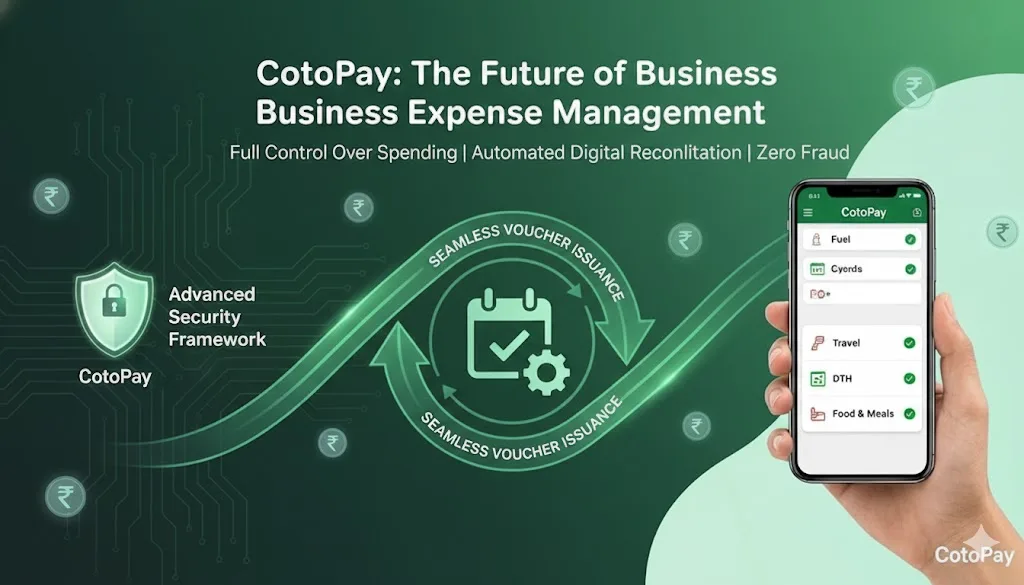
CotoPay is a business payments and expense management platform that allows companies to issue, manage, and track business expenses using UPI vouchers powered by e-RUPI — India’s government-backed digital voucher infrastructure developed by NPCI.
At its core, CotoPay does something deceptively simple but profoundly impactful: it turns ordinary UPI payments into purpose-specific, locked, trackable transactions. A fuel voucher can only be spent at fuel stations. A food allowance can only be used at eligible food merchants. A travel budget can only go toward transport — not electronics, not groceries.
Think of it as giving your employees a smart wallet that knows exactly what it’s allowed to buy — and won’t let anything else happen. And it works on the UPI apps your team already has installed: PhonePe, Google Pay, Paytm, BHIM.
No new app. No bank account needed for the employee. No KYC requirement. Zero friction.
“Business expenses made seamless like your personal UPI spends — that’s the CotoPay promise. The difference is that now, your business has full control over every rupee.”
— CotoPay Mission Statement, cotopay.inUPI in 2026: Why This Is the Right Moment
To understand why CotoPay matters, you need to understand the scale of UPI in India today. The numbers are staggering — and they explain why building a business expense platform on top of UPI isn’t just smart, it’s inevitable.
India processed more UPI transactions in a single month — January 2026 — than many countries process in a year. By July 2025, UPI’s daily transaction count had surpassed Visa, positioning India at the absolute forefront of real-time payments globally.
There are now 50 million registered UPI merchants across India, spanning 98% of the country’s postal codes. From a chai stall in Patna to a petrol pump in Rajkot to a corporate canteen in Bengaluru — UPI QR codes are everywhere. This means an employee with a CotoPay voucher can spend it at almost any business in India — without any special terminal or integration.
What makes CotoPay’s timing brilliant is that it’s building on infrastructure that already has mass adoption — not asking businesses or employees to change their behaviour. You don’t need to train your drivers to use a new payment app. You don’t need merchants to install new hardware. The UPI ecosystem is already there. CotoPay just makes it smarter.
What Is e-RUPI? The Engine Powering CotoPay
Before we go deeper into CotoPay, it’s worth understanding the technology it’s built on — because e-RUPI is genuinely one of India’s most underappreciated digital payment innovations.
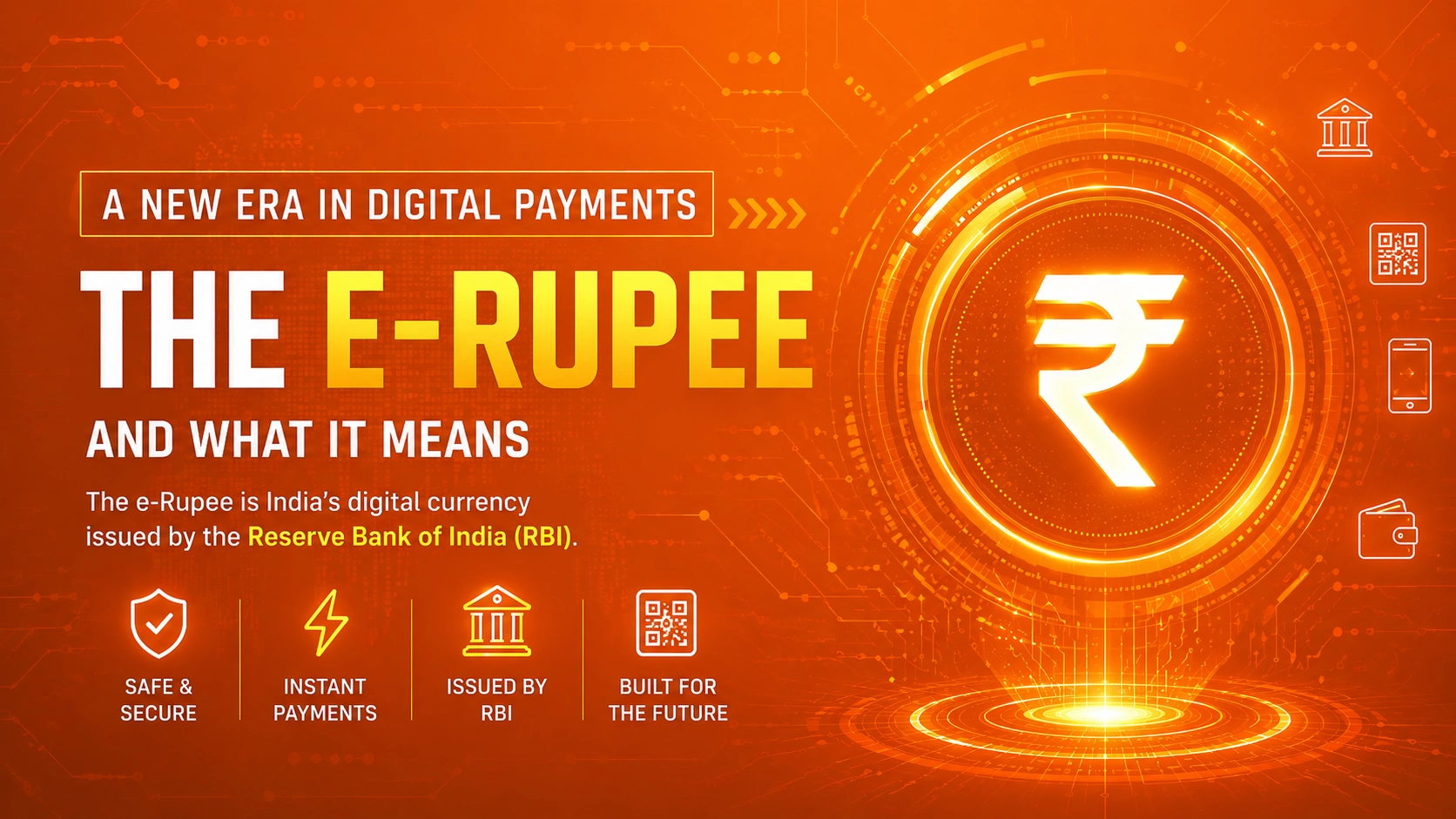
e-RUPI is a digital, prepaid, purpose-specific payment voucher launched by the Government of India in August 2021 and developed by the National Payments Corporation of India (NPCI). It enables cashless, contactless, and contactless-friendly transactions where the money can only be used for its intended purpose.
- Launched by Government of India + NPCI — sovereign-grade infrastructure
- Works via SMS or QR — no smartphone or bank account required for beneficiary
- Purpose-specific — funds cannot be diverted to unintended spending
- Tamper-proof and encrypted — two-layer security framework
- Accepted at any UPI-enabled merchant QR code
- Enables direct benefit transfer without leakage — even for rural India
- Used by government for welfare schemes and now commercial platforms like CotoPay
- No bank account required for the voucher recipient to redeem it
Originally e-RUPI was conceived for government-to-citizen benefit transfers — think health scheme disbursements, fertiliser subsidies, food coupons. But the underlying infrastructure was always capable of more. CotoPay recognised that the same purpose-locking mechanism that makes e-RUPI perfect for welfare schemes makes it equally powerful for corporate expense management.
Why is this a big deal? Because every other solution in the market — corporate cards, prepaid wallets, cash advances — either lacks purpose-locking or requires significant infrastructure changes. e-RUPI delivers programmable money natively within the UPI ecosystem. CotoPay is the business-facing wrapper that makes it enterprise-grade.
How CotoPay Works: A 4-Step Story
The genius of CotoPay’s design is its simplicity. The entire workflow from business to employee to merchant takes four steps — and none of them require any new hardware, new apps, or complex onboarding.
Using CotoPay’s web dashboard, the business manager selects the spending category (fuel, food, travel, etc.), enters the voucher amount, sets a validity period, and issues the voucher directly to the employee’s mobile number. Takes less than 60 seconds.
The issued e-RUPI voucher automatically appears in the employee’s existing UPI app — PhonePe, Google Pay, Paytm — under the e-RUPI section. No new app download. No registration required. The money is visible and ready to use instantly.
The employee walks up to a petrol pump, food court, or eligible merchant, scans the existing UPI QR code, and completes payment using the e-RUPI voucher. The merchant doesn’t need any special terminal — just their existing QR code setup.
At the moment of payment, the relevant voucher automatically surfaces based on merchant eligibility. A fuel voucher will only activate at authorised petrol pumps. If the merchant doesn’t match, the voucher doesn’t appear. Misuse is structurally impossible.
The Lock That Changes Everything
CotoPay’s most powerful and distinctive feature is its three-level spending lock system. This is the architectural decision that makes CotoPay fundamentally different from every other business payment tool in India.
Traditional payment instruments are permissive by default — you hand someone a card and they can use it anywhere, for anything, up to the credit limit. CotoPay flips this model: vouchers are restrictive by design. You define where and how the money can be spent before it’s issued.
Restrict spending to a broad category — Fuel, Food, Travel, Health, Telecom. The voucher works at any merchant in that category but nowhere else. Ideal for general employee allowances.
Narrow it down to specific brands — for example, “Indian Oil only” for fuel, or “Zomato partner outlets only” for food. Enables negotiated corporate rates and preferred vendor programmes.
The most precise control — restrict spending to a single specific merchant outlet. Perfect for company canteens, designated maintenance workshops, or exclusive corporate tie-ups.
Consider what this means for a fleet company running 500 trucks across India. The fuel vouchers issued to drivers only work at approved fuel stations. If a driver tries to use the fuel allowance at a grocery store, electronics shop, or any non-fuel merchant — the transaction is structurally blocked. Not flagged for review later. Blocked at the point of sale, in real time.
This single feature eliminates the need for post-facto audits, receipt verification, and the costly human overhead of manually reconciling thousands of expense entries every month.
Real Benefits for Businesses and Employees
CotoPay delivers a rare win-win: businesses get dramatically better financial control, and employees get a genuinely better payment experience with no friction. Here’s how both sides of the equation benefit:
Which Industries Are Using CotoPay?
CotoPay is designed to work across every industry that manages people-driven expenses — which is effectively every industry. But certain sectors have the most to gain from the platform’s capabilities, given the high volume and high misuse risk of their expense categories.
- Control fuel spend per driver, per vehicle, per route
- Lock fuel vouchers to approved petrol pumps only
- Manage vehicle maintenance, toll, and service expenses
- Eliminate cash advance cycles for long-haul drivers
- Track real-time fuel consumption vs. route distance
- Manage employee travel allowances, food budgets, accommodation
- Distribute team lunch allowances to specific canteen partners
- Handle client entertainment budgets with full auditability
- Automate reconciliation — zero manual entry at month-end
- Integrate with existing HRMS and accounting software via API
- Issue travel vouchers for medical representatives
- Control category-specific expense budgets by territory
- Manage HCP engagement expenses with purpose control
- Real-time spend visibility across a distributed field force
- Manage site-level material and consumables purchasing
- Issue equipment fuel vouchers locked to authorised vendors
- Control labour welfare expenses — food, transport, lodging
- Prevent cash leakage on large, geographically dispersed projects
Every Category Your Business Needs — Covered
CotoPay supports voucher locking across a comprehensive set of spending categories, allowing businesses to configure their expense programmes with surgical precision. Whether you’re running a 10-person startup or a 10,000-employee enterprise, the categories are designed to cover every legitimate business expense scenario.
CotoPay vs. Traditional Expense Methods
To appreciate what CotoPay brings to the table, it helps to compare it directly against the methods most Indian businesses currently rely on for employee expense management.
| Feature / Capability | ✅ CotoPay (UPI e-RUPI) | ⚠️ Traditional Methods (Cash / Cards / Wallets) |
|---|---|---|
| Purpose Control | ✓ Locked at category, brand or merchant level | ✗ None — money can be spent on anything |
| Real-time Tracking | ✓ Instant — every transaction logged automatically | ✗ Delayed — manual receipt collection & entry |
| Employee Onboarding | ✓ Instant — mobile number only, no KYC | ✗ Slow — card issuance, KYC, bank forms |
| New App Required | ✓ No — works on existing UPI apps | ✗ Sometimes — wallet apps, corporate card apps |
| Fraud Prevention | ✓ Structural — blocked at point of sale | ✗ Reactive — audited after fraud occurs |
| Cash Flow Impact | ✓ Money stays in company account until used | ✗ Pre-funded — cash advances leave your account early |
| Reconciliation | ✓ Automatic — digital, real-time, zero effort | ✗ Manual — time-intensive monthly reconciliation |
| Reimbursement Cycle | ✓ Eliminated — employees don’t pay from pocket | ✗ Required — employee advances, claim forms, delays |
| Merchant Coverage | ✓ 50M+ UPI merchants across India | Card networks — good but not universal in Tier 2/3 markets |
| API & System Integration | ✓ Plug-and-play API for HRMS / ERP integration | ✗ Complex — bank-specific, time-consuming integration |
Security Architecture: Built on Government-Grade Infrastructure
For any business payment platform, security is non-negotiable. CotoPay’s security posture derives significant strength from its foundation on e-RUPI — a system designed and certified by NPCI with sovereign-level infrastructure backing.
CotoPay’s two-layer security framework ensures that both the issuance and redemption of vouchers are protected through encrypted data flows. Because the platform operates within the UPI ecosystem — which is regulated by RBI and operated by NPCI — it inherits all the compliance and security standards of India’s national payments infrastructure.
Additionally, since funds are never physically held in a third-party wallet (they remain in the company’s bank account until redemption), the risk of platform-level fraud or insolvency impacting company funds is structurally minimised.
Frequently Asked Questions
No. CotoPay’s e-RUPI vouchers work directly within the UPI apps employees already use — PhonePe, Google Pay, Paytm, and BHIM. The vouchers appear automatically in the e-RUPI section of the app. Zero new downloads, zero behaviour change for employees.
No individual KYC is required. Employees can start receiving and using vouchers immediately using just their registered mobile number. This makes onboarding instant and suitable for organisations with large, distributed workforces — including gig workers, drivers, and field staff.
The voucher simply won’t appear as a payment option at the non-eligible merchant. The lock is enforced at the infrastructure level — it’s not a flag or an alert to be reviewed later. It’s a structural block at the point of sale, in real time. Misuse is architecturally prevented, not just discouraged.
Yes. CotoPay offers plug-and-play API integration that connects with existing HRMS, ERP, and accounting platforms. This means your expense data flows automatically into your existing financial systems — no manual exports, no duplicate data entry.
Corporate credit cards give employees broad spending authority with post-facto controls. CotoPay flips this model — it defines exactly what can be purchased before the money is issued. Additionally, CotoPay works on the UPI ecosystem (no card required, no KYC for employees), covers 50M+ UPI merchants including small vendors, and provides real-time tracking without requiring receipt submission.
Absolutely. CotoPay is designed for businesses of all sizes — from 10-person startups to enterprise-scale operations. The platform’s API and dashboard are scalable, and the onboarding process is designed to be fast and low-friction regardless of company size. For small businesses in particular, the elimination of manual expense tracking is a significant operational time-saver.
Ready to Bring Your Business Expenses onto UPI?
Join the businesses across India that have already said goodbye to fake bills, cash advances, and month-end reconciliation nightmares.
Explore CotoPay → cotopay.inThe Bottom Line: This Is What Business Payments Should Feel Like
India spent two decades building one of the world’s most impressive digital payment infrastructures. UPI is a marvel — fast, ubiquitous, trusted by half a billion people. But for years, businesses were on the sidelines of that revolution, still managing expenses through cash advances, reimbursement forms, and corporate cards.
CotoPay closes that gap. By building on e-RUPI and the UPI ecosystem, it brings the same simplicity and convenience of personal UPI payments to the complex, accountability-heavy world of business expense management — without asking anyone to change their tools or habits.
The timing is perfect. 21.7 billion UPI transactions in a single month. 50 million registered merchants. 500 million active users. The infrastructure is ready. The behaviour is already trained. All that was missing was a platform that made business spending as smart, controlled, and transparent as it needs to be.
That platform is CotoPay.
As India continues its journey toward becoming a fully digital economy — and as businesses of every size face increasing pressure to demonstrate financial accountability and operational efficiency — platforms like CotoPay aren’t just a convenience. They’re a competitive necessity.