According to the International Energy Agency’s latest Global Electric Vehicle Outlook 2024, one in five three-wheelers sold globally in 2023 were electric, and nearly 60% of those were sold in India. With approximately 1 million electric 3Ws sold in 2023, reflecting a 30% growth compared to 2022, it is clear that businesses and independent drivers across the country are heavily adopting electric autos.
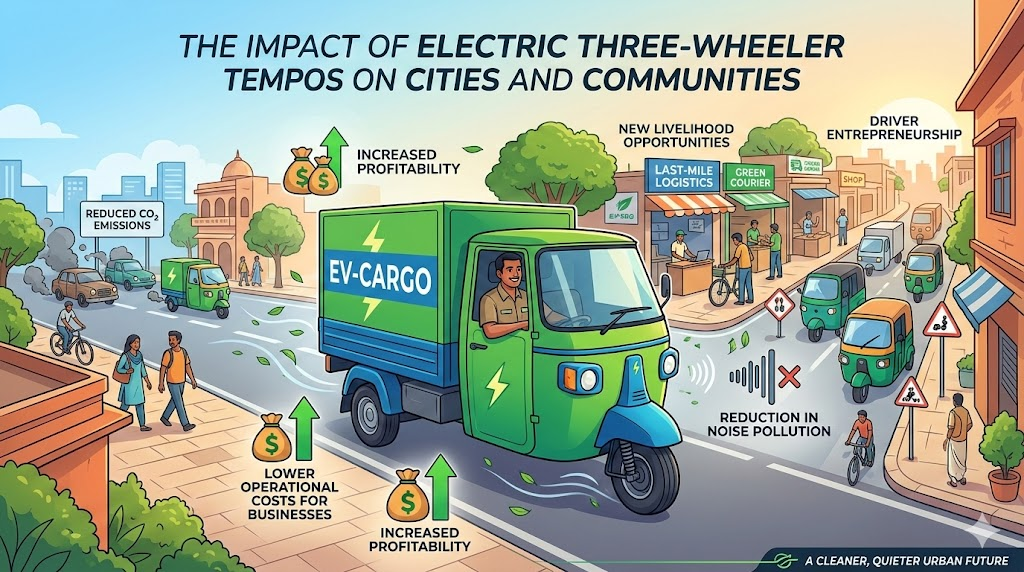
This surge in adoption highlights the pivotal role of electric three-wheeler tempos in shaping urban mobility and logistics. From reducing carbon emissions and noise pollution to offering cost-effective solutions for last-mile deliveries, these vehicles are changing how goods are being transported. Let us explore the profound impact of electric tempos on our cities and communities.
Drop in CO2 Emissions
Perhaps the greatest impact of EV vehicles on our cities can be noticed in the significant reduction in vehicular emissions. Before electric tempos, businesses relied on internal combustion engine (ICE) vehicles to transport goods, which released heavy carbon emissions that were contributing to rising air pollution levels in urban areas. Electric three-wheelers, on the other hand, produce zero carbon emissions and are helping lower vehicular emissions in cities.
Lower Operational Costs for Businesses
ICE vehicles incur significant expenses in terms of fuel and maintenance, which can be a challenge for many small businesses or individuals who are just starting in the transportation sector. An electric vehicle, on the other hand, runs on electricity and has fewer moving parts, lowering the running costs for these businesses. This affordability and hassle-free maintenance has allowed many small businesses to operate profitably in the logistics and transportation industry.
Reduction in Noise Pollution
Anyone who lives in urban cities is accustomed to the never-ending noise of vehicles, especially the roar of engines. Carriers and tempos, which operate round-the-clock to transport goods from one city to another, contribute significantly to the noise pollution. However, the whisper-quiet operation of electric three-wheelers is helping lower the noise pollution in urban areas. In fact, the best EV vehicles are so silent that manufacturers often have to add false sounds to make them safe for pedestrians.
Easing Traffic Congestion
Battery electric vehicles are compact, easy to manoeuvre and occupy less space on the road, which allows them to navigate through traffic and congested areas easily. Moreover, their smaller size reduces parking and loading challenges, thereby reducing the chances of bottlenecks in high-traffic areas. As a result, electric three-wheelers have optimised the flow of goods and are reducing overall traffic density in urban areas.
New Livelihood Opportunities
With lower operating costs, minimal maintenance and government incentives, electric three-wheeler tempos have opened new business opportunities, especially for drivers and entrepreneurs in urban and semi-urban areas. Electric three-wheelers offer an accessible and profitable business model for independent driver cum owners and small businesses, looking to enter the transportation and logistics sector. As a result, electric 3Ws are providing stable income opportunities in many communities across the country.
Final Thoughts
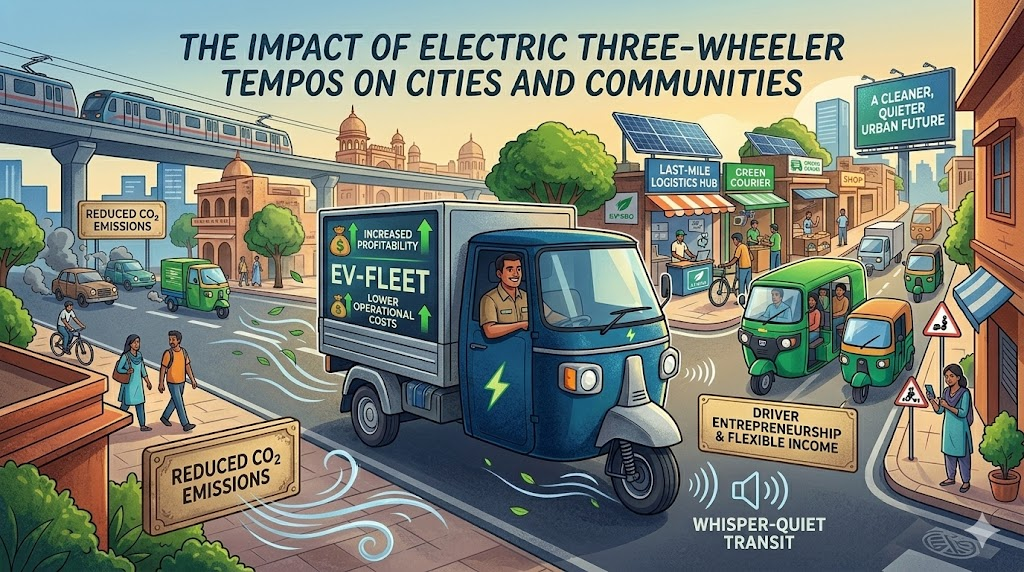
The impact of electric three-wheeler tempos can be seen beyond just environmental benefits like reduced carbon emissions and noise pollution. Electric 3Ws are lowering operational costs for businesses, easing traffic congestion in urban cities and creating new livelihood opportunities in the country. By embracing electric three-wheelers, we can pave the way for cleaner, quieter, more efficient and accessible urban mobility and logistics.
Frequently Asked Questions.
1. Why are electric three-wheeler tempos becoming popular in India?
Electric three-wheeler tempos are gaining popularity due to lower fuel costs, reduced maintenance, and government incentives. With rising fuel prices and stricter emission norms, many businesses and drivers are switching to electric vehicles for cost-effective and sustainable urban transport.
2. How do electric three-wheelers help reduce carbon emissions?
Unlike ICE vehicles, electric three-wheelers produce zero tailpipe emissions. By replacing diesel and petrol-powered tempos, they significantly lower CO2 emissions and contribute to cleaner air in urban cities.
3. Are electric three-wheelers cost-effective for small businesses?
Yes, electric autos have lower running costs since they operate on electricity and have fewer moving parts. This reduces fuel expenses and maintenance costs, making them an affordable and profitable option for small logistics and delivery businesses.
4. Do battery electric vehicles help reduce traffic congestion?
Battery electric vehicles, especially compact three-wheelers, are easier to maneuver in narrow streets and congested areas. Their smaller size helps optimize road space, making last-mile delivery more efficient and reducing bottlenecks.
5. What livelihood opportunities do electric three-wheelers create?
Electric three-wheelers offer independent drivers and entrepreneurs an accessible entry into the logistics and transportation sector. With lower operational costs and growing demand for last-mile delivery, they provide stable and sustainable income opportunities.Frequently Asked Questions.